
Megaprojects: The Great Wall of China
30.07.2025

We continue the series of "historical management" of large and megaprojects, which we hope will be of interest not only to history buffs, but also to project managers, team members, and PMC contractors. Historical examples as ready-made models for analysis, copying and development.
The reason for writing this article was a quote from Tony Buzan's book "Superthinking", read at an altitude of ten thousand meters and saved to favorites:

Project management trends assure us that in today's dynamic world, it is time to measure the duration of projects in days, or even hours. Things are changing quickly! Against this background, the history of the megaproject, which lasted... two thousand years, is interesting. You already guessed it. This is the Great Wall of China. A project on the scale of the Tower of Babel with one difference. You can touch it.
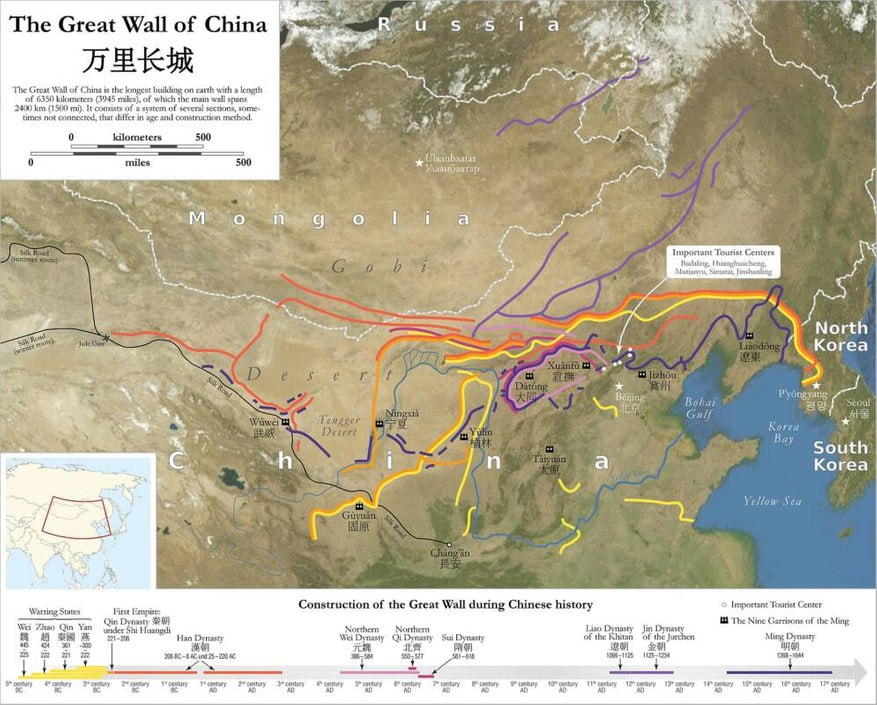
Below is calendar network diagram megaproject. It's literally a road map. Distribution of project phases by imperial dynasty over two thousand years. A very eloquent document.
I wonder if it is possible to determine from it critical path?
ROADMAP FOR WALL CONSTRUCTION
Home
It all started in the period from the 5th to the 2nd centuries BC, when larger states conquered smaller neighbors, becoming even stronger and larger. It was customary to mark the boundaries of territories with earthen embankments, which over time were eroded by precipitation and destroyed by enemies.
WALL
In the middle of the 3rd century BC. Emperor Qin Shi Huang ordered the construction of an unusual stone structure to begin, which was supposed to delineate the boundaries of his possessions and protect residents from enemy attacks.
The commander (!) Meng Tian was appointed to manage the construction of the wall. What is known about him? An ancient Chinese commander of the kingdom and empire of Qin, who distinguished himself in the wars with the Xiongnu and during the construction of the Great Wall of China. He came from a family that included several famous generals and architects. Wrote several famous works. He was forced to commit suicide after the death of the emperor.

Providing resources
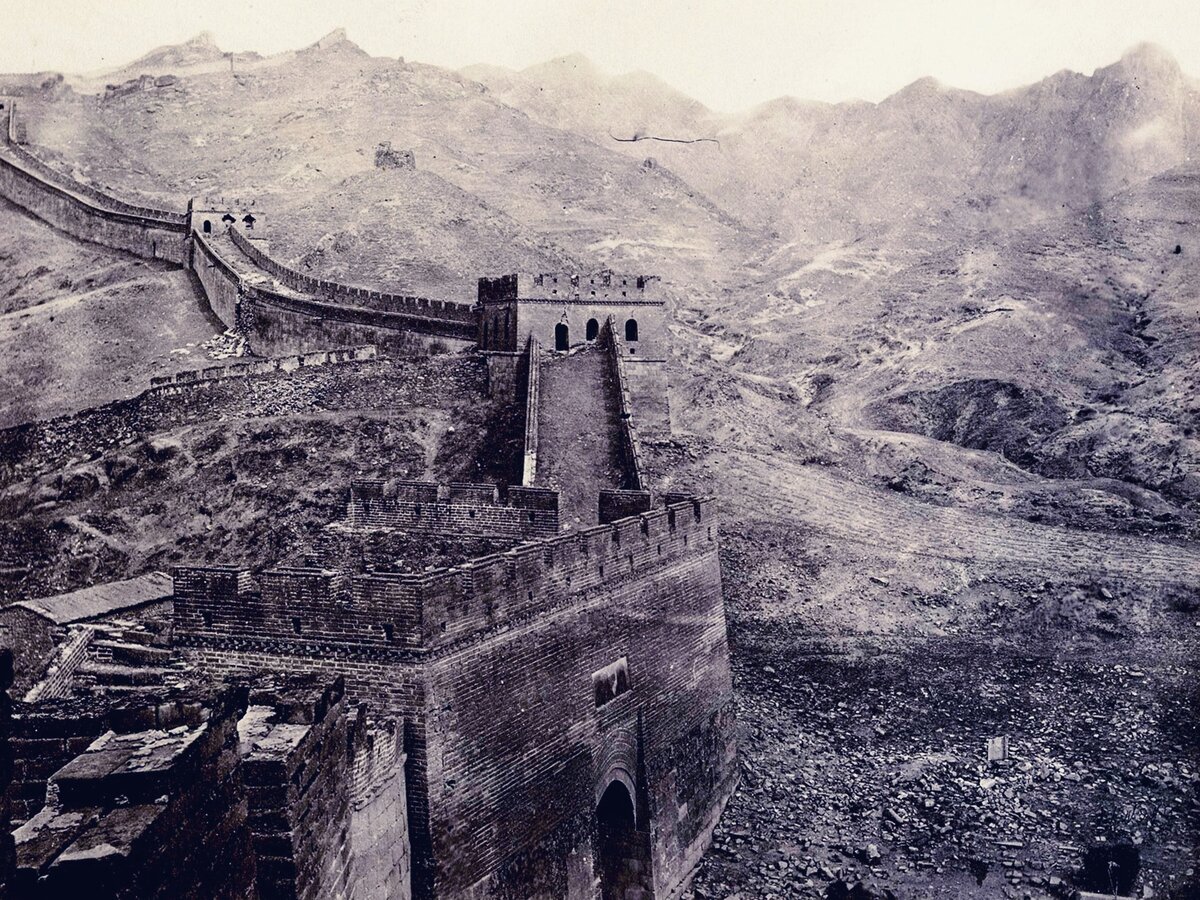
Almost a fifth of China's population was sent to build the wall. In 10 years, the number of its builders reached two million people. Peasants, artisans, soldiers, slaves, and criminals went to the construction site.
WALL
Compare with the largest recent megaproject - the Soviet Buran program:
- 2.5 million people worked on the project;
- approximately two thousand work teams;
- The program budget, translated into our money, amounted to about 10 trillion rubles.
The famous ancient Chinese philosopher and thinker Confucius, who lived in the 6th century BC, left the following wisdom:

Challenges and know-how
Difficulties and know-how to solve them arise in every large and megaproject. For example, during the construction of the Burj Khalifa in Dubai, ice was mixed into the concrete to make it flowable for the construction of the tallest structure in the world.
The main problem was the lack of appropriate infrastructure for construction: there were no roads, there was no adequate water and food for those involved in the work, while their number reached 300 thousand people, and the total number of builders involved under Qin reached 2 million.
WALL
In China, during the construction of the Wall, pre-existing parts of the wall were used, which were strengthened, built on, connected with new sections and lengthened, while sections that previously separated separate kingdoms were demolished.
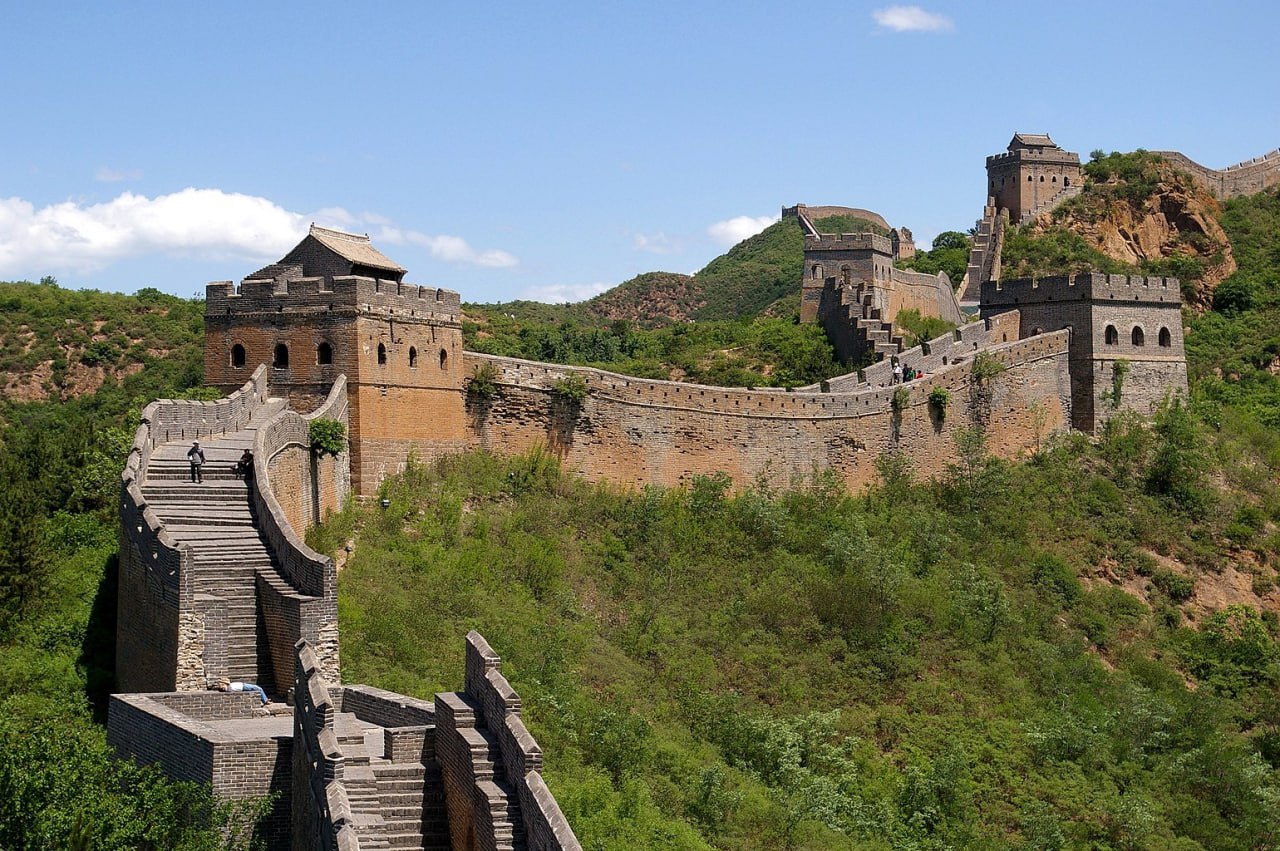
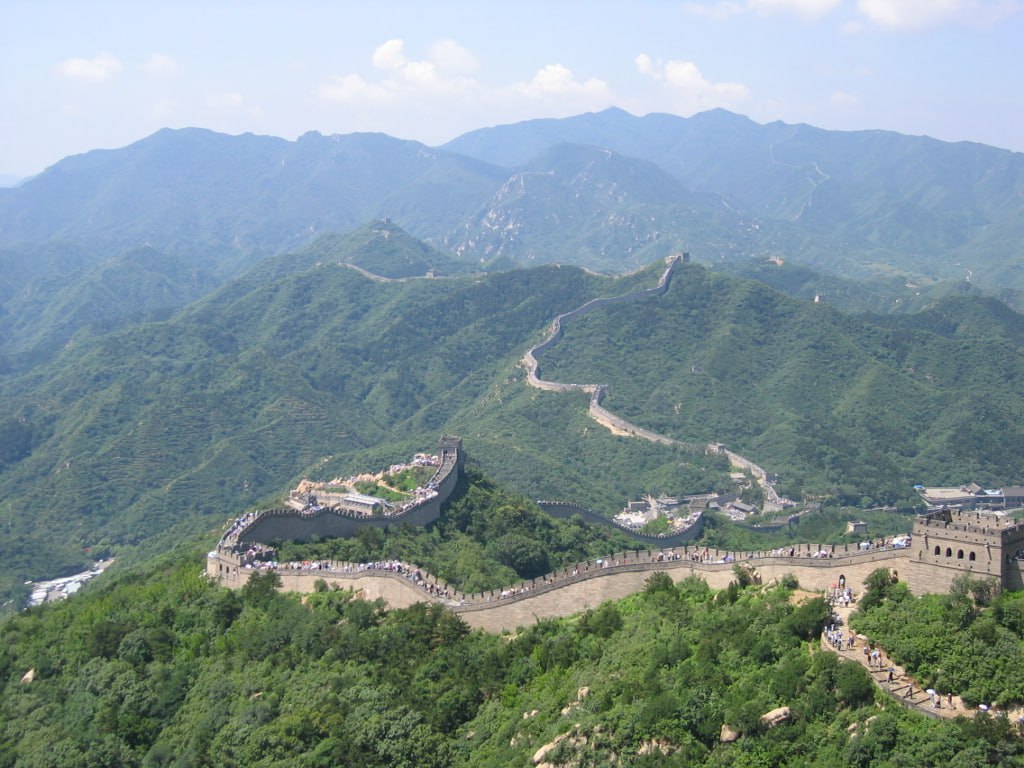
The unique originality of the structure is that the wall is unusually organically integrated into the landscape and forms a single whole with it. The wall goes straight along the mountain range, going around all the spurs, and it was necessary to overcome both high climbs and very significant gorges.
The basis of the greatest creation of the ancient Chinese was stone blocks covered with compacted earth. Later, already in the Han and Ming eras, stones and bricks began to be held together with rice glue with the addition of slaked lime. By the way, it is this part that has survived to this day and amazes modern tourists with the grandeur of its plans.
As a result of epidemics and overwork, at least tens of thousands of people died. Outrage against the mobilization for the construction of the wall caused popular uprisings and served as one of the reasons for the fall of the Qin dynasty.
Results
The length of the wall with all its branches is more than 21 thousand kilometers (!).
The dimensions of the wall varied by area, the average parameters were: height - 8 m, height with battlements - 9 m, base width - 6.5 m.
There are about 25 thousand towers (!) along the entire length of the wall. The towers, erected together with the wall, were located from each other at a distance of up to 200 meters, which is the flight range of the arrow.
Those sections of the Great Wall that have survived to this day were built mainly during the Ming Dynasty (1368-1644).
Benefits
What benefits did the Chinese receive due to the construction of such a serious fortified structure? Inviolability of borders? Stability of the empire? Constant tourist flow?
Historians write that the constant construction and restoration of the wall drained the strength of the people and the state, but the value of the wall as a defensive structure was questioned.
It got to the point that the barbarians accepted the wall as a challenge and tried to conquer the territory of the empire by any means. For Chinese scientists, the wall became a symbol of military weakness during the Ming Dynasty, capitulation to the next barbarians.
Wang Sitong, a 17th-century historian and poet, wrote:

Its sociological benefits look much larger. In modern Chinese culture, the wall has taken on a new meaning. Regardless of the failures associated with its military use, it has become a symbol of the resilience and creative power of the Chinese people.
And maybe the world's first economy appeared partly thanks to this megaproject - the construction of the Wall?
As a summary, more from Confucius:

In conclusion, I note that the key issues of project management, on which ultimate success depends, have remained virtually unchanged for two thousand years. You still need to see the goal, believe in yourself and not notice obstacles!