
Megaprojects: critical path or chain?

Several years ago, on a business simulator of the German business game developer TOPSIM, together with a group of participants, I worked out changes to the critical path of a test project. Changes were made to the project, risk scenarios were implemented. Together with the team, we monitored the dynamics of critical and near-critical chains and made decisions on progress. Watching this in the game was no less entertaining than driving a Formula 1 car.
The critical path of a project has become magic for project teams, a sort of "silver bullet", the possession of which allows one to completely solve the problems of the project. A category of top managers has emerged who prefer to ask the project manager a single question: "Show me the work that is on the critical path?"
The mathematics of network diagrams, schedule network models in combination with the critical path method really makes decision-making easier for project management. Decisions in operational terms, for example, which work chains require time compression, in which work it is necessary to strengthen control? And also strategically, how much does the change affect the milestones and finish of the project?
A megaproject differs from a project in a large (sometimes by an order of magnitude) number of operations and a strong influence of uncertainty and restrictions. These parameters make it difficult for the planner to determine the critical path, and often the issue of the "red chain of tasks" is solved either intuitively or incorrectly.
Consideration of the critical path of a megaproject, taking into account all constraints, including resource shortages, leads to the determination of the critical chain of the megaproject. Literally, the critical chain of a project is the practical critical path. The theoretical critical path in this case goes beyond the attention brackets.
The second reason for interest in the critical chain stems from the understanding that project management is fundamentally about managing constraints. In fact, a project manager differs from a line manager in working with restrictions: strict budgets, deadlines, a team for one project, a total shortage of resources, problems with logistics, and so on, so on, so on. In this regard, it would be useful for the head of the megaproject to remember the name Goldratt.
Eliyahu Goldratt, the author of the Theory of Constraints, explains another limitation of the critical path in his book Critical Chain:

Understanding the difference between a critical path and a chain gives an additional degree of freedom to the megaproject team. Now, in addition to focusing on critical and adjacent work chains, the team puts to work the key principles of Goldratt's Theory of Constraints as applied to project management.
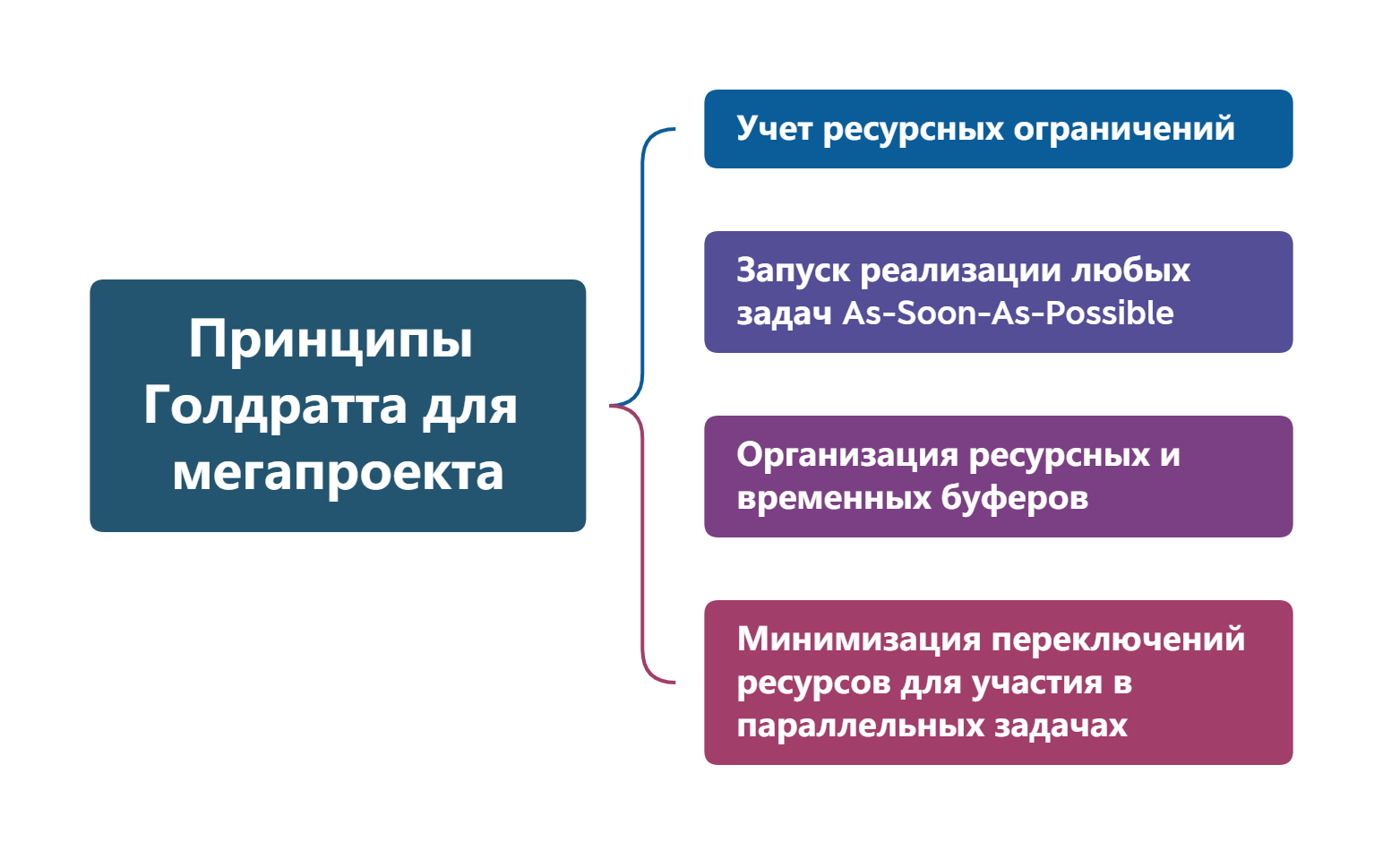
Fig. Goldratt's Principles for a Megaproject
The megaproject management team can implement these principles in parallel with the creation of a full-fledged schedule network model of the project. Following the principles will help level out the situation when the organization has problems with the formation of the critical path of the project. For example, some organizations prefer to save on planning. In this case, the effect will still be achieved.
The words from Ilya Kormiltsev's song involuntarily come to mind:

In general, Eliyahu Goldratt's legacy in the field of the theory of constraints is useful to see systematically, as a business process. Here are his recommendations for working with visible limitations of the system (organization, megaproject, etc.).
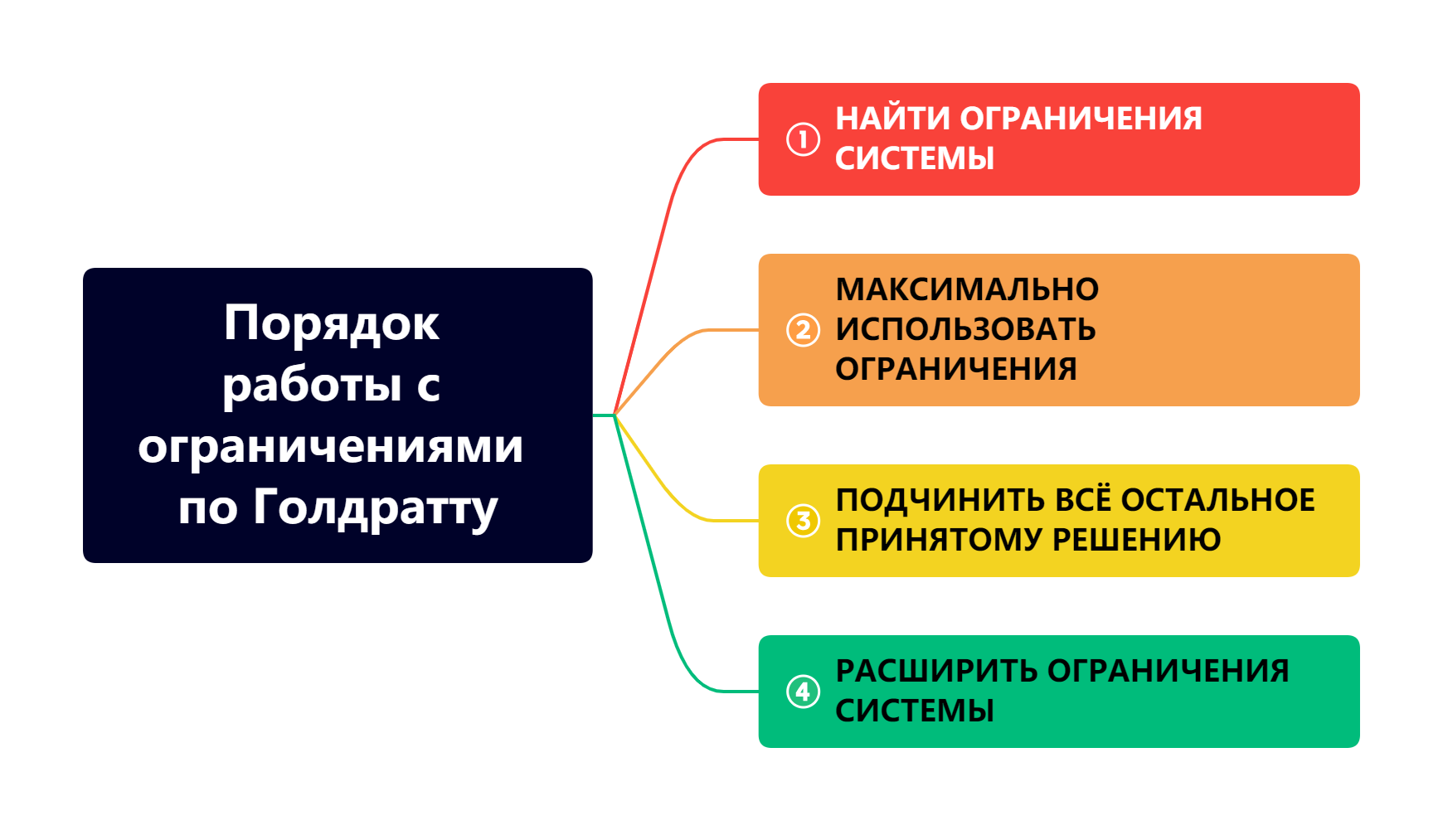
Fig. How to work with restrictions
Let me give you an example from the practice of megaprojects. One company had a need for technical diagnostics and non-destructive testing of a remote pipeline. This problem was brilliantly dealt with using Goldratt's "accelerating thundercloud" method.
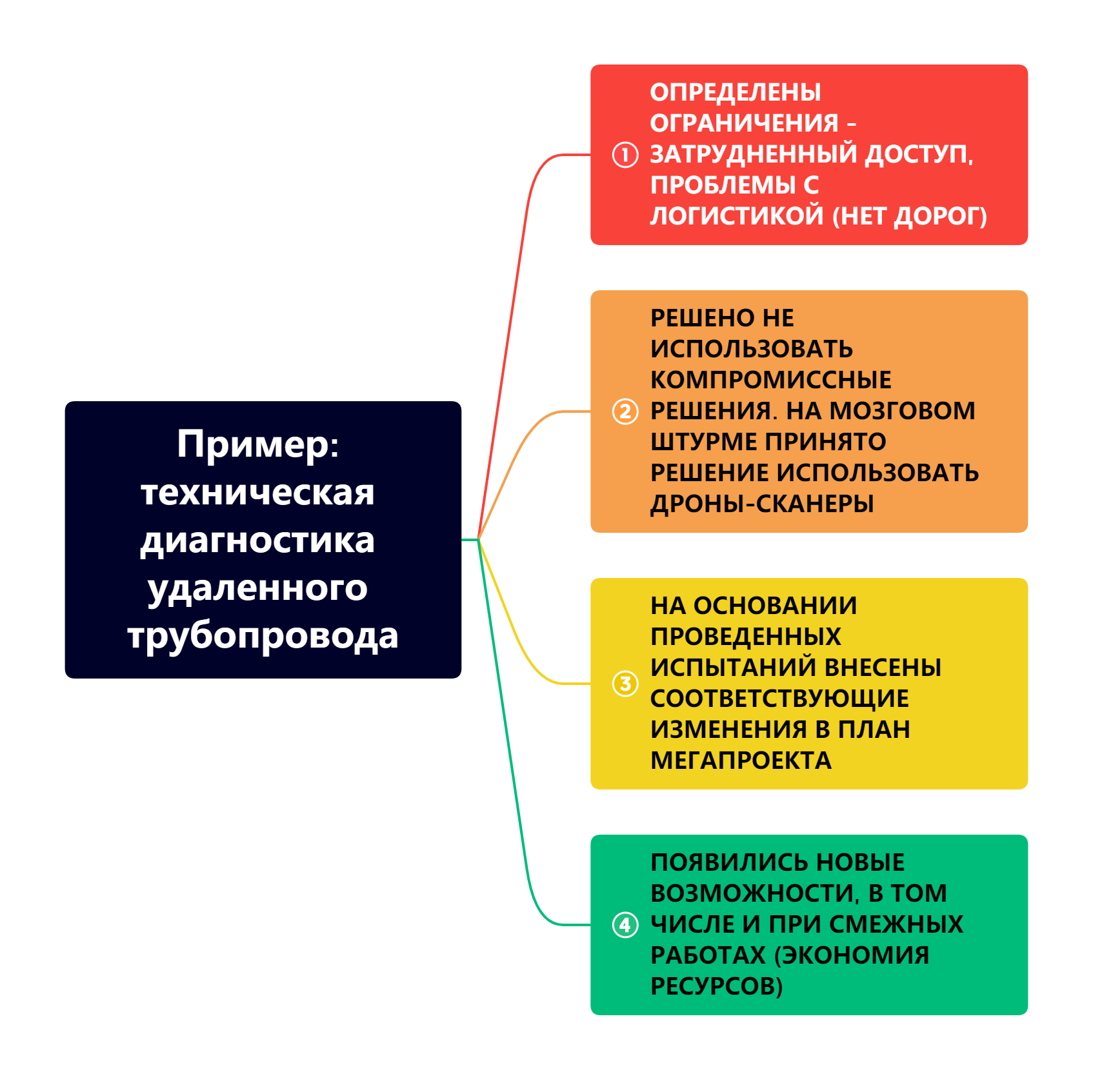
Fig. An example of how to work with restrictions in a megaproject
Goldratt also makes subtle jokes about when to stop on a failed project.

The PM Excellence team in large-scale projects and megaprojects, as a rule, takes into account the terminology and maturity of the customer, adaptively adjusting the schedule network model. The arsenal of solutions includes working with the critical path of the project, prioritizing work according to the amount of reserve, taking into account project limitations. The Big Picture of the project offered to the customer allows you to see the systemic picture of the project and track changes in the critical path.
An important conclusion follows from the above. A megaproject as a large-scale project requires analysis from the point of view of the critical chain method and the theory of constraints. First of all, with calculations based on resource dependencies, risks, and uncertainties. Therefore, the project manager's favorite phrase at the morning planning meeting should sound like this:

Literature
Goldratt, Eliyahu M. Critical Chain / Eliyahu M. Goldratt; Per. from English - Moscow: TOS Center, 2006 - 272 pp.