
Foreign and Russian assessment of the reasons for missed deadlines in the implementation of large-scale projects and megaprojects in the fuel and energy complex

Conclusions based on foreign assessment from articles by Claire Colhoun, AVEVA ProCon and Tim Haidar, chapter. editor of Oil & Gas IQ magazine, and assessment of the Russian market - from Ivana Smirnova, PMP, PME, director of the company's practice PM Excellence.
The implementation of large-scale projects in the fuel and energy complex abroad and in Russia has recently looked quite problematic. Let's figure out why this happens and how you can change the situation for the better for each individual project.
According to estimates from foreign colleagues, 78% of megaprojects in the oil and gas sector completed over the past decade not only failed to meet their deadlines and costs, but two-thirds of them did not achieve production volume targets. More precisely, half of them did not even reach 50% of the production volume planned for the first 24 months of operation.
According to a 2017 analysis by Ernst & Young, the Middle East is the region where the problem is most pronounced megaprojects, experiencing both cost overruns and schedule delays: 89% and 87% of projects, respectively.
Together with AVEVA ProCon, the editors of Oil & Gas IQ analyzed a wide range of projects and conducted a survey among specialists directly involved in the implementation megaprojects in the hydrocarbon sector. Experts answered questions about what the main factors of success are, and what are the pain points and problems in the implementation of large-scale projects.
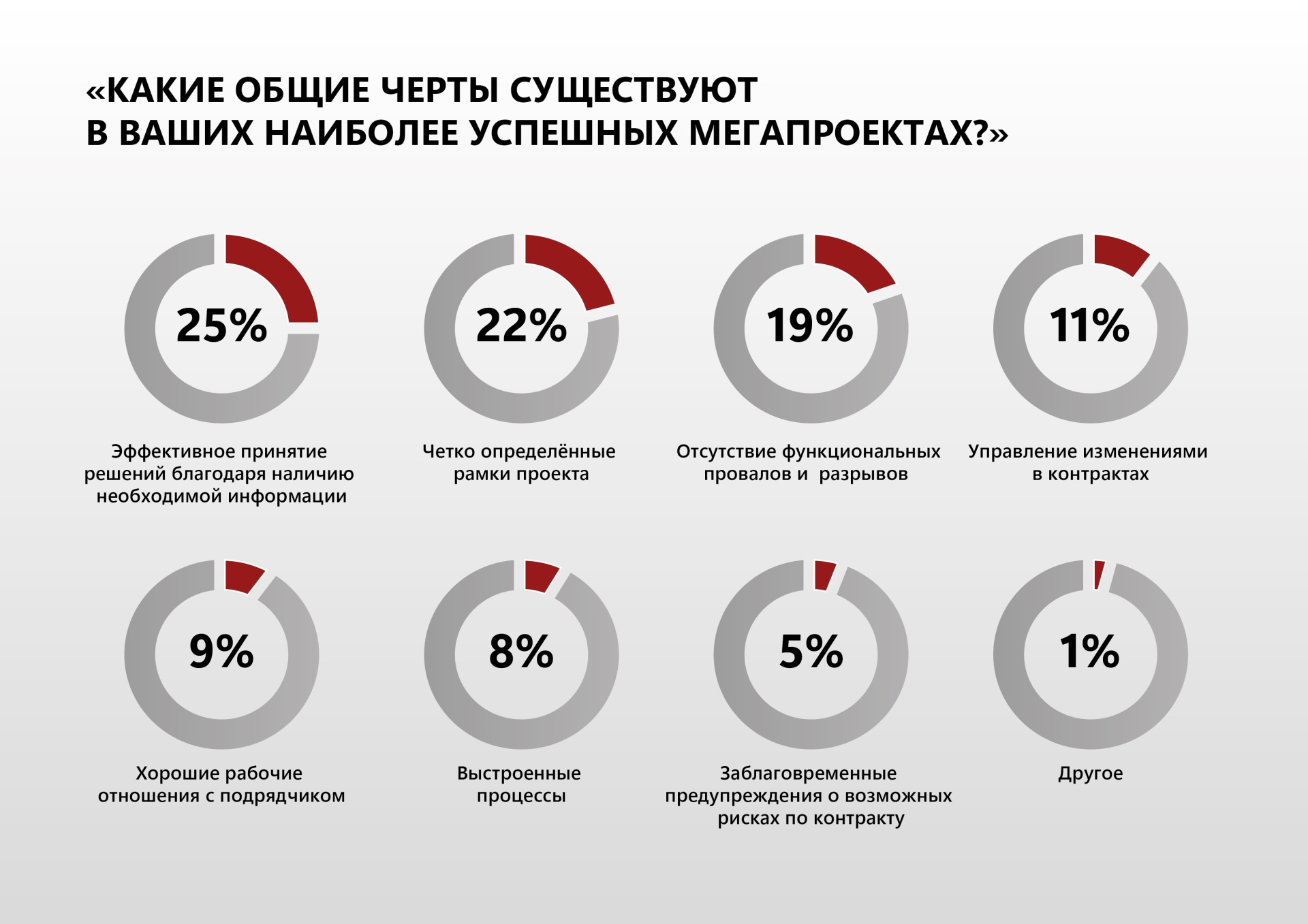
The survey results show that for implementation megaproject It is not the technical aspects that are extremely important, but the communication aspects related to the effective interaction of the parties. From the data, we see that the importance of building a strong relationship with a contractor is relatively underrated compared to other factors.
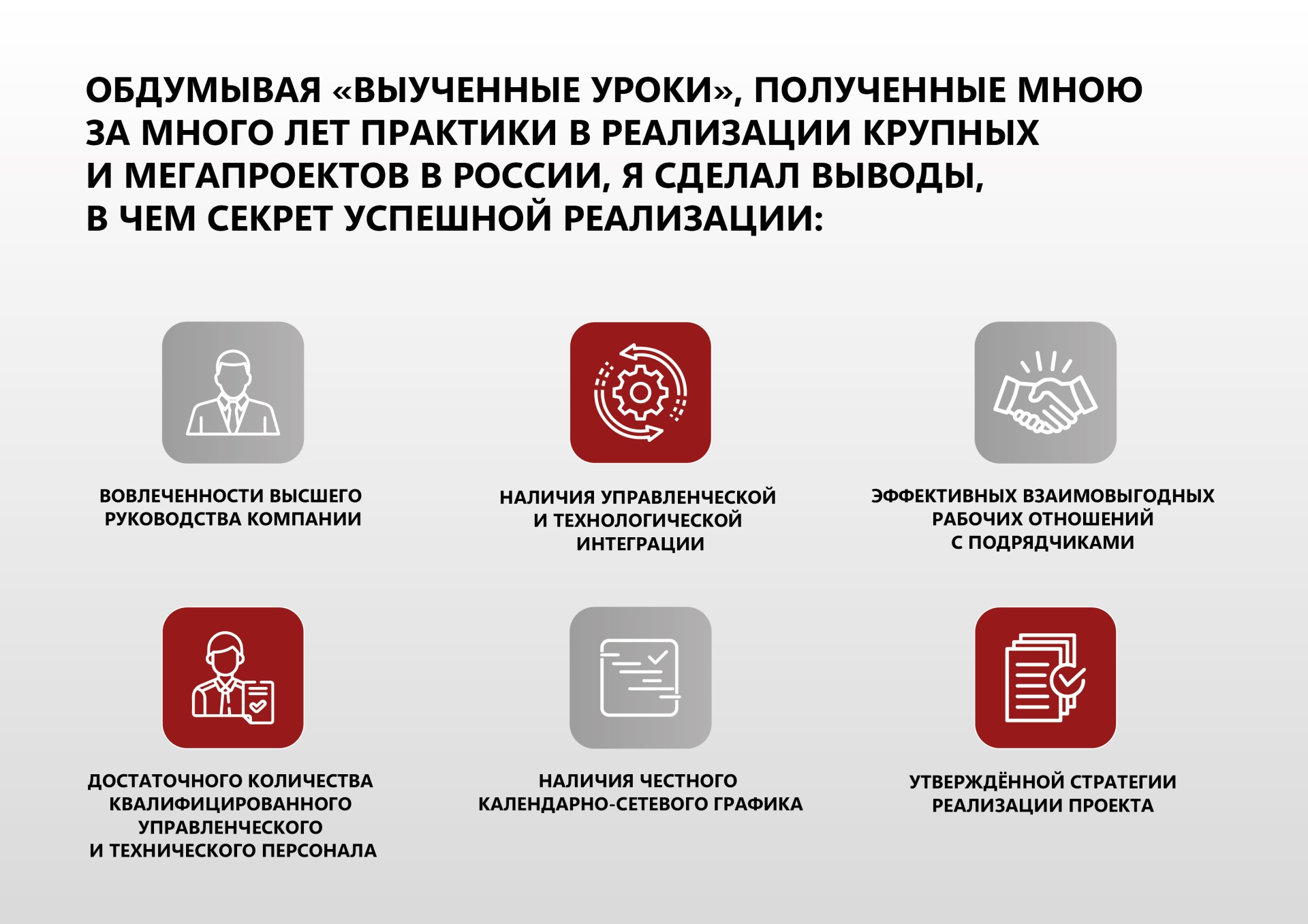
At the same time, experts from AVEVA ProCon believe that building and maintaining an excellent working relationship with the contractor is fundamental to the success of a megaproject. It is also important to have a clearly defined, structured contract change management process and effective workflows that permeate all areas of implementation. Unfortunately, this is not always present in megaprojects.
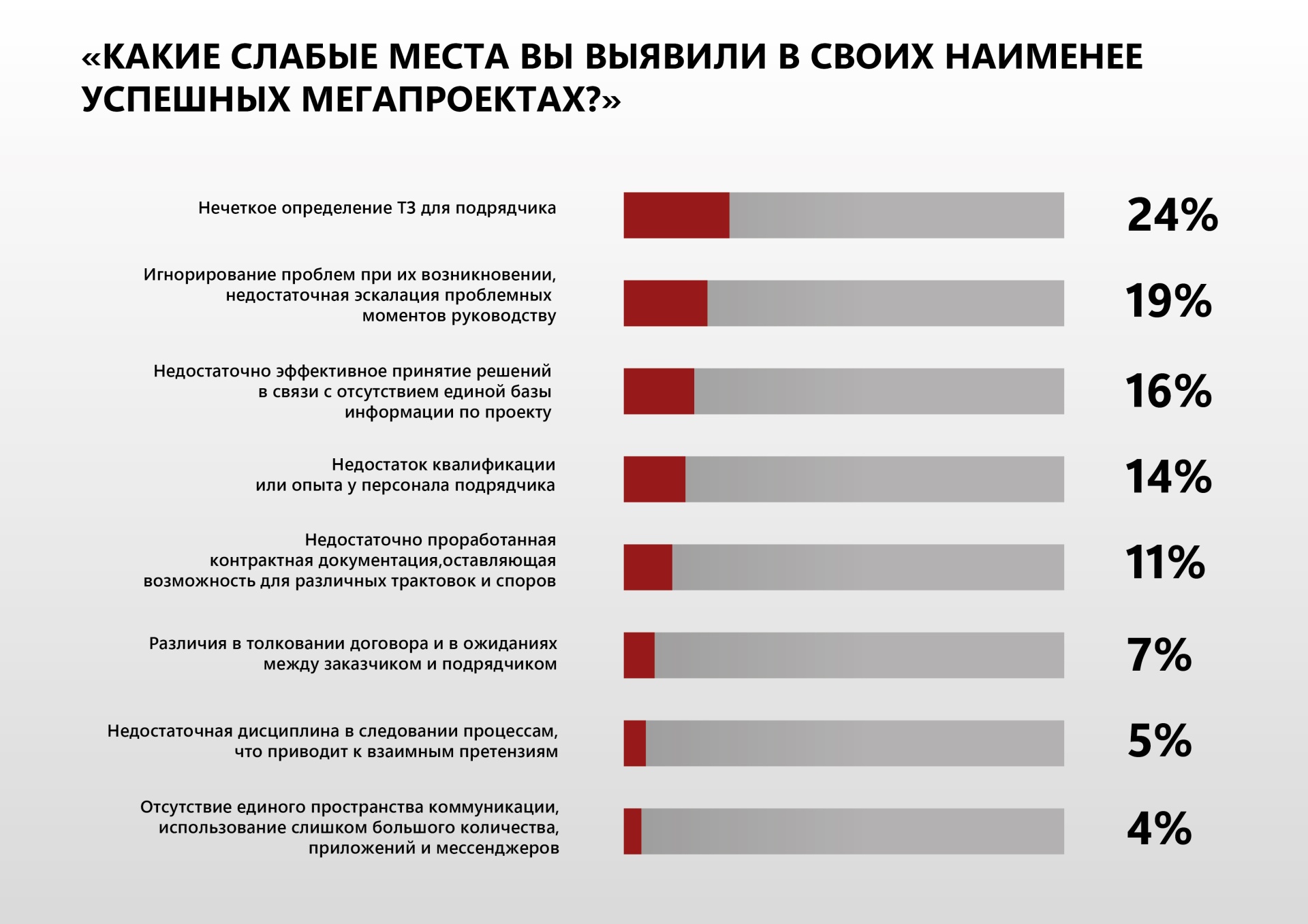
Let's also look at the factors that led to implementation problems megaprojects.
According to the results of the AVEVA ProCon and Oil & Gas IQ surveys, they look like this:
Personal experience helped me formulate the key problems when implementing large-scale projects and megaprojects in Russia:
- Availability of qualified contractors
- Ineffective organizational structure of management
- Blurred responsibility and lack of authority
- Predominance of priority of functional tasks over design ones
- Lack of clear priorities in tasks
- Lack of motivation to achieve project goals (motivation is tied to compliance with internal regulations, which slow down work)
- Lack of qualified specialists during peak loads
- Insufficient effectiveness of the management tools used
- Managing "from problems" rather than proactively.
In many ways, the difficulties and reasons behind them in Russian megaprojects are similar to foreign ones. And they are the main reasons for project delays and budget overruns.
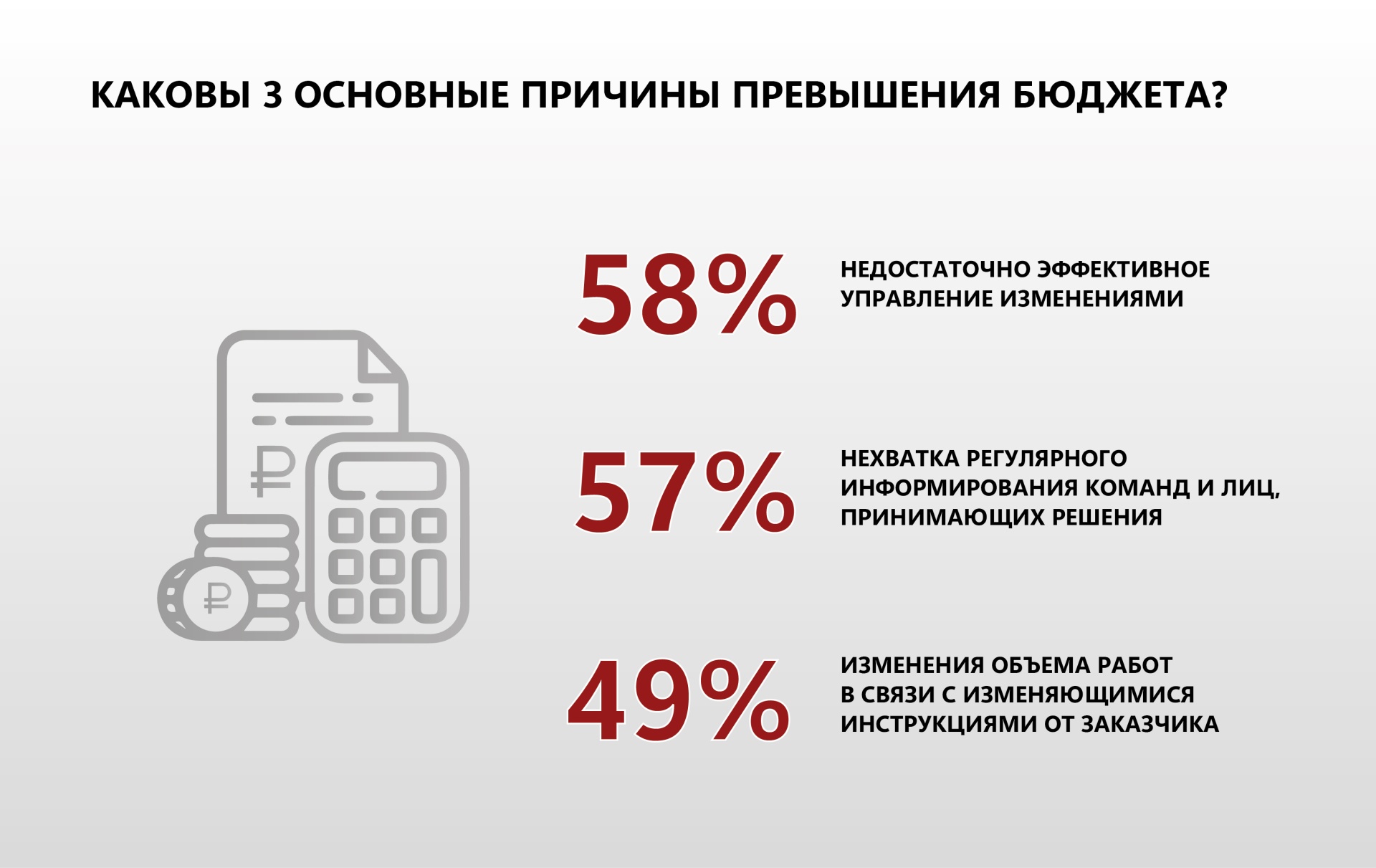
Top 3 reasons for exceeding budgets of megaprojects - according to the results of surveys by AVEVA ProCon and Oil & Gas IQ:
PM Excellence's practical experience in managing large-scale projects and megaprojects in Russia allows us to detail these areas. Below are specific conditions and steps that must be taken to minimize the risks of missing deadlines and exceeding budgets on large-scale projects and megaprojects:
- Availability of management and technological integration
- Involving top officials in solving problems and making decisions within their area of responsibility
- Timely staffed and qualified project team, including a professional project manager
- Partnerships with contractors
- A working change management process
- An up-to-date schedule network model as one of the key sources for prompt management decision-making, rather than an approximate schedule
- Automation of control: no more than 20% of control "in manual mode"
- Application of professional project management technologies