
Those who are not ready to change will not succeed
11.09.2025


As you know, there are several types of organizational structures of companies. Typically, functional, matrix and project structures are distinguished (the matrix, in turn, has subtypes - weak, balanced and strong matrix). Most companies implementing projects (especially large-scale projects and megaprojects) traditionally have a matrix or functional structure. This situation is due to the fact that despite the more than seventy-year history of project management as a separate management discipline, the legal requirements regulating the work of organizations are focused specifically on various functions (purchasing, finance, legal responsibility, etc.). The transition to a matrix structure (not to mention a project structure) requires resolving many issues of responsibility and reporting to regulatory authorities.
But the increase in the number and complexity of projects being implemented required structural changes from companies. More flexible small companies (mainly IT-oriented) were the first to react; later large organizations also caught up. As a result, a strong matrix structure is now increasingly common, allowing both legal compliance and management to be organized in a more efficient way.
When moving to a new management structure, any organization that involves implementing projects must be prepared for internal organizational changes. Let us highlight several areas in which they are inevitable.
1. Changes to internal procedures and monitoring their strict implementation
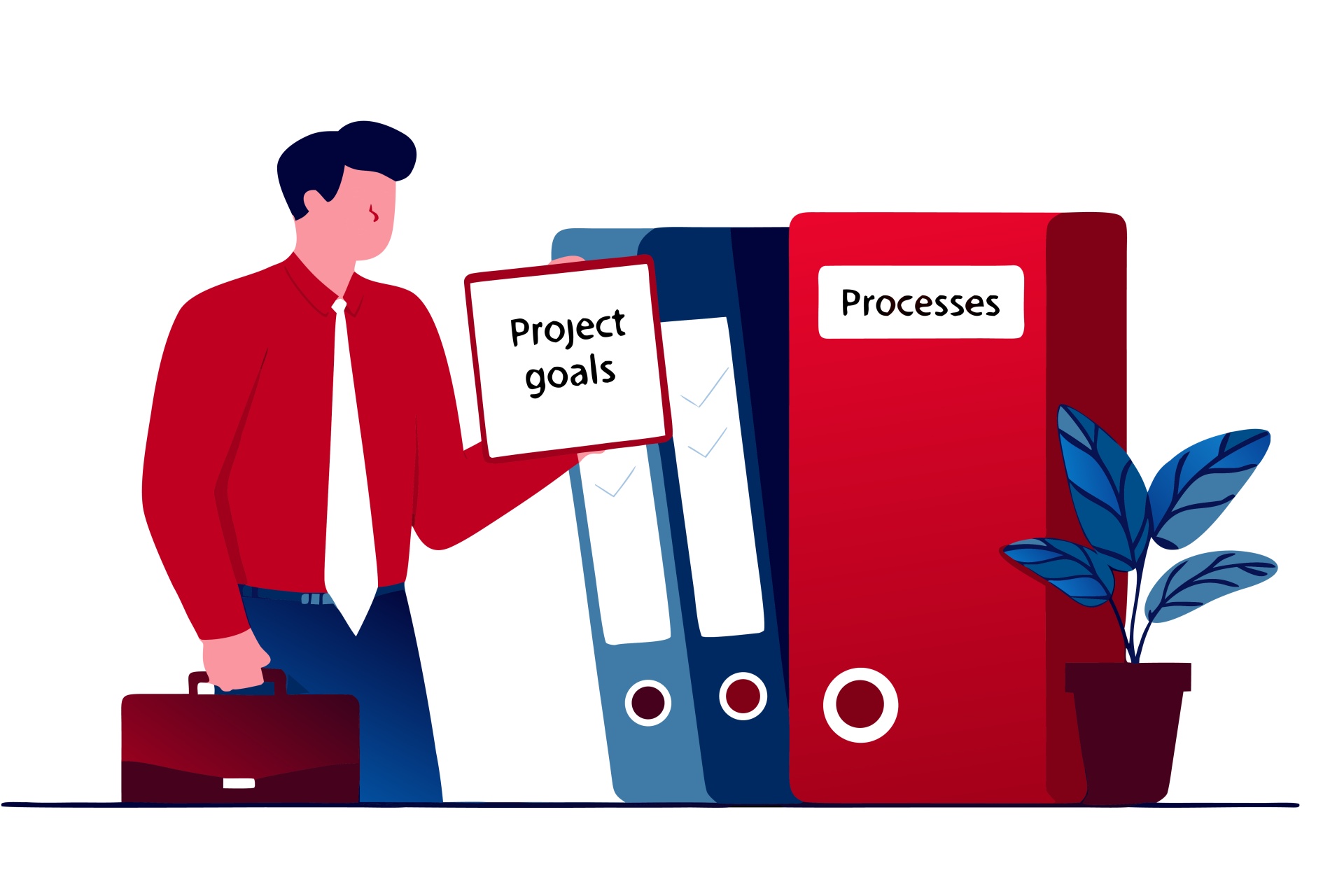
In most functional companies, procedures describe process requirements. At the same time, achieving a result (especially the result of a project based on the results of integrating the work of different functional areas) is rarely defined by such procedures as a goal. But as you know, a project is aimed at achieving a specific goal, and, accordingly, procedures should be aimed precisely at this. This situation does not negate the need to maintain the quality of processes (including operational ones), however, the methodology must explicitly indicate the importance of achieving the project's goals.
Communicating the importance of the new methodology and closely monitoring its implementation (including the use of sanctions for violations) is also critical. The fact is that often in traditionally functional organizations the project management methodology is perceived as optional in comparison with job descriptions and procedures of functional areas. Often during diagnostics of project management systems one hears: "I didn't fill out this report because I didn't have time." Or: "I didn't complete the task of the project manager because I had many urgent tasks from my functional boss." Employees identify project tasks as low priority. And if the company's management and the project manager are satisfied with this, and there are no sanctions for such an approach, then the methodology will not work in the company.
2. As a consequence - changes in the employee motivation system

Due to the above reasons (emphasis on process rather than result), most organizations do not have a motivation system tied to project results. More often, as already mentioned, motivation is tied to the quality of process execution. This situation provokes disinterest among project team members in accelerating the deadlines for its implementation, in saving the budget and, in general, in initiating ideas to improve the efficiency of its management. However, if team members are directly interested in both the successful implementation of the project as a whole and, in particular, the successful completion of its milestones, the likelihood of success will increase significantly. This is especially true for the motivation of the project manager - a key role in the new system.
3. Changes in role structures and job descriptions

In continuation of the above, we come to the conclusion that changes should affect job descriptions and role descriptions of employees (participants in project activities). Sometimes you see how the project manager's job description lacks the responsibility and authority of this employee related directly to the project. At the same time, there are many obligations related to labor protection, financial discipline, industrial safety, internal reporting, etc., which in itself is also very important, but in isolation from projects it looks ridiculous (especially for the position of a project manager). The same applies to job descriptions and role descriptions of all other team members - they must explicitly state powers and responsibilities (within the role) in relation to specific project indicators.
4. As a consequence, a change in approaches to internal audits

During diagnostics of project management systems (including megaprojects), one hears from project team members phrases like: "It is dangerous to take active steps to improve the efficiency of project management - then the auditor will come and definitely find at least minimal violations of one of the numerous instructions, and all those involved will be deprived of bonuses." Unfortunately, the auditor is often seen as a threat, as an adversary who needs to be feared and, if possible, reinsured. It is necessary to convey to both auditors and audited objects the idea that the auditor is a partner who will help correct any inaccuracies and shortcomings, and this will help increase overall efficiency. Accordingly, it is necessary to change the approach to assessing the results of audits, shifting it from a situation where it is decided whether the auditor, in fact, can ensure the withdrawal of part of the bonus of the audited object, towards a partnership to achieve common goals.
This should be followed by changes in approaches to planning, project monitoring, risk management, the structure and principles of reporting, etc. - but after a fundamental decision has been made to implement adjustments in the structure, description of processes, and motivation. Otherwise, the company will be faced with a situation where, when trying to implement modern project management tools (for example, a schedule network model), they will have minimal effect - due to the fact that the company as a whole will work in the old way.
Thus, an organization implementing or planning to implement projects must be ready for changes - not one-time, but permanent, aimed at improving management processes. In essence, projects are the cause of such changes that force organizations to be more flexible and change towards greater efficiency.