
- Home
- News
- Articles
- All Articles
- Foreign experience in project management
Construction of the Three Gorges Dam: lessons and challenges of managing a megaproject
24.06.2025

Introduction
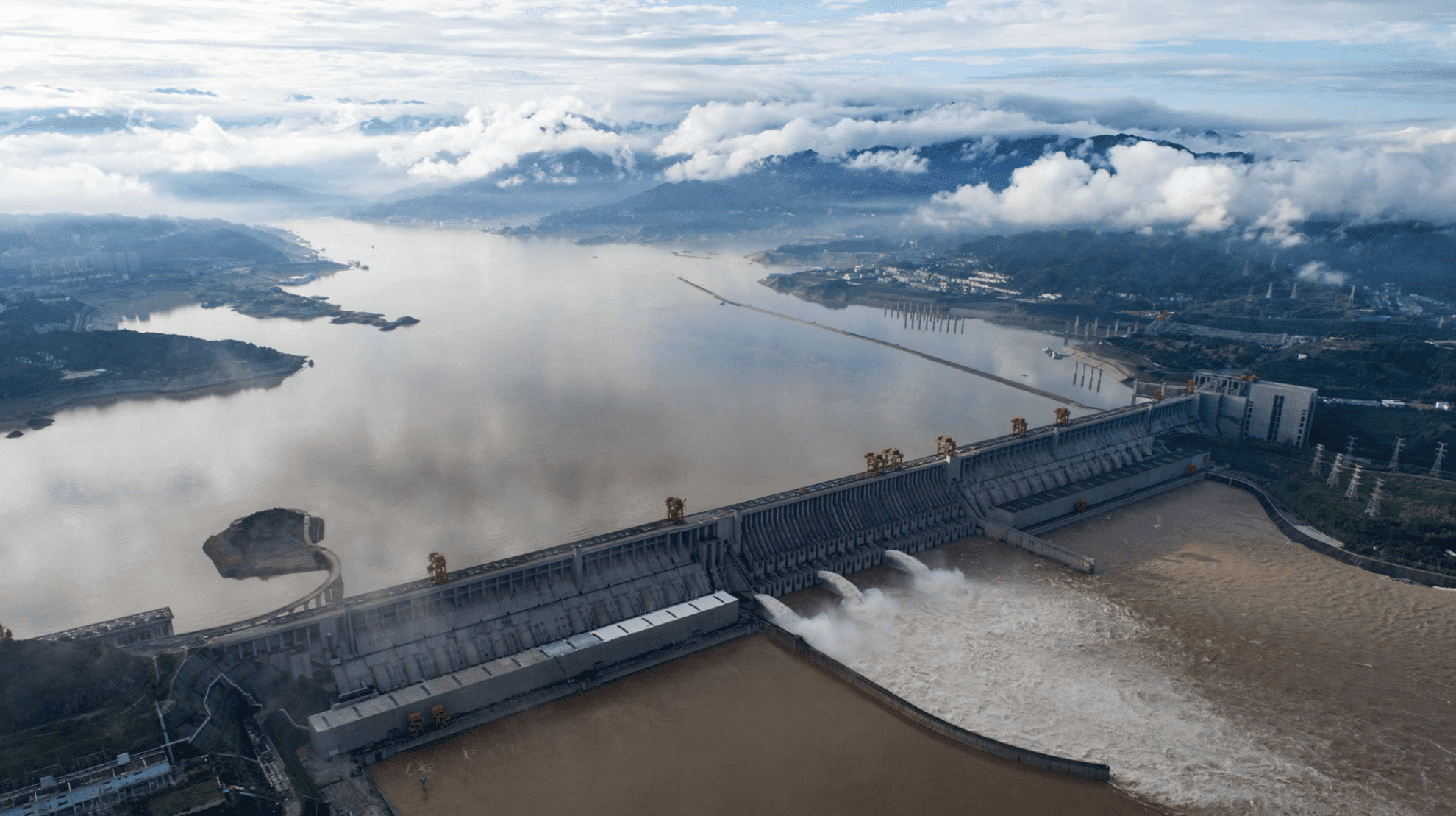
Analytical service PM Excellence has prepared an overview of the lessons and challenges of managing the Chinese megaproject - the Three Gorges Dam, a giant hydroelectric power station on the Yangtze River. In terms of power (22.5 GW), Three Gorges exceeds any other power plant on the planet. However, the implementation of this megaproject, one of the most significant in the history of China, was accompanied by enormous difficulties in the field of project management. Below, we examine the key challenges associated with managing the Three Gorges Project-from time, budget, and quality of work to risk management, stakeholder engagement, and environmental sustainability-and examine approaches to addressing them, management effectiveness, and lessons that can be learned for future megaprojects.
Key Project Management Challenges
Managing the construction of the Three Gorges Dam required an unprecedented set of challenges. The main challenges include the following:
-
Time frame and scope of work: The project was extremely lengthy and gradual. The first plans arose in the middle of the 20th century, but due to technical and political discussions, the decision was postponed for decades. After final approval in 1992, construction officially began in 1994 and continued for almost 18 years. It was necessary to plan a sequence of colossal amounts of work: the construction of temporary cofferdams to divert the river, the construction of the main concrete dam 185 m high and 2.3 km long, the installation of dozens of turbines, the construction of shipping locks and a lift, etc. Thanks to strict centralized management and division into stages, the main tasks were completed on time or even earlier. For example, partial filling of the reservoir (to 135 m) occurred already in 2003 - a year ahead of schedule, and the completion of construction of the main dam in 2006 made it possible to raise the water level to 156 m by four years earlier than the original schedule network model. By 2012, all generators were fully operational, including the installation of additional turbines beyond the original 26. However, such tight deadlines required the seamless coordination of tens of thousands of tasks and hundreds of contractors.
-
Bbudget and cost: Financial planning for the project turned out to be a serious challenge. The Chinese government initially lowered the estimate to gain approval: in 1992, the National People's Congress approved a budget of 57 billion yuan (about $8.3 billion) for the entire project, including construction of the dam, resettlement of residents and laying of power lines. This figure was unrealistically low - soon the budget was revised almost twice (to 90 billion yuan) for construction alone, excluding costs for the electrical grid. As the work progressed, the cost steadily increased. By the end of 2008, it had already officially been spent 180 billion yuan (more than 26 billion dollars, 3 times more than in the first planning) - more than three times higher than the original estimate. According to the authorities, the project met this revised amount ($27 billion), but independent experts note that many associated costs were not taken into account.
Taking into account investments in the surrounding infrastructure, interest on loans and other external costs, the total cost of the project can reach 70-88 billion dollars (8-11 times more than in the first schedule network model). Moreover, after construction was completed, the government had to set aside an additional 124 billion yuan ($18 billion) to eliminate unforeseen consequences - geological and environmental problems that arose as a result of the dam's operation. Thus, cost management became a major challenge: design required constant balancing between ambitious goals and real financial risks, and insufficient budget development at the initiation stage led to significant cost overruns.
-
Quality and technical complexity: Building the world's largest dam is an engineering challenge of the highest complexity. It was necessary to ensure the reliability of the structure under any load, because the dam must withstand both multimillion-dollar water pressure and extreme natural influences (for example, strong earthquakes or catastrophic floods, which have happened more than once on the Yangtze). Quality management included strict control of construction work, materials and technologies: approximately 27 million m³ of concrete special composition and hundreds of thousands of tons of reinforcement, built sealed walls to prevent filtration - leakage of water from the reservoir through the base of the dam (231 thousand m² of anti-filtration diaphragms).
The best engineering forces in China were involved in the project, as well as international companies to supply turbines and electrical equipment (for example, ABB, Alstom, Voith/Siemens participated in the contract for the supply of generators). However, the scale of innovation carried the risk of technological problems. Reports indicate that the project faced technical difficulties, which had to be solved on the fly. For example, there were cracks and deformations in individual sections, difficulties with the operation of shipping locks, the need to improve water discharge systems, etc. Each such problem could affect the shift in schedules and safety, so quality management required constant monitoring, testing and adjustments.
Ultimately, from an engineering point of view, the project is considered a success - the dam is recognized structurally sound and safe: according to measurements, it deflected under load by only a few millimeters, which is within the normal range. This indicates a high level of quality in design and construction.
-
Risk management: The Three Gorges Project poses many risks, both traditional for the construction of large dams and unique due to its scale. The risks were known from the very beginning: geological (the dam was built in a tectonic fault zone, there is a risk of seismic activity), hydrological (extreme floods can cause the reservoir to overflow), construction (accidents during the construction of such a grandiose structure), as well as financial and social risks. Project management planned and monitored many of them. For example, to combat floods during construction, a temporary bypass canal and dam were erected, which made it possible to safely divert the river flow and work "dry". The dam is designed to withstand an earthquake of magnitude 7.0-8.0, thanks to built-in safety margins and quality control.
-
However, a number of serious risks were not fully foreseen or were underestimated at the initial planning stage. Soon after the reservoir was filled, they discovered landslides and coastal erosion: Fluctuations in water level (from 145 m during the water withdrawal season to 175 m during the water storage season) destabilized the slopes of the Yangtze Valley. During the first months after the water level rose, more than 150 geological collapses in the coastal zone. About 178 km of coastline were at risk of collapse, although the developers did not plan for such a large-scale problem. Eliminating this threat required emergency, expensive measures - strengthening slopes, creating monitoring systems, and even re-relocating tens (and potentially hundreds) of thousands of residents from dangerous zones.
In addition, the phenomenon emerged induced seismicity: The accumulation of a huge mass of water caused hundreds of small earthquakes in the region. Although the dam itself is designed to withstand tremors, the surrounding communities are vulnerable to such events. Also revealed environmental risks (pollution, fish kills, algal bloom outbreaks - more on them below). Risk management during project implementation became a continuous process: the project team was forced to respond to unforeseen circumstances by adjusting plans. For example, in 2009, authorities delayed raising water levels to a maximum of 175 m when faced with severe drought downstream and bank instability. Instead, priority was given to protecting the population and ecosystem. This case showed the need for flexibility and monitoring: even after the formal completion of construction, the project entered the phase of active risk management.
-
Ecology and sustainable development (Sustainability & Environment): The environmental aspects of the Three Gorges project have become the subject of the most heated debate. On the one hand, the dam was supposed to bring environmental benefits benefits on a global scale - annually generating tens of terawatt-hours of renewable electricity, it made it possible to stop burning ~30 million tons of coal per year, reducing emissions of greenhouse gases and pollutants. The dam also improves flood protection: the huge reservoir can store flood waters, reducing the risk of catastrophic spills like those that killed hundreds of thousands in the 20th century.
On the other hand, the transformation of a living river into a giant standing reservoir caused irreversible environmental changes. The natural river flow has ceased, sediment is now settling in the reservoir, which has led to the "starvation" of the lower reaches of the river - the banks and delta of the river began to collapse due to a lack of sediment material. Every year up to 4 km² of valuable coastal wetlands in the Yangtze Delta region. Coastal erosion has accelerated, allowing salty seawater to penetrate upstream, degrading freshwater quality and affecting agriculture. Scientists have noted a sharp decline in fisheries resources in the river and adjacent marine areas; several species, including the Chinese river sturgeon (sturgeon can no longer migrate across the dammed river), have become endangered. In the reservoir itself, due to the slow flow and flooding of cities/enterprises, the water quality has deteriorated: tons of household and industrial waste have accumulated, which has led to frequent outbreaks toxic algae overgrowth on the surface. In fact, according to environmentalists, the new reservoir has turned into a "sewage ditch"; the concentration of pollutants in it has increased. All these aspects show how important it is to take into account the environmental component when managing a megaproject from the very beginning and throughout its life cycle.
Thus, the Three Gorges project presented the management team with a number of complex tasks covering all classical aspects triangle project (time, cost, quality/content) and beyond (social, environmental and political issues). The scale of the problems - from technical to humanitarian - made this project one of the most difficult from a management point of view.
Lessons from the Three Gorges Project for Future Megaprojects
The Three Gorges Dam experience is a primer on megaproject management, containing both outstanding achievements and cautionary tales. Here are some key lessons and conclusions useful for future large-scale projects around the world:
-
Careful and realistic planning. It is extremely important at the initiation and planning stage to adequately assess the scope of the project, timing and budgets. In the case of Three Gorges, the initial underestimation of the cost and complexity of resettlement led to the need for a subsequent increase in the estimate by tens of billions and improvisation in the process. Lesson: you cannot sacrifice realism for the sake of the political situation - it is better to immediately make reserves in time and money, and plan for negative scenarios. Using stage gates is correct, but at each "gate" it is necessary to conduct a comprehensive analysis of what has been achieved and update forecasts for the future, including possible risks.
-
Balance between timing, cost and quality. China has been able to demonstrate that with sufficient funding and mobilization of resources, even a gigantic project can be completed on time. This is an inspiring example for managers: strict control and discipline can curb even a megaproject. However, the race for deadlines or savings should not be allowed to worsen other indicators. In this project, the acceleration of the schedule network schedule was partly due to a lack of time for environmental measures (for example, they did not have time to remove all the garbage from the flood zone). As a result, the gain in time led to subsequent cleanup costs. Lesson: Targets must be balanced-in the quest to deliver a contract on time and on budget, quality (in every sense) must not be overlooked.
-
Effective stakeholder management and transparency. Perhaps the main non-technical lesson of Three Gorges is the price to be paid when stakeholder views are not sufficiently taken into account. A million displaced people mean a million human destinies. There are examples in world practice where resettlement can be carried out relatively painlessly if people are provided with equal or better living conditions in a new place and are involved in resettlement planning (for example, World Bank resettlement projects contain such components
-
An integrated approach to project sustainability. Megaprojects are now assessed not only by short-term results, but also by long-term impact - economic, environmental, social. The dam gave China a lot of electricity and reduced emissions, but created new risks (landslides, pollution) and damaged biodiversity. When planning future hydropower (and other infrastructure) megaprojects, it is necessary to include measures for sustainable development: environmental compensation (for example, the creation of nature reserves to replace lost territories), natural resource restoration programs, ecosystem monitoring, adaptive management - flexible operation management taking into account the environment. The principle of sustainability must be part of the project's objectives. Then the project manager will track sustainability indicators along with budget and deadline indicators.
-
The Importance of Political Support and Governance. Of course, such a project could only be implemented with the full support of the state. For future major infrastructure projects, the lesson is that institutional support and stable policies are essential conditions for success. China even created a special commission under the State Council to oversee the Three Gorges. Likewise, other countries should consider government guarantee mechanisms, inter-agency cooperation, and perhaps independent review boards when planning megaprojects. It is also important to have a mechanism for external audit of the project to increase public confidence. In the case of the Chinese dam, alas, there was no such audit - all reporting was departmental, which gave rise to suspicions of embellishing the results. Lesson: Independent oversight (such as hiring a professional PMC contractor) can help identify problems early and recommend solutions, rather than presenting management with a fait accompli.
-
Megaproject as a source of knowledge. Projects like Three Gorges show the limits of what is possible and the areas of risk. In this case, the world community learned a lesson about the permissibility of building large dams. Thanks in part to the Yangtze experience, many countries have reconsidered their plans for reckless construction of giant hydroelectric power plants. The World Commission on Dams (WCD) in its 2000 report cited the Three Gorges as an example of how large dams have hidden costs and that decisions must be made in a transparent, participatory manner. Each megaproject must be documented and analyzed so that subsequent projects run more smoothly. China has become more cautious after the Three Gorges: a number of megadams planned in the 2000s (on the Nujiang River, etc.) were temporarily suspended or revised after a wave of criticism. This shows that lessons have been learned.
As a result, the construction of the Three Gorges Dam became an outstanding example of how successes and problems go hand in hand in managing megaprojects. On the one hand, the project proved that with proper organization it is possible to implement a grandiose plan, which at first seemed like a utopia. On the other hand, he recalls that the cost of a mistake in a megaproject is also mega-high. Today's project managers may be inspired by the technical triumph of the Three Gorges, but they must also consider the pitfalls to ensure their own projects benefit people and the planet to the fullest extent possible, rather than creating problems for the future.
Sources and literature:
-
International rivers. Three Gorges Dam: Electricity Cost (Fact Sheet) URL: riverresourcehub.orgriverresourcehub.org. - (Scale, cost and construction stages).
-
Reuters. China admits Three Gorges Dam caused social and environmental problems URL: reuters.comreuters.com (2019). - (On the recognition by the PRC government of problems and additional costs).
-
Probe International. How Beijing explains the cost of the Three Gorges Dam URL: journal.probeinternational.orgjournal.probeinternational.org (2009). - (Budget growth from 57 to 180 billion yuan, corruption and hidden costs).
-
Asia Pacific Journal (Peter Bochard). Lessons from China's Three Gorges Dam URL: apjjf.orgapjjf.org (2009). - (Analysis of results: ahead of schedule, cost disagreements, 1.24 million displaced, environmental problems).
-
Scientific American (M. Hvistendahl). Three Gorges Dam in China: an environmental disaster? URL: scientificamerican.comscientificamerican.com (2008). - (Warnings from scientists, recognition of "hidden dangers," data on resettlement and compensation).
-
American University. Impact of the Three Gorges Project in China URL: american.eduamerican.edu (2010). - (Statistics: 1.3 million displaced, 13 cities and 1350 villages flooded, volumes of materials, capacity 22.5 GW).
-
Probe International/CTV. Construction of the Three Gorges Dam is nearing completion URL: journal.probeinternational.orgjournal.probeinternational.org (2006). - (Facts: 13 years of construction, 25 thousand workers, cost 25+ billion dollars, 26 turbines, reservoir length 660 km).
-
AquaPedia Case Study - Tufts University. Three Gorges Hydroelectric Power Plant URL: aquapedia.waterdiplomacy.orgaquapedia.waterdiplomacy.org. - (Design history, international responses, main dates).
-
Xinhua News Agency, China Daily (translation in sources No. 3, No. 4, No. 6). - (Official Chinese government data used in materials cited).
-
Engineering News-Record, Project Management Journal, etc. - (General information about typical cost overruns and delays in megaprojects for comparison).