
Missing deadlines for large-scale projects - who is to blame and what to do?

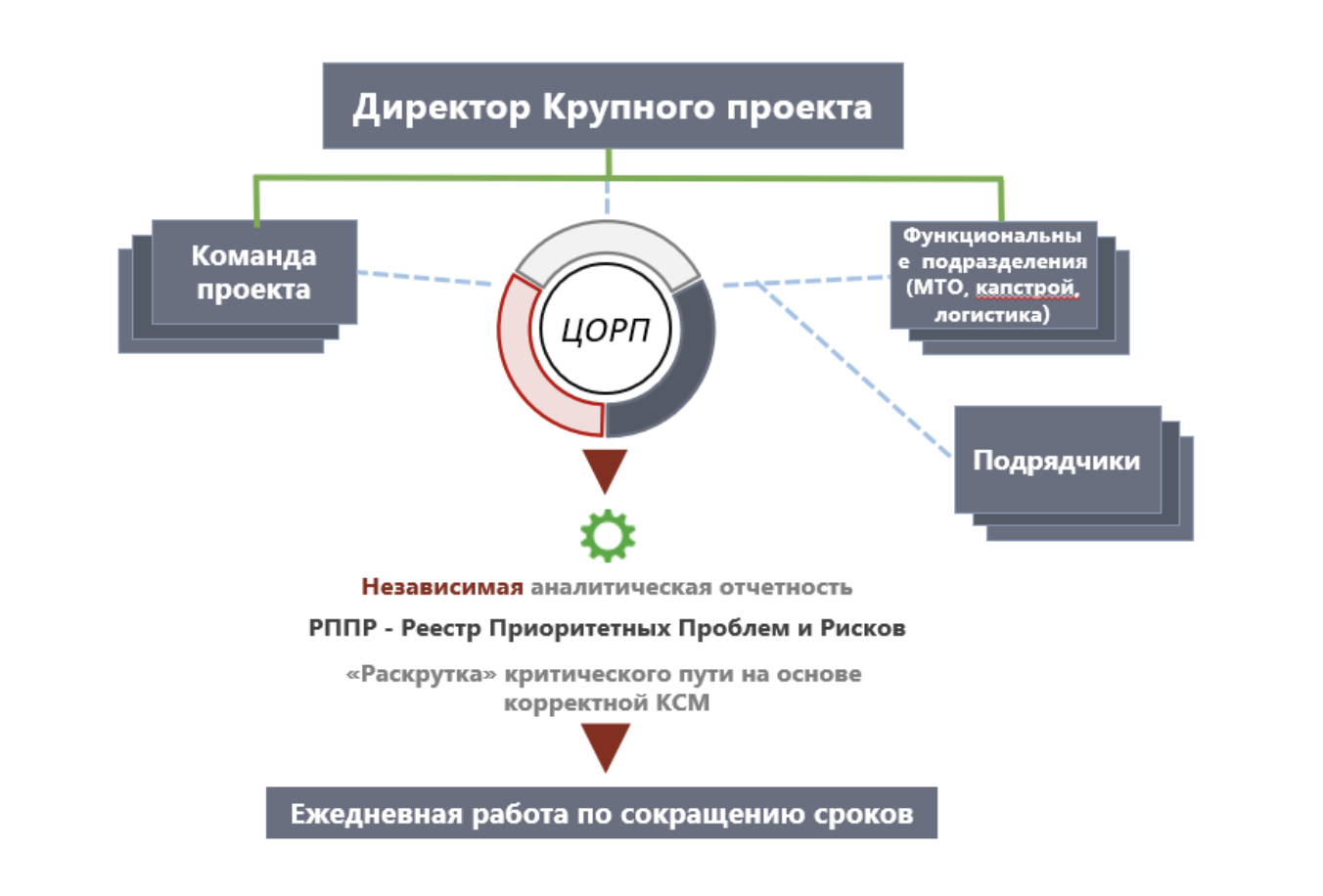
Missing deadlines is one of the critical moments in the implementation of large and megaprojects. According to our statistics, more than half of large-scale projects are implemented with significant deviations from temporary plans - more than 1 year. At the same time, the damage from shifting deadlines is, as a rule, several tens of millions of rubles per day. The scale of the problem and the accompanying losses are difficult to overestimate.
Why deadlines are missed
Managing large-scale projects and meeting deadlines is an objectively challenging task at all levels. Problems with it arise not only in Russian, but also in international practice.
As a rule, dozens of contractors are involved in a project, whose work is closely interrelated. Look at the example.
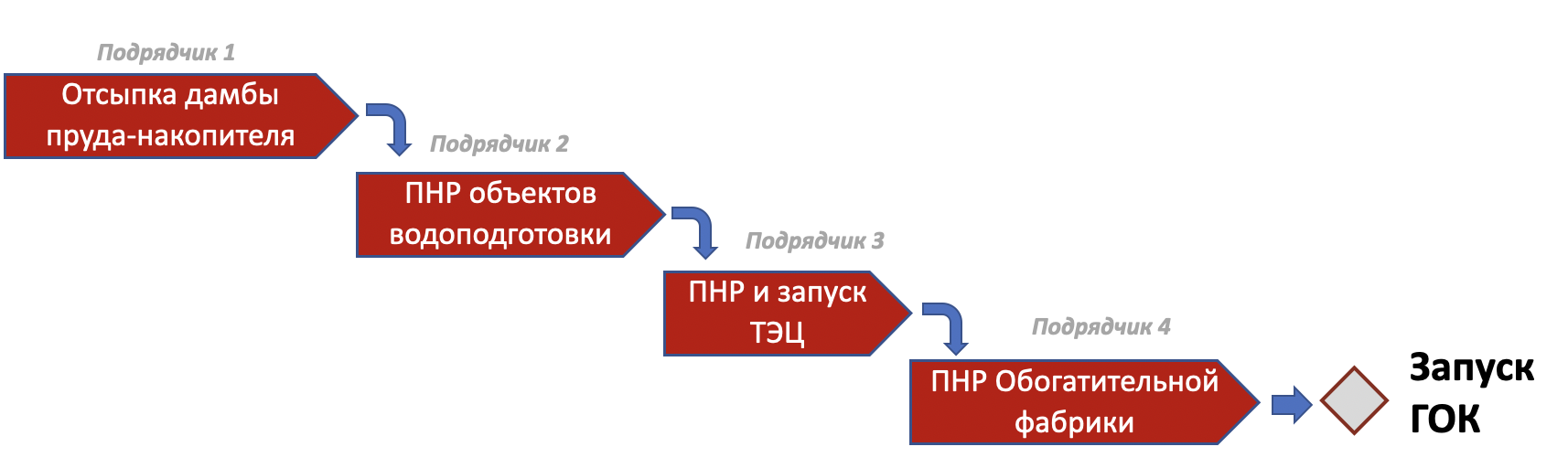
The picture shows the chain of work:
- The first contractor must fill the dam to block the stream bed and form a storage pond from which water will be drawn for process water supply needs.
- Until the storage pond is formed, the second contractor will not be able to carry out commissioning and launch of water treatment facilities.
- Until the water treatment facilities are put into operation, the third contractor will not be able to carry out commissioning work and put the thermal power plant into operation.
- Until the thermal power plant is put into operation, the fourth contractor will not be able to carry out commissioning of the enrichment plant.
In the example given, there is only one chain and three relationships. To understand the number of relationships in a large-scale project, consider an example of one construction project. Finishing can only be done after installation of the equipment. Installation of equipment is possible after completion of general construction work. To perform general construction work, working documentation (DD) is required, the initial data for which is the design documentation for the equipment. To obtain design documentation for equipment, it is necessary to hold a tender and select a supplier. The starting points for the tender are the questionnaires and technical requirements included in the design documentation of the "PD" stage.
In large-scale projects, the number of such chains and relationships is usually in the thousands. At the same time, at the initial stage of the project, there are no initial data for detailed planning, and the composition of the work and the sequence of their implementation during the project can change many times, which will require regular and prompt replanning.
In addition to objective difficulties, there is also the "human factor": the larger the structure, the more often responsibility is transferred between units, departments, and employees. And the management structure megaproject by definition, it cannot be small. Therefore, information in a project does not always circulate quickly and is objective - each project participant strives to present information to management in a light favorable to themselves.
As a result, decision-makers often simply do not know what is happening "on the ground": there is no understanding of the overall picture of the project, the real reasons for delays and objective forecasts for deadlines. In such a situation, it is almost impossible to set priorities and promptly make the necessary management decisions. Therefore, it is necessary, first of all, to work on project transparency and identifying critical issues.
Steps to meeting deadlines
Let's consider a method for optimizing deadlines, consisting of three main steps. They have already proven their effectiveness in a number of projects.
- Step 1. Formation of an integrated schedule network model (fair schedule)
It is almost impossible to effectively manage the timing of a large-scale project based on several dozen disparate schedules of contractors - this requires an integrated schedule network model (CNM), which includes the entire scope of work on the project (including work that has not yet been contracted) and reflects the relationships between different contractors. Information about the status of the CSM project implementation will be available to the entire project team.
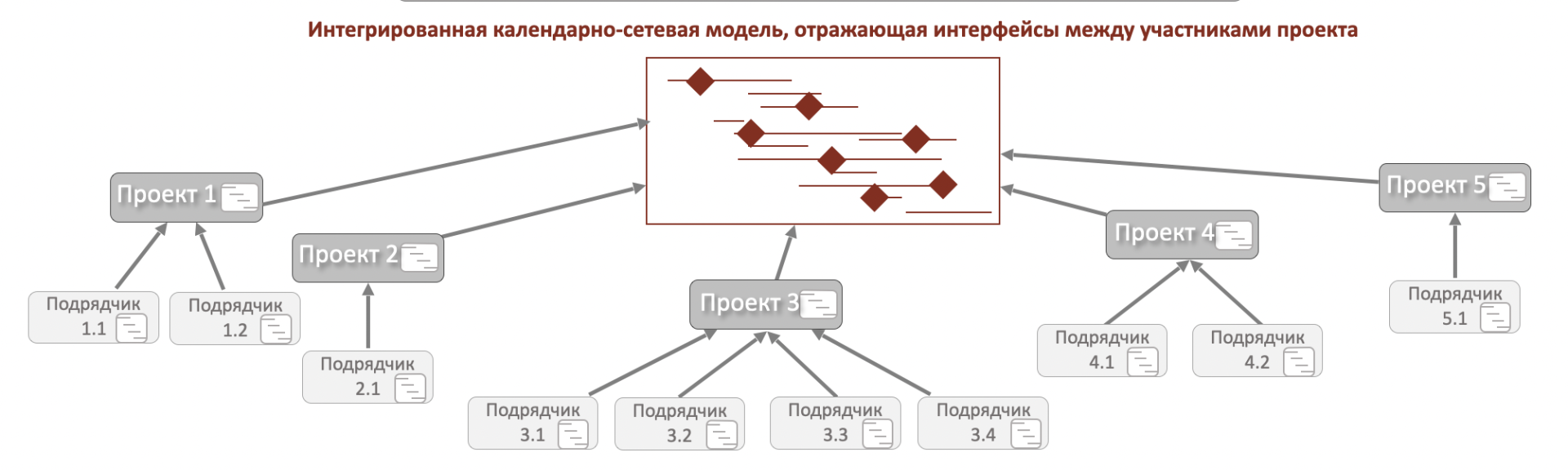
The schedule network modeling technique implies that the start and end date of each work and the duration of the project as a whole are calculated automatically, based on the duration of the work and the logical sequence of their implementation. It is precisely calculated, which is why the term "fair schedule" has also become entrenched in the practice of many projects. You can read more about schedule network models in article.
This is where conflict often occurs. Classic project management methodology says that project deadlines are determined based on the KSM using the critical path method. In practice, project deadlines are set prescriptively at the very beginning of the project, long before the schedule network model is formed. Experience shows that in 100% of large-scale projects, deadlines are set before the schedule is drawn up; in 70% of cases, calculation of deadlines through KSM shows deviations from the target deadlines. In the presence of directive restrictions, the classical critical path method does not work well, so we have formed the technology of "unwinding critical chains."
-
Step 2. Identify critical issues that lead to missed deadlines
The method of unwinding critical chains implies that:
- directive restrictions on the project completion date are included in the CCM;
- Based on time constraints, negative reserves arise in the schedule and critical chains of work are identified.
At the same time, the value of the negative reserve shows how much the chain of certain works shifts the target deadline of the project, and until the optimization of the chain with the greatest deviation from the plan is carried out, it is pointless to optimize the timing of the remaining works.
Example. The image below shows two critical work chains.
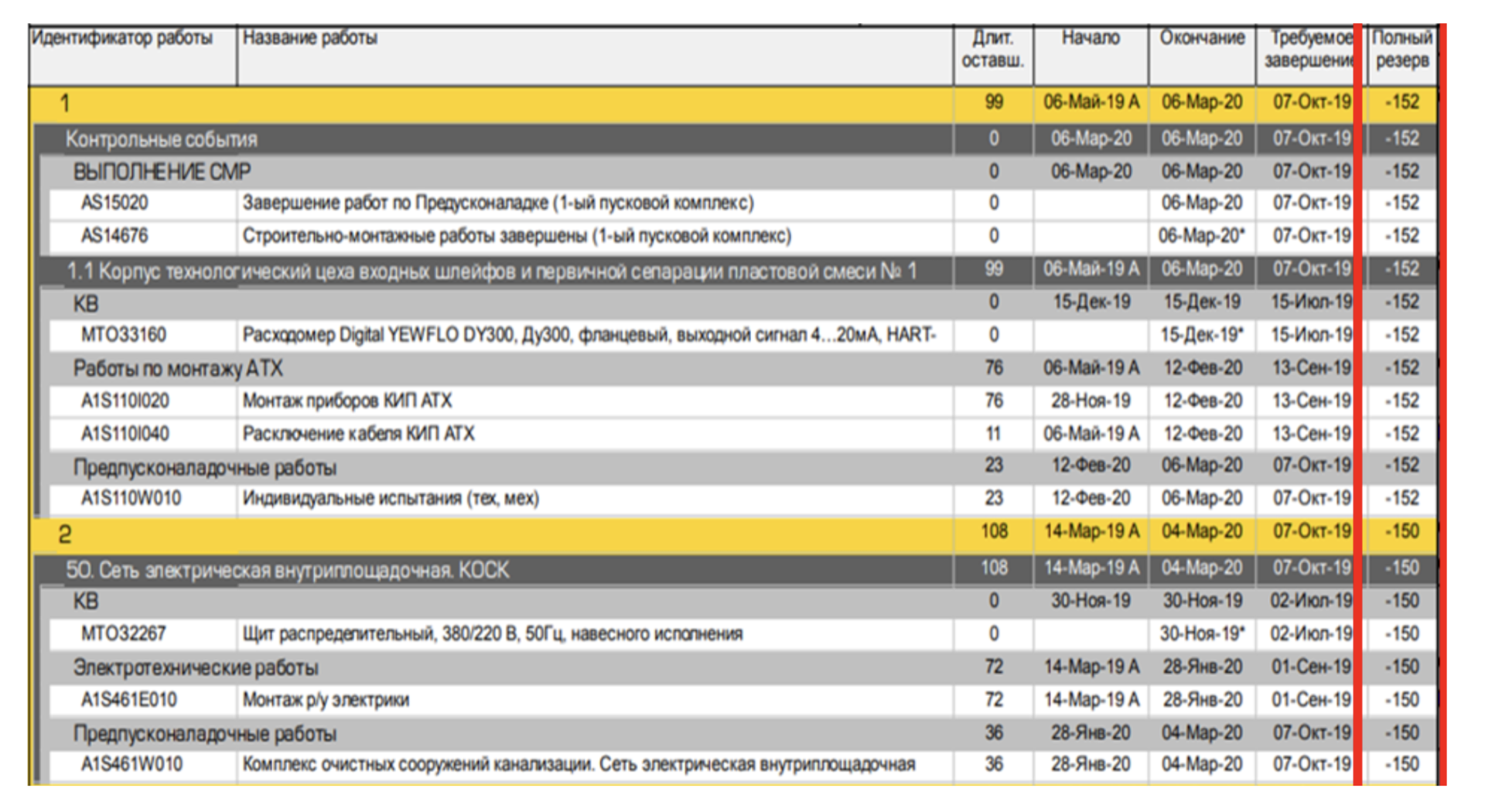
The analysis shows that the project timing is determined by chain No. 1. The negative float of this critical chain is minus 152 days. One of the works in chain No. 1 is the supply of equipment "Digital YEWFLO DY300 Flow Meter" - the expected delivery date for it is December 15, 2019. If the delivery of the flow meter or the subsequent construction and commissioning works are not optimized, the project will be delayed by 152 days and will only be completed on March 6, 2020, with a target date of October 7, 2019.
To eliminate the impact of chain #1 on the project timeline, the flow meter must be delivered no later than July 15, 2019 (see the "required completion" column). In this case, the project deadlines will be determined by critical chain No. 2 with a negative reserve minus 150 days.
- Step 3. Developing solutions to optimize deadlines
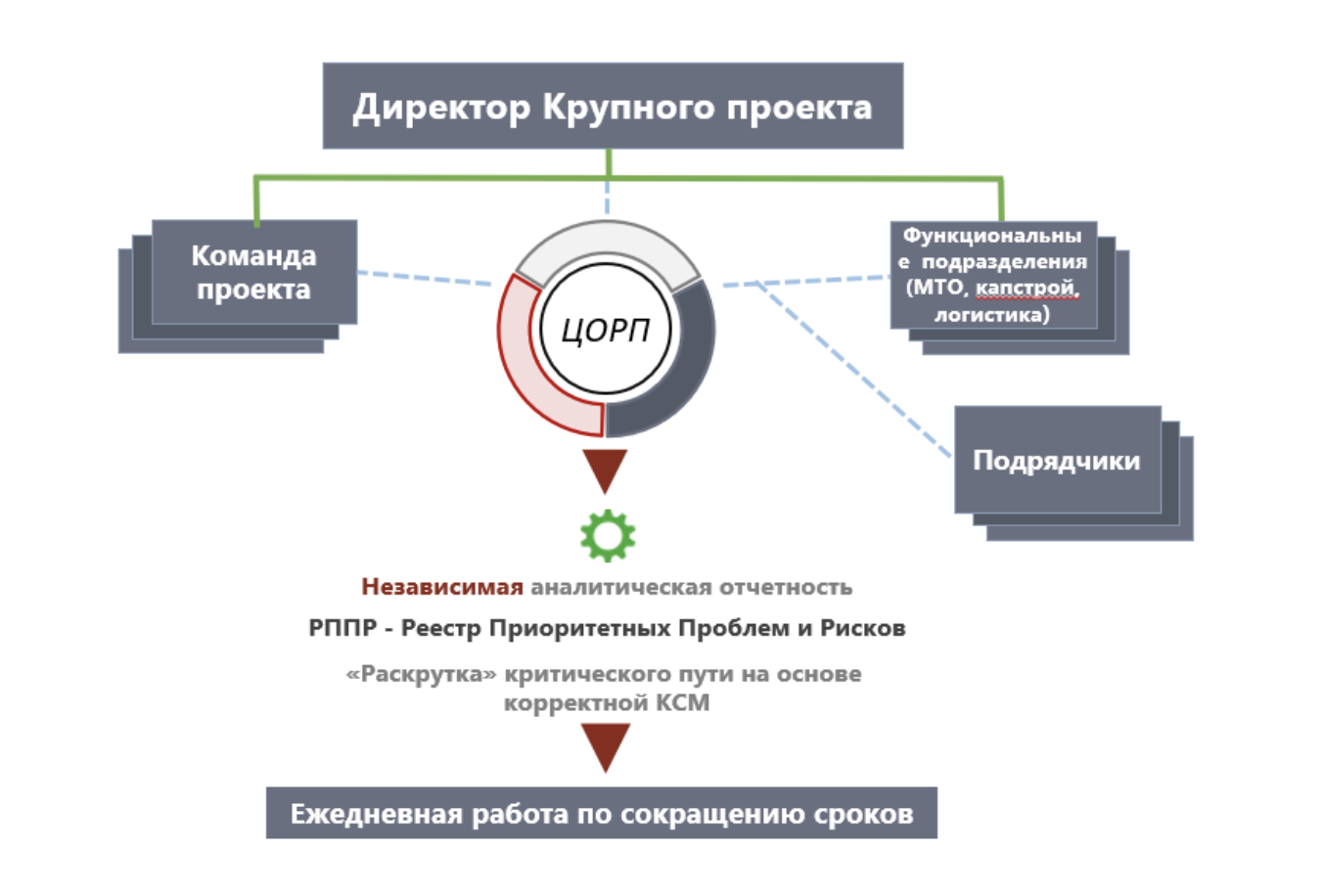
To optimize project timelines, it is necessary to consistently consider critical chains of work as their negative reserves decrease and develop compensatory measures for each chain. This requires collegial discussion - something that almost everyone has problems with. In our practice, we have developed a separate meeting format - the Rapid Response and Forecasting Center (RTC).
How does it work? The holding of a meeting of the PIOR provides for the following rules:
- Work meetings are attended by employees/specialists/managers responsible for work located on critical chains.
- The meeting is held with the participation of the head of the organization.
- The agenda includes only issues of considering critical chains and developing compensatory measures. Duration: no more than 30 minutes.
- All decisions are recorded, and a person responsible is assigned for each of the compensating measures. The implementation of decisions is then monitored.
Examples of solutions for optimizing deadlines from the practice of PM Excellence.
- Formation of a list of priority supplies for navigation
Many large-scale projects in our country are characterized by complex logistics. For example, when developing an oil and gas field in Yakutia, delivery of materials was possible only in the summer, during navigation along the Lena River. At the same time, the maximum supply volumes per season are significantly limited. In this regard, a key planning task was to determine the priority items of materials and equipment that need to be delivered to the site first. In solving this problem, they relied on KSM data, in which supply work and construction schedules, and "promotion of critical chains" were interconnected. Below is an example of a report based on the results of such an analysis.
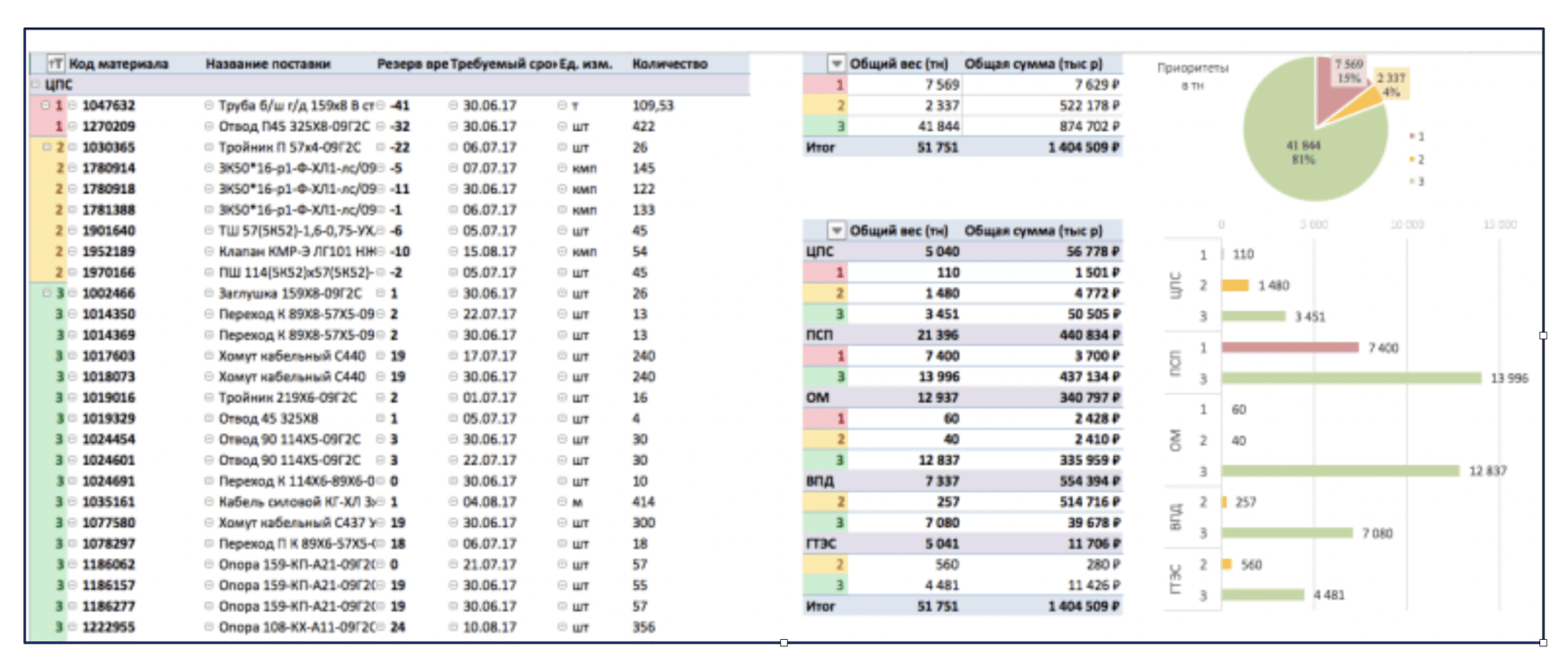
In this report, all deliveries are classified based on the reserve of the corresponding work in the KSM. Group 1 (highlighted in red) includes the most critical positions. They make up 15% of the total supply.
- Setting deadlines at the contracting stage
When planning long-term, there are sometimes works on the critical chain for which contracts have not yet been concluded, and their duration was estimated based on analogous objects. In these cases, based on the KSM data, it is possible to determine the required duration of work by the contractor. These deadlines are included in the tender documentation and then become regulatory deadlines under the contract with the contractor.
- Prioritization of construction contractor's work
KSM helps determine the priorities of work within the framework of the construction contractor's contract. For example, there is an excavation contractor. He works at a unit rate (N rubles per cubic meter) and it does not matter to him which object is poured. In this case, the required readiness times for each site and each road section are determined from the general CMS. Based on this, the contractor is given target dates and operational assignments are issued.
- Contracting based on the "PD" stage
In general, the initial data for contracting the construction and installation work contractor are the estimates as part of the working documentation (DD). When the CSM shows that the late development of the DD, taking into account the subsequent chain of work, will not ensure the overall project timeframe, a decision may be made to award a contract based on the preliminary design (PD stage). In the future, this decision will lead to almost guaranteed problems with the administration of the contract (the scope of work will most likely change after the development of documentation for the RD stage, which will require the conclusion of additional agreements and create difficulties in accepting the contractor's work). But when it comes to work lying on the critical path, the lesser of two evils is chosen - and in the case of large-scale projects, 1 day of missed deadlines leads to losses of 20-50 million rubles.
The use of such technology is not a panacea and does not provide a 100% guarantee that the project will be implemented on time. When working on projects, there are always many circumstances and factors that affect the implementation timeline, and not all of them can be controlled. Nevertheless, this technique can significantly reduce the risk of missing deadlines, and the effect of its application is hundreds of times greater than the cost of its implementation.