
Underground megaprojects
05.02.2026

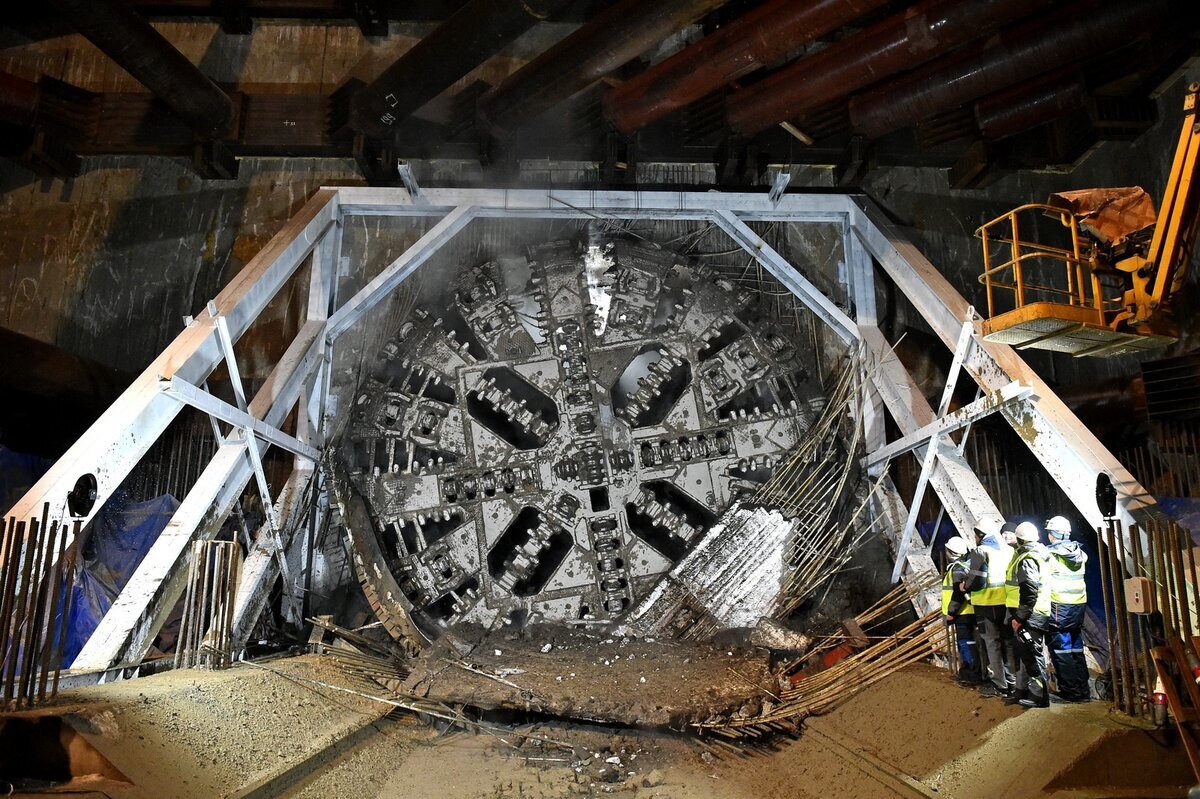
Now this is difficult to imagine. Over the past ninety years since the publication of the novel, people have made significant progress in the urbanization of the underground economy. In many countries and cities (and Moscow is no exception), you and I touch, use, and can participate in the development of grandiose underground megaprojects. Sometimes it's worth thinking about it.
Norway
In 2015, I traveled by car in Norway. In first place among the impressions is the amazing underground Norway. A huge number of tunnels, using which there is an illusion of "piercing" not only space, but also time. You enter a tunnel at the end of a street with green leaves, and jump out of the tunnel in a place with meter-long snowdrifts.
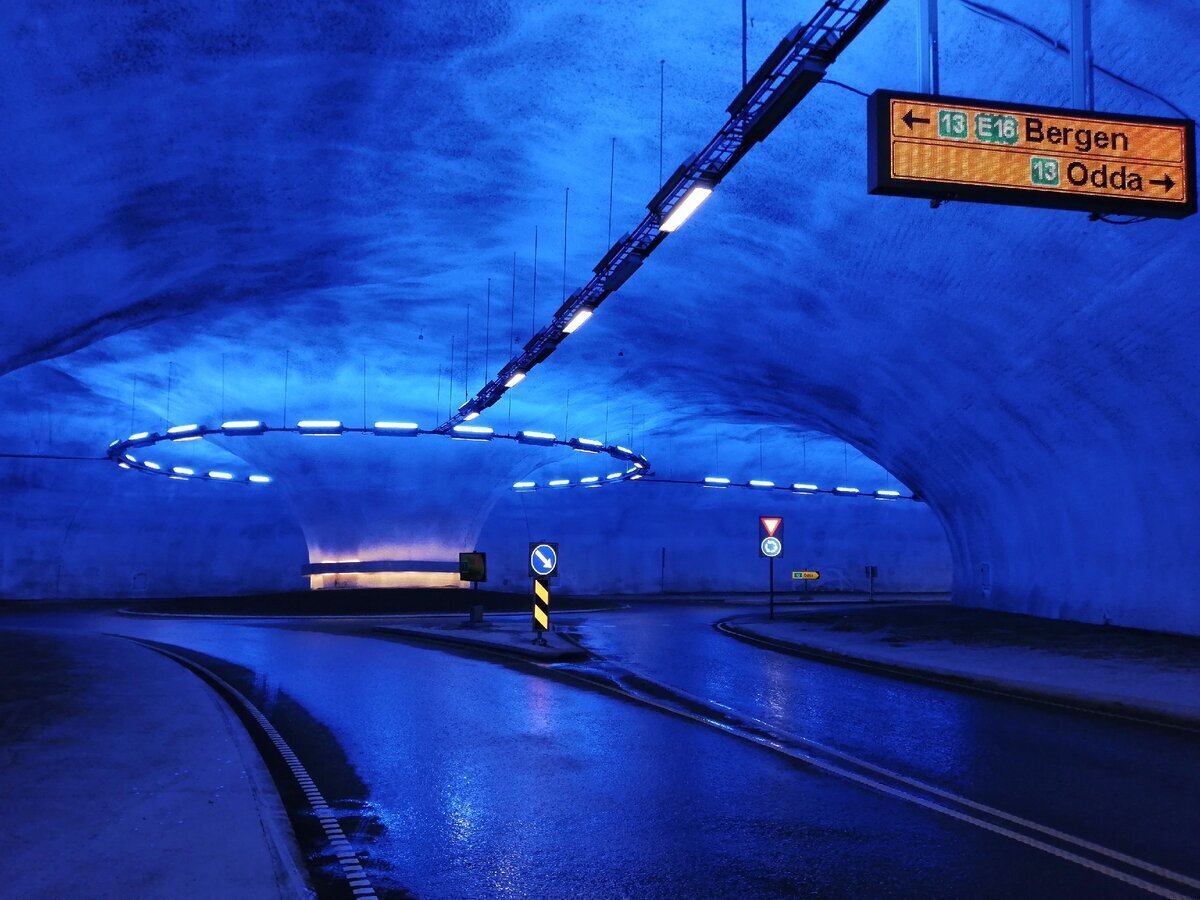
Fig.1 Underground interchange. On the left is the road to Bergen, on the right is to Odda
Inside the tunnels there are roundabouts and entire underground transport palaces with intersections and garages for storing equipment in the winter. With interesting lighting.
As of 2023, more than 1,200 road tunnels have been built in Norway, their number is growing every year, and the total length exceeds 5 thousand kilometers. One of the longest tunnels in the country is Lerdalsky, its length is 24.51 kilometers.
Saying goodbye to Norway, you board the Aeroexpress, it dives into a tunnel and emerges at the Norwegian airport. Such things!
Moscow
But "Moscowites have their own pride" and Moscow has made tremendous strides in underground infrastructure in recent years. The Moscow metro occupies a leading position in the world in terms of the pace of construction. Over the past 15 years, the number of its stations has grown almost 1.7 times, new lines have been built and existing lines have been extended, and the Big Circle Line has appeared.
Such rates became possible thanks to the development of technology and the use of modern tunneling shields. The tunneling shield is an underground plant weighing more than 150 tons, which, like a giant salamander, gnaws through the soil and leaves behind a finished microtunnel.
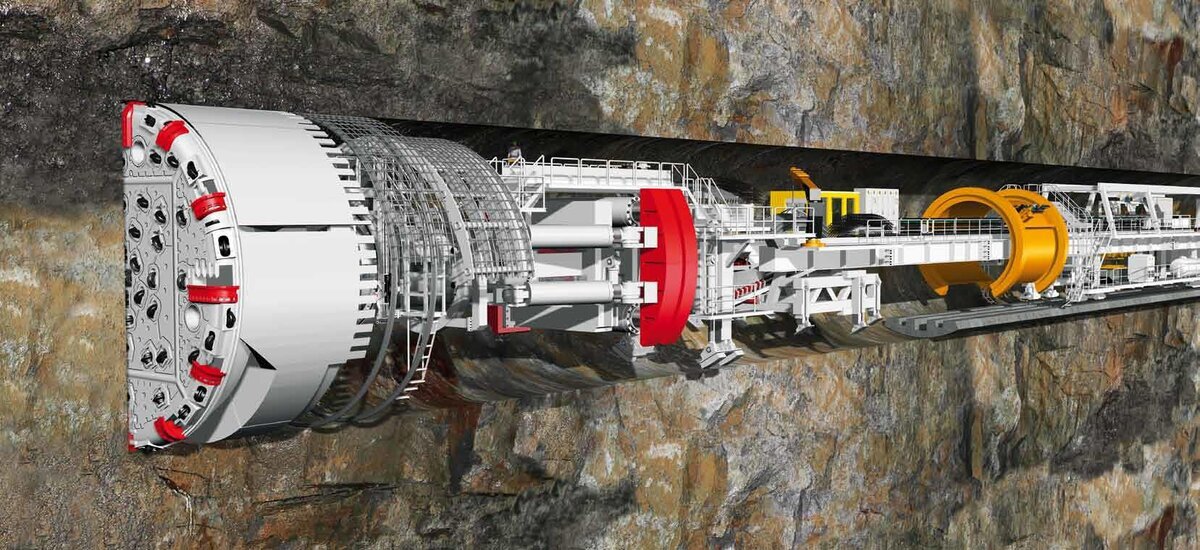
Fig. 2 Modern tunneling shield
By the way, the technology that underlies the modern shield design was patented in 1818. Unlike the 1818 shield, where workers manually selected the soil, the modern shield, like a hybrid of a drill and a meat grinder, "drills" its way. A giant metal rotor with cutters "drills" the soil, feeding it onto a conveyor located behind the shield. Afterwards the soil is transported by trolleys to the surface. Behind the "head" of this "salamander", biting into the layers of the earth, in addition to the conveyor, there is a whole workshop that immediately erects the vaults and finishing of the tunnel in order to prevent collapse.
Modern shields can work in conditions of water-saturated soil and, having a protected front compartment, will prevent water from entering the face if the miners accidentally stumble upon an aquifer.
The speed of such a shield is about 10 meters per day. But the speed is compensated by the number of such machines. For example, during the construction of the second stage of the metro in Moscow, 42 switchboards were working simultaneously. Therefore, Moscow today is a labyrinth of underground infrastructure.
The construction process of metro stations in Moscow consists of six stages.
- The first stage is design, which involves an open or more often closed method of construction, depending on the nearby infrastructure and communications.
- The second stage in the case of a closed method involves laying a mine shaft, along which builders descend in an elevator, deliver equipment and materials, and lift tens of tons of soil formed during the work to the surface. As a rule, top-down technology is used, which involves construction not from the bottom of the pit, but, on the contrary, from top to bottom. This technique minimizes the impact of construction on the area, since the development site remains compact. This is exactly how the cross-platform Nizhegorodskaya station of the Nekrasovskaya and Big Circle Lines (BKL) was built, which is located in dense buildings next to the overpass on Ryazansky Prospekt.
- At the third stage, tunneling of the future line begins from a specially created installation chamber using tunneling shields. Shields are called by women's names: this world tradition is associated with the name of the patroness of all miners and miners - Saint Barbara. So, when creating a double-track tunnel on the western section of the Big Circle Line, the crew of the Lilia shield (the first giant shield to build double-track tunnels in the Moscow Metro) set a record for the speed of work - 500 linear meters per month.
Tunneling is invariably located on the critical path of megaproject implementation and requires special attention and the use of tools to reduce duration.
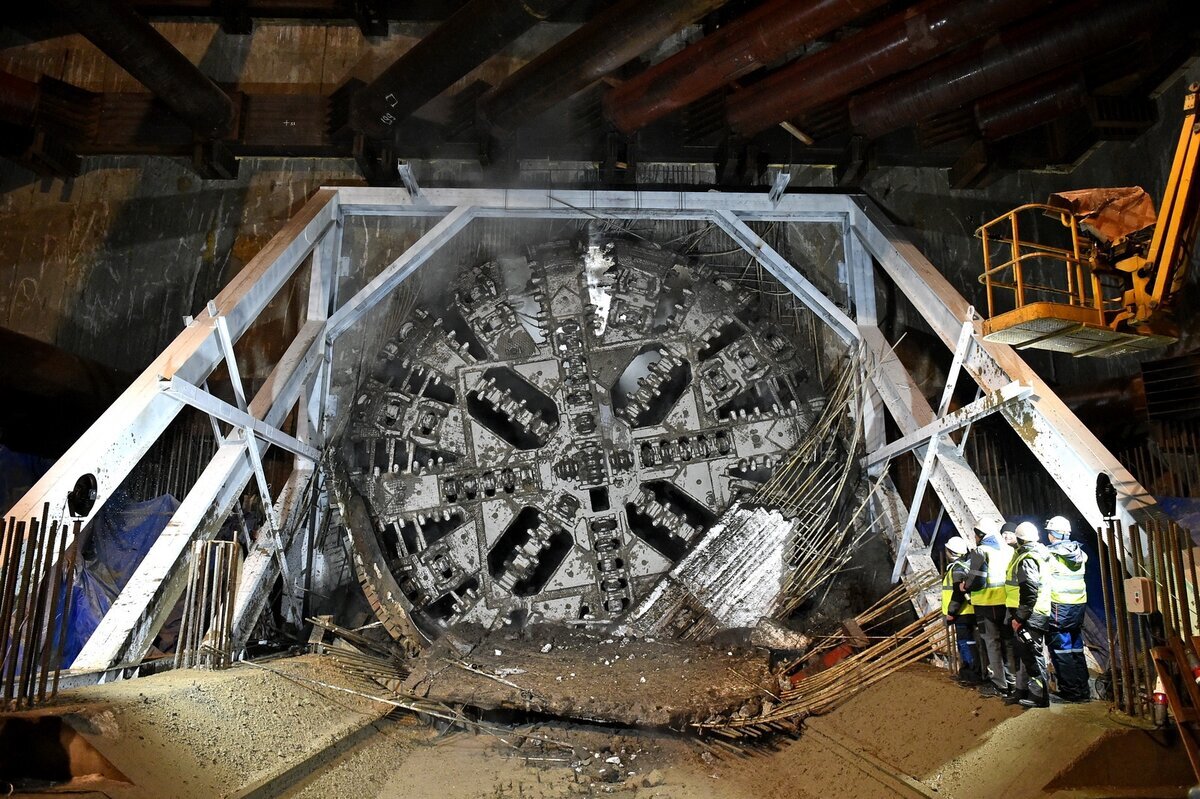
Fig.3 The shield broke through the road to the station
- The fourth stage is the collection of the base of the station complex. During it, builders lay about 30-40 thousand cubic meters of concrete. In this case, reversible dead ends and a ramp chamber may be needed, then the figure will increase to 100 thousand cubic meters or more. This is followed by the installation of engineering systems and architectural finishing of the station.
- The fifth stage takes place on the surface - landscaping of the adjacent territory is underway.
- The final, sixth stage involves the integration of the new station into the metro network. In total, testing and checking all systems takes about two months.
The construction of a metro station is a classic megaproject. A lot of project parameters are laid down at the design stage. It's interesting to make analogies between the construction of a metro station and an airport (my industry niche). Tunnels - runways, escalators - boarding bridges, arrival passengers, departure passengers. Like in an air terminal there are several dozen engineering systems: from ventilation to public address system.
The uniqueness of each metro station requires taking into account and prioritizing a large number of requirements and expectations of stakeholders, sometimes contradictory. Therefore, for such projects, elements of flexible methodologies are used, which allow the project team to arrive at an agreed upon version of the technical documentation. This means that such megaprojects can also be carried out using a hybrid approach.
As part of the Targeted Investment Program (TIP) of the capital for 2025-2027, 1.7 trillion rubles are planned for the development of transport infrastructure.
Some plans for metro construction between 2026 and 2028:
- Rublevo-Arkhangelskaya line. A line of eight new stations will appear, which will be joined by the previously built Shelepikha and Delovoy Tsentr stations.
- Biryulevskaya line. It is planned to commission the first section of ZIL - Kuryanovo (four stations) and the Golyanovo station of the Arbatsko-Pokrovskaya line.
- Southern section of the Troitskaya line. Construction of the southern section "Novomoskovskaya" - "Troitsk" (six stations), the "South Port" stations of the Lyublinsko-Dmitrovskaya Line and the "Dostoevskaya" Circle Line stations will continue.
- Design of a line in Skolkovo and a number of others.
I would like not only Moscow, but all of Russia to develop at such a pace. So, you and I have a lot of work to do!
The fly in the ointment is that metro construction projects are not always successful.
For example, when designing the Samara metro, mistakes were made that led to problems with system congestion and logistical problems.
They tried to build the "Stone Tents" station in Yekaterinburg back in the 80s of the last century. I remember huge holes dug in that area. Technology didn't allow it. Now this station is included in the master plan for the development of Yekaterinburg with a planning horizon until 2045.
As a summary
Last week I went skiing in Krasnogorsk near Moscow and ran into a large construction site. At the checkpoint they said that they had begun to build a depot for the metro as part of the development of the Rublevsko-Arkhangelskaya line. Such is the c'est la vie!
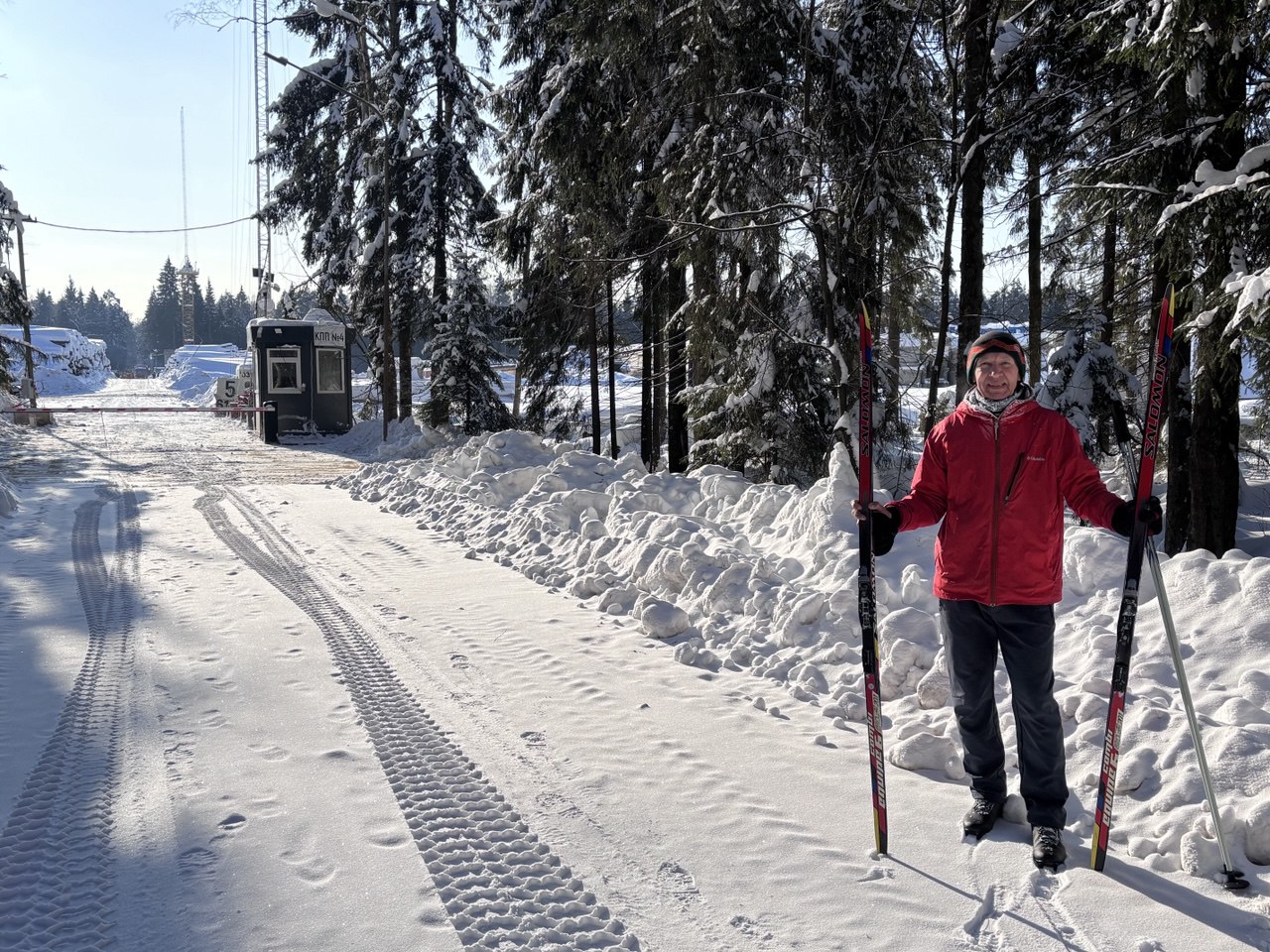
Fig.4 The ski track is over. The metro will start soon

Sources of information: