
Megaprojects: Osudareva Road and White Sea-Baltic Canal
21.01.2026

During the New Year holidays, I traveled to Karelia and stopped in the city of Povenets in the north of Lake Onega. In 1931-1933, Povenets was the center of construction of the White Sea-Baltic Canal, thanks to which a ship repair yard appeared. Right in the village I observed the White Sea Canal lock system, the so-called Povenets Stairs, and the monument to the Osudareva Road. An amazing combination of two grandiose projects.
The front line of the Great Patriotic War also passed through Povenets. The canal itself became a man-made border - a front between the parties.
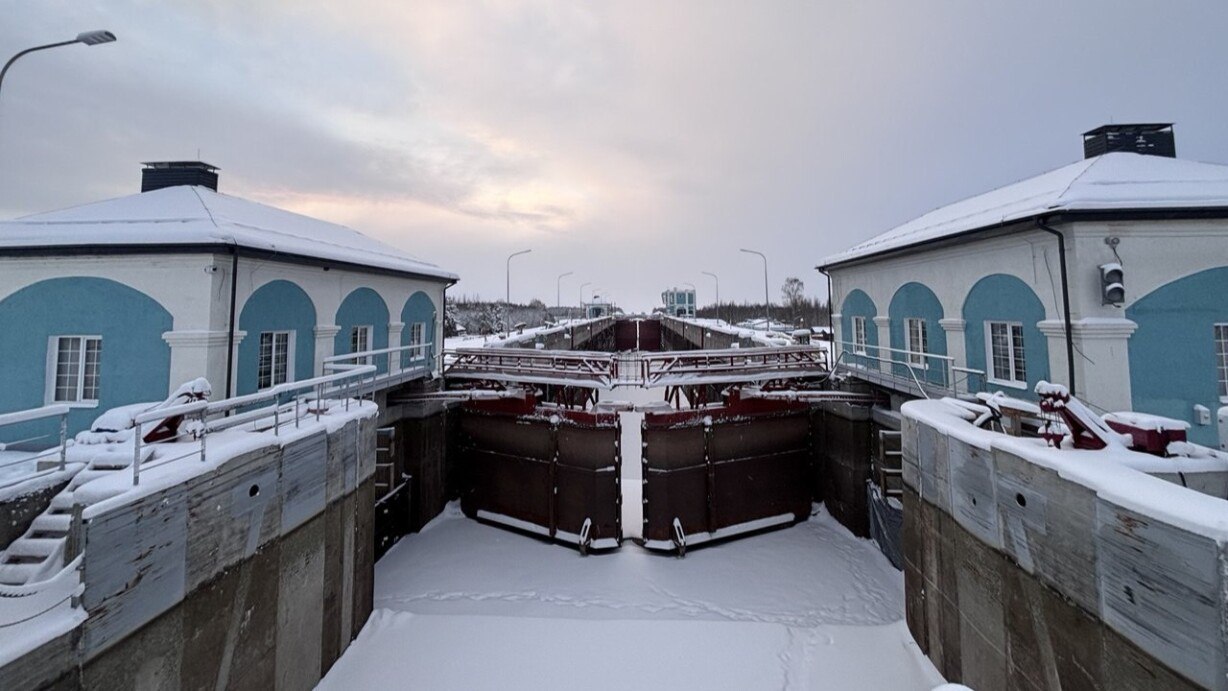
Fig. 1 White Sea Canal locks in Povenets (photo by the author)
Background of the road and canal
The waterway from the center of Russia to the north has been known since ancient times. The "path of pilgrims" to the Solovetsky Monastery ran through Povenets and Sumsky Posad. Povenets was a trading settlement. Povenets was first mentioned in the Scribe Book of the Zaonezh Pogosts of the Obonezh Pyatina in 1563.
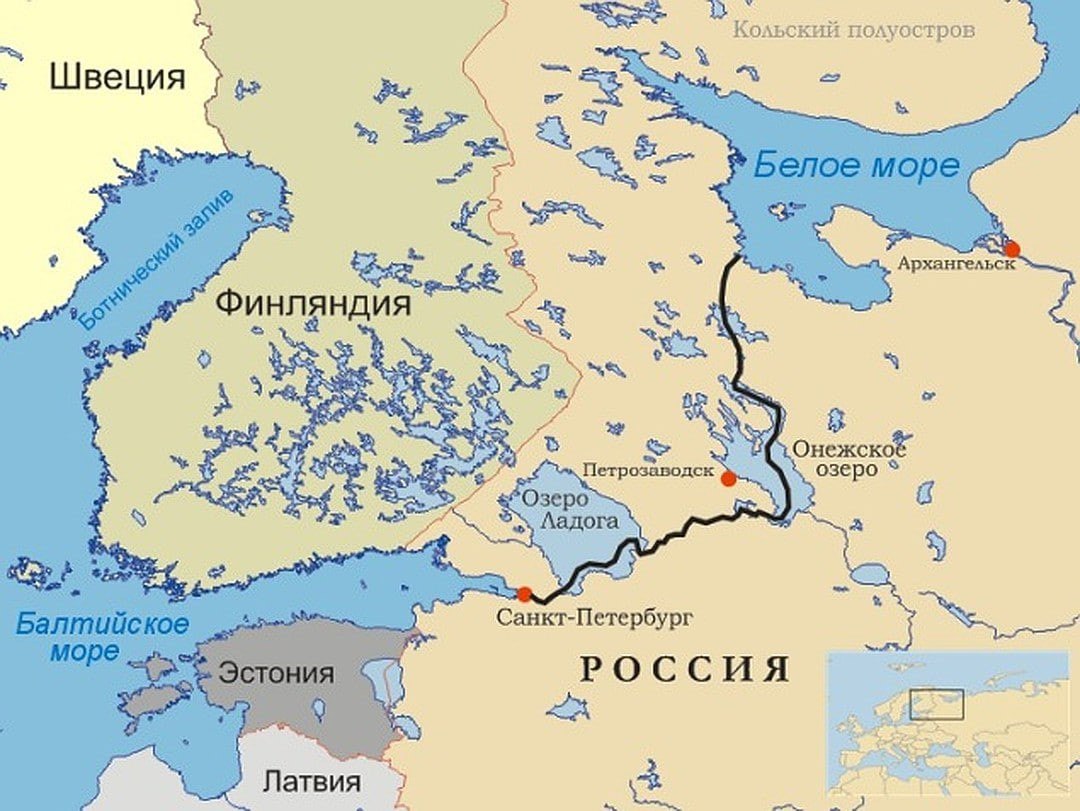
Fig. 2 Map of Osudareva Road
Project 1. Osudareva road 1702
This very land road on the watershed of the White Sea and Lake Onega, from the village of Nyukhcha to Povenets, helped to win the first major victory over the Swedes and provided the desired route to the Baltic.
They built a 170-verst route (almost 265 km!) in two weeks. True, about five thousand people from Arkhangelsk, Olonetsk and Novgorod provinces worked on construction. The interesting thing is that they built this road from both ends, and completed it in the middle. They cut down the forest, laid roads and bridges, filled the swamps with sand, and leveled the terrain.
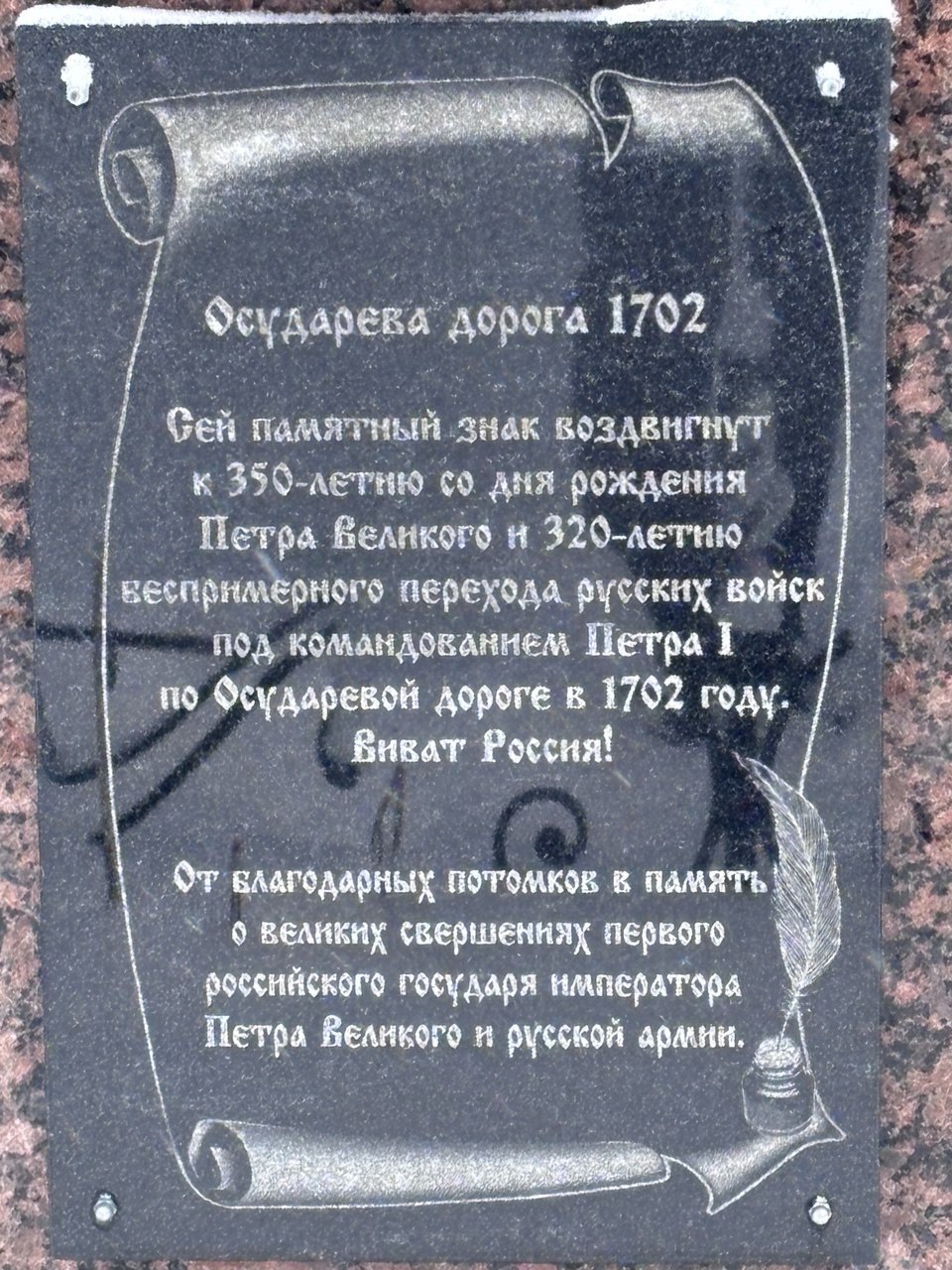
Fig. 3 Memorial sign of the Osudareva Road in Povenets (photo by the author)
During the Northern War, the Osudareva Road was used to transport troops and cargo - mainly, of course, weapons from the Olonets province to Arkhangelsk, and from there to St. Petersburg.
But already in the 19th century, the grandiose creation of the peasants was abandoned as unnecessary.
Project 2. White Sea-Baltic Canal
In the 19th century, the first projects of a canal appeared, which was supposed to be laid in those places. There were many of them, but the decision on its construction was made by the USSR Council of Labor and Defense only in 1931.
The curators of the construction were the future People's Commissar of Internal Affairs of the USSR Genrikh Yagoda and the head of the Gulag Matvey Berman. The construction of the canal from 1931 to 1933 was led by N. A. Frenkel. It is he who is credited with the idea of using prison labor to work on large national economic construction projects.
The construction of the megaproject was enormous! Even by today's standards, there are more than a hundred complex hydraulic structures. The total length of the new waterway was 227 km, of which more than 40 km were artificial routes. 19 locks, 15 dams, more than 40 dams, 12 spillways and other hydraulic structures.
The White Sea-Baltic Canal named after Stalin, connecting the White Sea with Lake Onega, was opened on August 2, 1933. We implemented the megaproject in record time - less than two years. Moreover, at minimal cost. There was no sophisticated technology; the tools used were antediluvian ones - sledgehammers, axes, shovels, wheelbarrows. The materials used are wood, stone, soil, sand. And also free labor.
Historians claim that about 100 thousand prisoners constantly worked on the construction of the canal. Through their brutal exploitation it was possible to achieve unprecedented rates of construction. The following fact is often cited for comparison: the Panama Canal, only 80 kilometers long, took three decades to build. Among the prisoners, the "canal army men," as they were called, there was a high mortality rate, so their detachment was constantly replenished.
The construction management, among other figures, noted one and a half thousand rationalization proposals to improve work at all construction sites.
In general, during the entire construction period, the canal army men completed excavation work with a volume of 21 million cubic meters and built 37 km. artificial tracks, moved the Murmansk railway, which interfered with the excavation work.
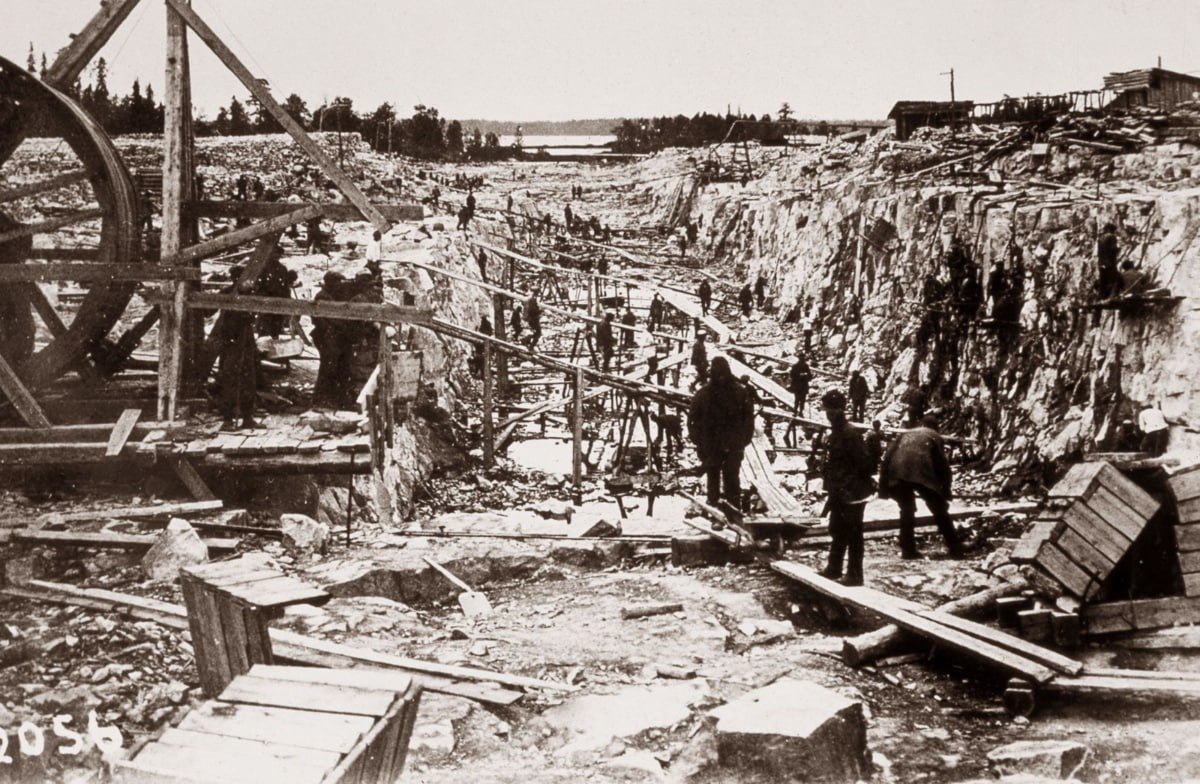
Fig.4 Canal construction
Motivation tools of those years. The food standard for prisoners for shock work increased: those who met and exceeded the standard (2.5 m3 per day on earthworks) received an increased bread ration (up to 1200 g), a bonus dish (for example, 75-gram pies with cabbage or potatoes), and a cash bonus. Moral incentives were also used: presenting the brigade or phalanx with a rolling Red Banner, declaring gratitude, presenting certificates, placing the names of shock workers on the honor board), as well as counting 3 working days for 5 days of the period, and for shock workers - "a day in two".
Upon completion of construction, some of the "prisoners" were generously thanked for their selfless work. By the resolution of August 4, 1933, 12,484 people were completely released from further serving of social protection measures, as having completely reformed and become useful for socialist construction, and the terms of serving protection measures were reduced for 59,516 people who proved themselves to be energetic workers in construction.
Based on the results of the project, an interesting book was written, "The White Sea-Baltic Canal named after Stalin. History of Construction" edited by Maxim Gorky and a team of 36 authors, many of whom were subsequently arrested.
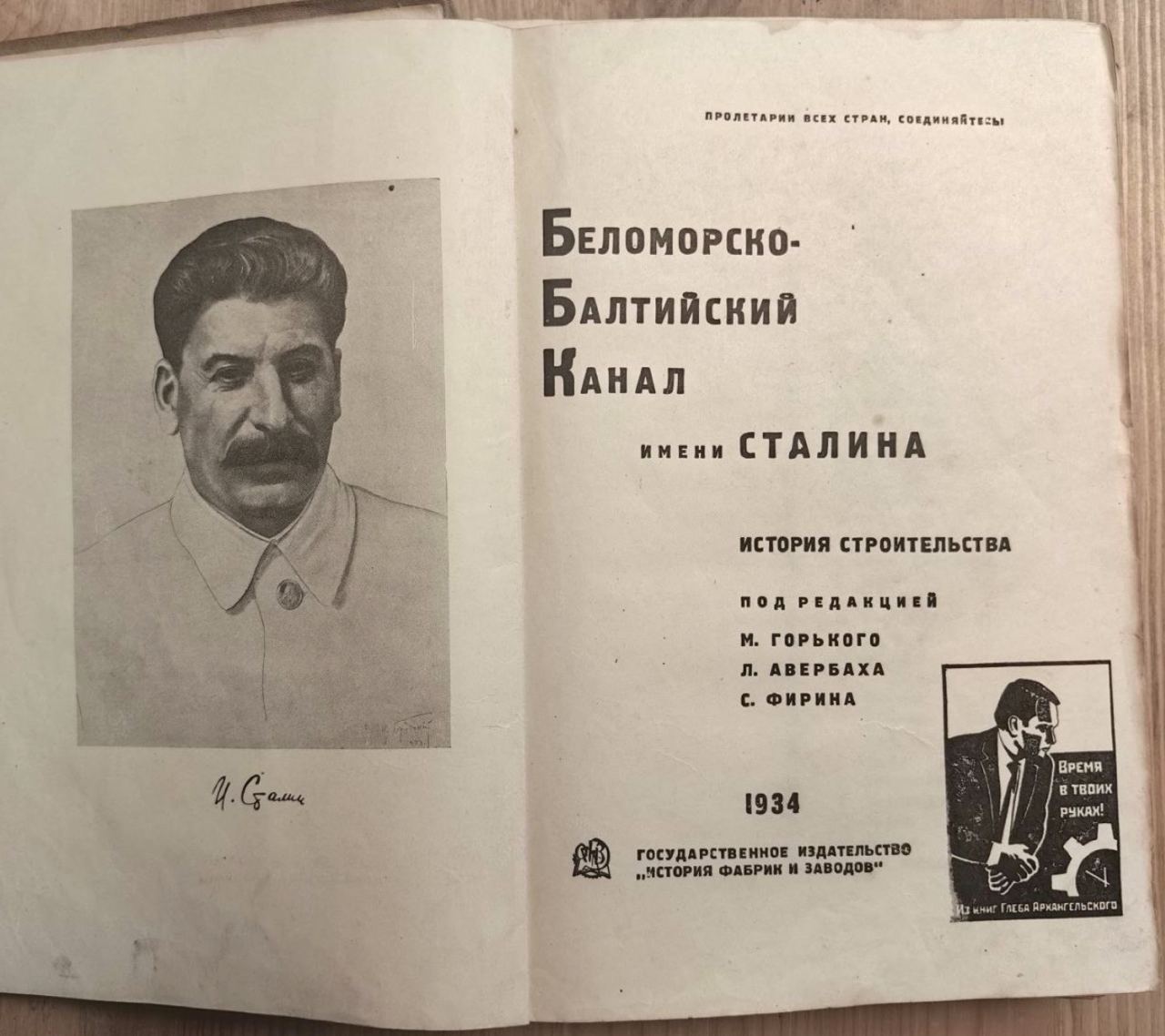
Fig.5 Spread of a book from the collection of Gleb Arkhangelsky
The book contains technical chapters showing the specifics of canal design, and also describes lessons on construction management, quality assurance, and the elimination of emergency situations at a construction site.
The structure of the chapters and quotes from it show that the book is not so much a history of construction as "a pedagogical poem, presenting the zone as an institution for the re-education (reforging) of criminals through collective labor."
Such things!
Materials used: