
Megaprojects. Crimean bridge to the future
25.11.2025

It's nice to watch the development of a major construction project, especially if we are talking about a real megaproject that was built before your eyes. Megaproject - because it fully meets the PM Excellence criteria for being classified as a megaproject, including budget, timing and impact on more than 100 thousand people. I think that the Crimean Bridge influenced millions of people.
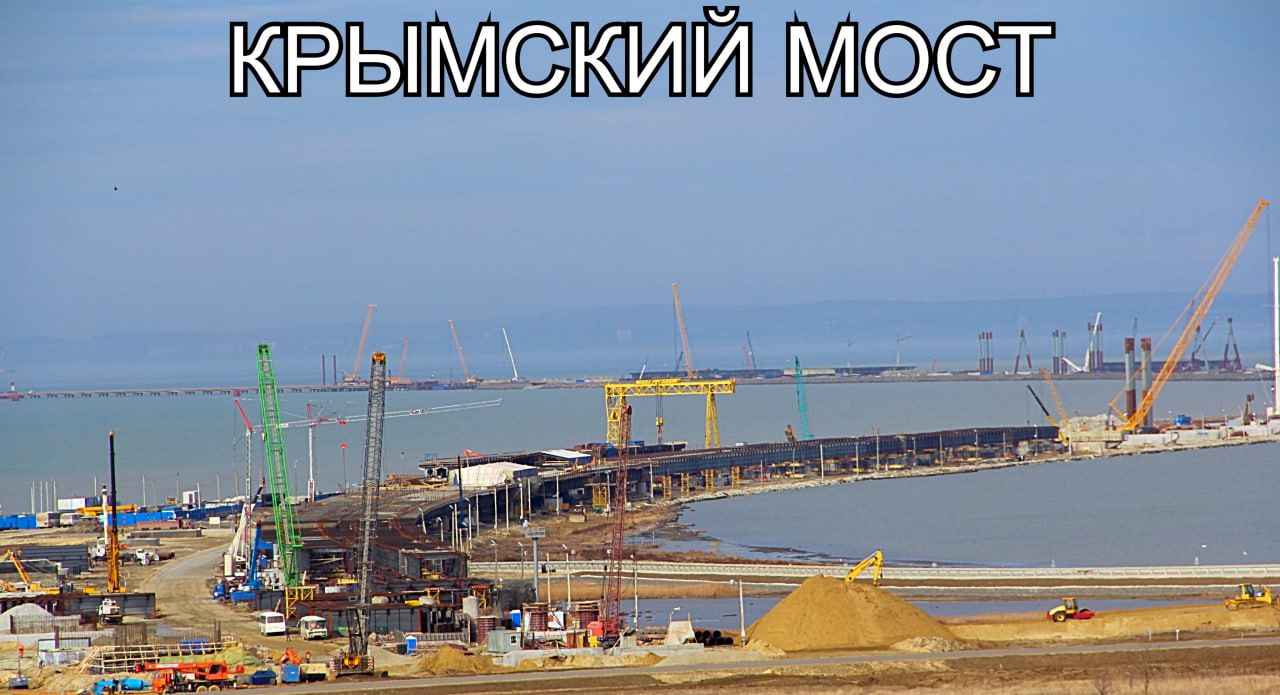
Fig.1 Construction of the Crimean Bridge

Introduction
In 2016-2018, he lived in Anapa, built a new air terminal complex at Vityazevo Airport and repeatedly visited the Crimean Bridge construction zone. I talked a lot with construction crews who flew in and out of our airport. We received very distinguished guests who controlled the megaproject. So, an article about the Crimean Bridge, which is aimed at the future...
General information
The total cost of the project was 227.92 billion rubles. If we take into account the beginning of work (February 2016), then the price is the equivalent of $3.03 billion, if at the time of commissioning (December 2019) it is $3.55 billion. For comparison, the Bay Bridge suspension crossing between Oakland and San Francisco cost the United States $6.4 billion. True, the length of this structure is 78.7 kilometers, but the location is simpler than the Kerch Strait (there are no huge blocks of ice).
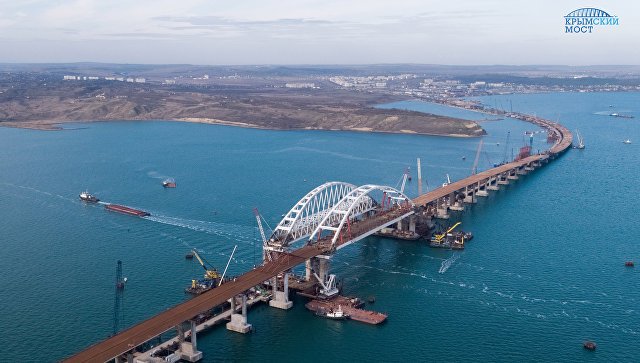
Fig.2 Bird's eye view of the bridge
The Great Belt Bridge project, which was implemented in Denmark, is comparable in length to the Crimean one. The length of the object is 18 km, and the price of the object reached 3.14 billion dollars. It was built at the end of the 20th century and has since fully recouped its investment. The lowest cost of such projects is in China. For example, the Qingdao Bridge, whose length is 42.5 km, cost "only" one and a half billion US dollars.
The construction of the Crimean Bridge was a complex and unique project that included several key features:
Design features and construction technology
Bridge design: The Crimean Bridge consists of two parallel bridges - a road and a railway. The road part has four lanes for cars, and the railway part has two railway tracks.
Spans and supports: The bridge has various types of spans, including all-metal arched spans with a span of 227 meters over the Kerch-Yenikalsky Canal. Above the sea, continuous beam all-metal spans with spans of 63 meters are used. In total, the bridge stands on 595 supports.
Piles and foundations: To ensure the stability of the bridge in a seismically active zone and on the muddy bottom of the Kerch Strait, piles up to 105 meters long were used. Three types of piles were used: tubular, prismatic and bored.
Construction technology: Construction was carried out using unique technologies, such as the longitudinal sliding method for the railway part of the bridge. This made it possible to assemble the structures on the shore and then slide them onto the supports.

Construction conditions
Seismic activity: The construction area has high seismic activity, reaching 9 points, which required special measures to strengthen the structure.
Climatic conditions: Construction was complicated by the aggressive marine environment, frequent storms and the formation of ice in winter.
Geological conditions: The bottom of the Kerch Strait has a thick layer of silt, which complicated the process of driving the piles. Tectonic faults and mud volcanoes were discovered, which also influenced the design.
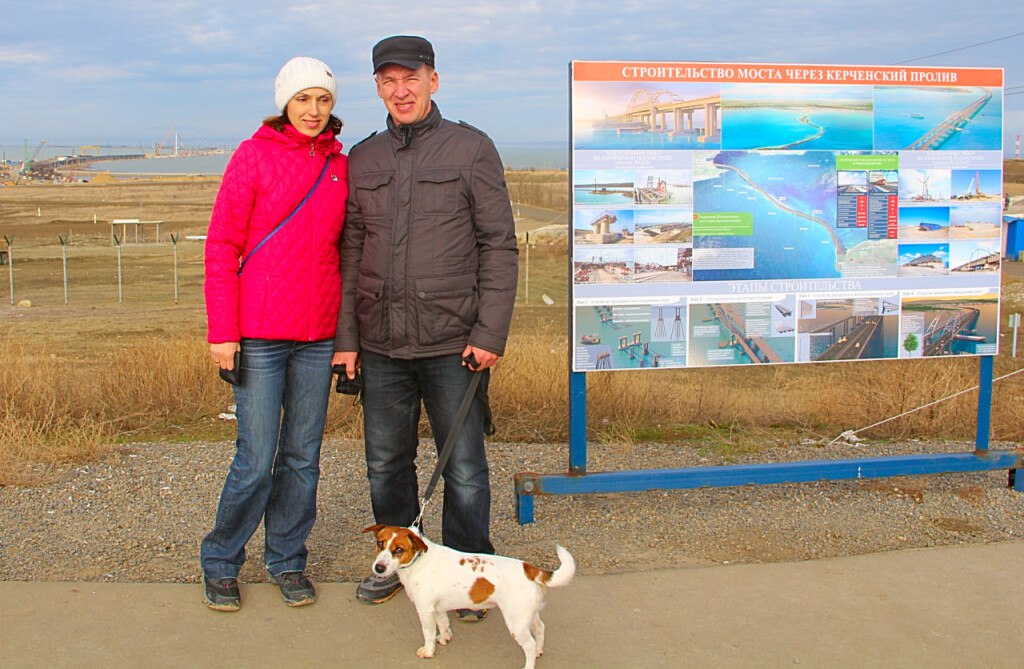
Fig.3 At the stand
Several innovative technologies and approaches were used during the construction of the Crimean Bridge:
Unique methods of span installation: The use of the longitudinal sliding method for the railway part of the bridge made it possible to assemble the structures on the bank and then slide them onto the supports with high precision and speed. Technologies developed by Saratov bridge builders were also used, which made it possible to lift and install spans using special lifting mechanisms.
M2M technologies: Wireless technologies were used to study geotechnical conditions and monitor the condition of piles and supports in real time. This included the use of seismic stations and weather stations to forecast weather and seismic activity.
Monitoring and security systems: The bridge has more than 400 sensors installed to monitor the condition of the structure, as well as protection systems against earthquakes and collisions with ships. Hydroacoustic systems are used to monitor the water area.
Innovative materials and designs: The road surface consists of two layers - a durable top layer and an elastic bottom layer, which ensures durability and traffic safety. The bridge is designed to withstand strong earthquakes and storms.
Special floating systems: To install the bridge arches, special floating systems were used, which made it possible to transport and install the structures in difficult weather conditions.
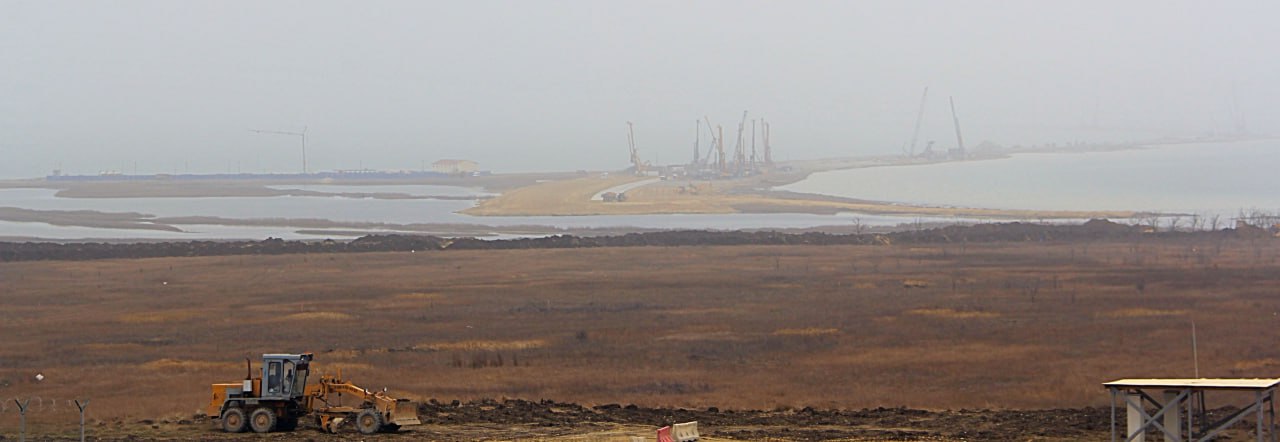
Fig.4 Panorama of the construction of the Crimean Bridge
Meaning and results
Length and status: The Crimean Bridge is the longest in Europe and Russia, its length is 19 kilometers.
Construction time: Construction of the road part was completed in 2018, and the railway part in 2019. Dividing the bridges into two independent structures made it possible to meet a tight deadline.
My story
I have an immortal story of team strengthening connected with the Crimean Bridge.
On May 16, 2018, a decision was made to begin the movement of passenger cars along the Crimean Bridge. Russian President Vladimir Vladimirovich Putin opened the traffic on a truck. Our team, being nearby in Anapa, decided to celebrate the opening of the bridge with a round-trip bike ride (To Crimea-From Crimea).
Planning for the project was carried out instantly. It was a very unusual bike ride. There was a risk that our column might not be allowed onto the bridge. As a result of successful negotiations with the traffic police, we convinced them of the safety of our intentions and excellent physical shape. The paradox was that de facto you can move across the bridge on a bicycle, but you cannot stop, since there are no parking places. Let me remind you that the length of the bridge is 19 km!!!

As a result, we traveled to Crimea in an organized manner, stopped for a small picnic in the vicinity of Kerch and headed back.

Fig.5 Cycling participants
Schedule
The schedule plan for the megaproject for the construction of the Crimean Bridge included several key stages:
Preparatory work
April 2014: Russian President Vladimir Putin set the task of building the Crimean Bridge no later than December 2018.
Summer 2014: Rosavtodor announced a preliminary estimate for the project.
January 2015: Stroygazmontazh LLC was appointed as the contractor for the design and construction of the transport crossing across the Kerch Strait.
April 2015: Construction of temporary auxiliary technical structures began.
Construction of working bridges and preparation for main work
October 2015: Construction of the first working bridge is completed.
Summer 2016: Construction of the second and third working bridges was completed.
February 2016: Construction of the Crimean Bridge began after receiving a construction permit.
Main stages of construction
February 2016: Construction of the next two working bridges and active bridge construction began.
March 2016: Construction of pile supports began.
April 2016: Installation of the first support was completed.
May 2016: The number of supports exceeded 1000.
June 2016: Installation of Voronezh spans began.
August 2016: Installation of main supports and assembly of spans.
September 2016: The first hundred supports were installed.
October 2016: Completion of piling work in the first section.
December 2016: 200 support structures installed.
February 2017: Start of construction of the transport access to the bridge.
April 2017: Concreting of the largest fairway support began.
May 2017: Support installation equator - 298 out of 5953.
June 2017: Construction of the main highway bridge structure is 70% complete.
July 2017: Assembly of the arched structure under the road surface was completed.
August 2017: The installation of the railway arch is completed.
October 2017: The installation of the road arch was completed.
April 2018: Asphalt laying on the road bridge was completed.
Opening of the bridge
May 15, 2018: Grand opening of the automobile part of the bridge.
December 2019: Construction of the railway part of the bridge was completed.
This plan included simultaneous construction of the road and rail sections of the bridge, with priority given to completing the road section.

Fig. 6 Bike ride three days after the opening of traffic
The Crimean Bridge is at the forefront of many processes in our country, so the importance of this mega-project will most likely be appreciated by our descendants!