
Project emergence? Didn't hear!

In 2013, my colleagues and I became acquainted with the fifth edition of PMBOK, which had just appeared. Evolutionarily, they began to make predictions about which areas of knowledge will appear in the next edition. As a result of the discussion, we settled on two answers. First answer: managing the rhythm of the project. Second: managing complex projects. As time has shown, we almost got it right.

In September 2017, the next 6th version of PMBOK (PMBOK 6th Edition) was released. In this version of PMBOK, much attention was paid to adaptive approaches to project management; the standard comes with a Guide to Agile Practices. An indirect answer to the question of managing the rhythm of the project through an iterative approach has appeared.
In 2021, the 7th version of PMBOK was released, which, among others, formulated the principle "Navigate the complexity of the project." The standard briefly describes the complex project environment, focusing on the behavior of the project as a system. Additional factors that complicate the system are human behavior, ambiguity and uncertainty, and technological innovation.
Even standards that came from overseas began to pay attention to the possibility of applying the theory of control systems to large-scale projects and megaprojects. Many smart books have been written on this topic; let's briefly draw an analogy between a project and a complex system.
The concept of system integrity (connectedness, unity of the whole) is inextricably linked with the concept of emergence (unexpected emergence, appearance of a new one).
Emergence - the presence of qualitatively new properties of the whole that are absent in its component parts. This means that the properties of the whole are not a simple sum of the properties of its constituent elements, although they depend on them. On the other hand, elements combined into a system can lose properties inherent to them outside the system or acquire new ones.
A key characteristic follows from this concept: the emergence of a project, linked to a system for developing value in the form of a new product, result or service.
Please note that the add-on called "Management of a large or megaproject" (Fig. 1) to achieve system stability must be adequate to the control object.
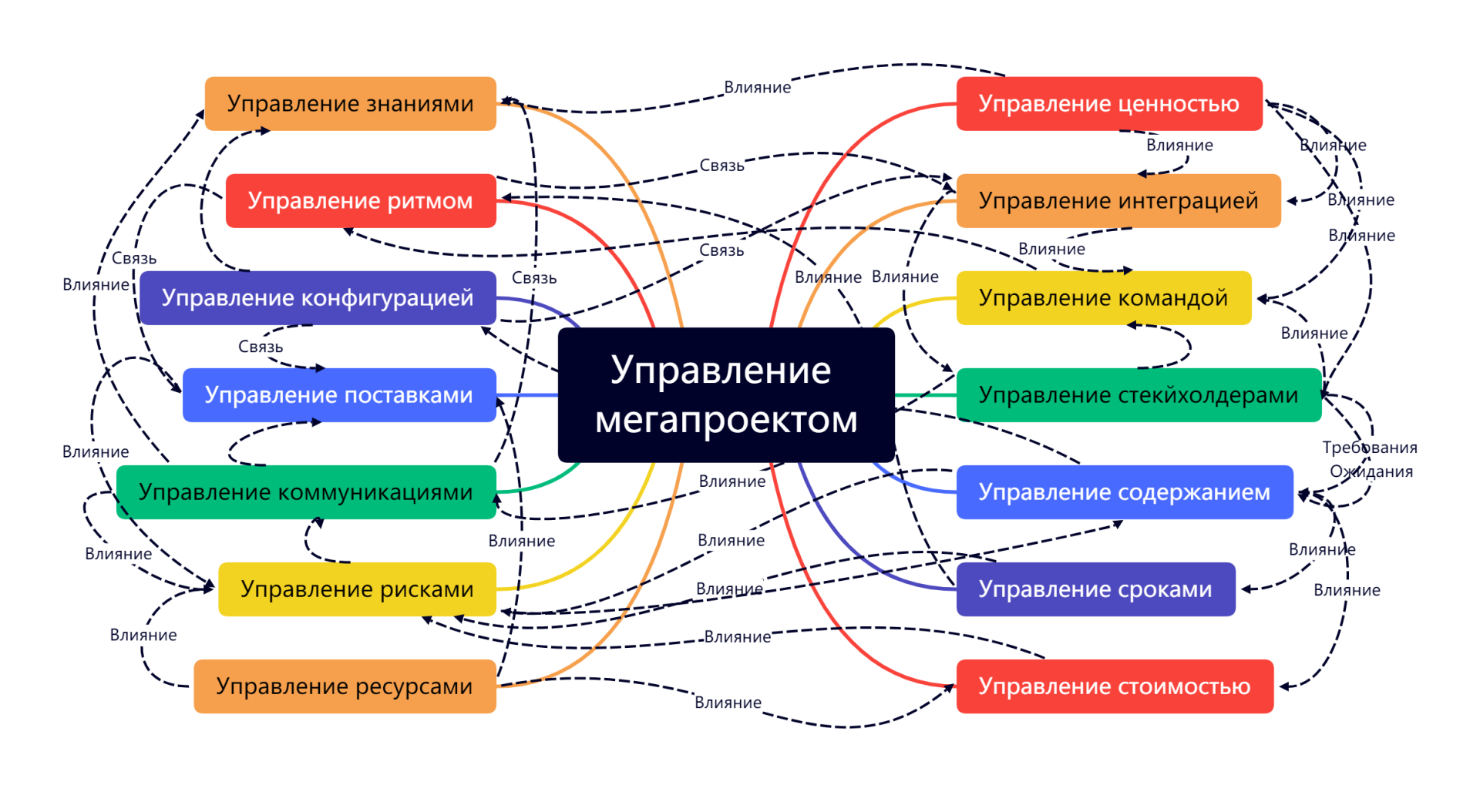
Fig. 1 Managing a megaproject as a complex system
A look at the system from the point of view of Norbert Wiener, one of the founders of cybernetics and the theory of artificial intelligence. A cybernetic system should be structurally considered as a network system of connections. Each cybernetic system has two elements - controlled and control parts. The main distinctive features of cybernetic systems are shown in Fig. 2.
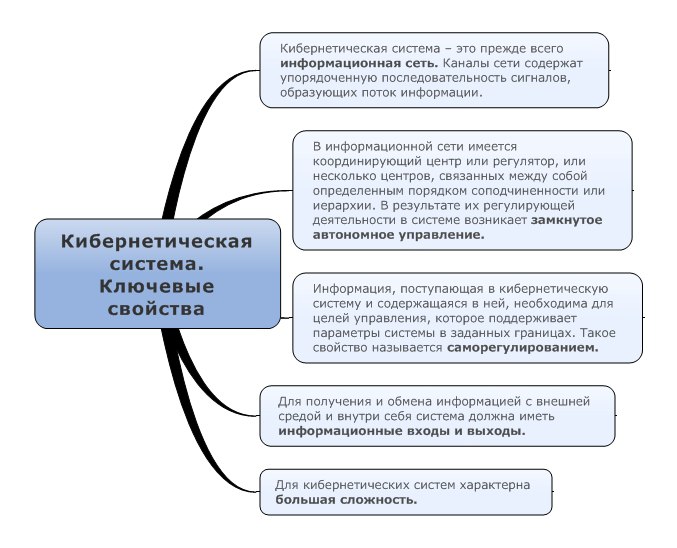
Fig. 2 Key properties of a cybernetic system
The study of the patterns of development of systems is based on the principle of hierarchy of the famous biologist Ludwig von Bertalanffy: any system represents a hierarchy of its subsystems and (most importantly!) a system at any tier of the hierarchy is part of a system of a higher tier, i.e. supersystems.
This is a very convenient definition for understanding a megaproject as part of a program of projects. However, for the entire set of project management objects in the company: project portfolio - program - megaproject - project - work package - work.
And these are just some applications of systems theory to project management, although there is also a system-object approach, a fairly general theory of management, and techniques for modeling complex systems.
Practical implications for a complex project from systems theory:
- The more complex the project, the more its characteristics as a system will differ from the characteristics of its component parts. Emergence is a measure of the discrepancy between the goals of an organization or megaproject and the goals of its constituent parts.
- For the sustainable development of a large and complex project, a megaproject, autonomous management is required: core, regulator, team, project office.
- The more complex the project, the more demanded simple models are for understanding the dynamics of its development: hierarchical structures, S-curves, schedule network models, business process diagrams.
- Complex projects represent a hierarchy of objects. The key principle is the principle of decomposition.
- Large and megaprojects are nonlinear systems.
As a summary:

Literature:
- Denisov, A.A. Theory of large control systems / A.A. Denisov, D.N. Kolesnikov. - L.: Energoizdat, 1982.
- A fairly general theory of management / M.: NOU "Academy of Management", 2011.
- Systems theory and system analysis: textbook / A.G. Zhikharev, O.A. Zimovets, M.F. Tuboltsev, A.A. Kondratenko; edited by S.I. Matorina. - Moscow: KNORUS, 2020. - 456 p.