
Exhibition of megaprojects: From stability to aristocracy
13.06.2025

The Exhibition of National Economic Achievements, a product of Soviet ideology and industrial power, as an organized structure has a complex life cycle. An interesting question arose: where is its place as an organization in the standard picture of Isaac Adizes?
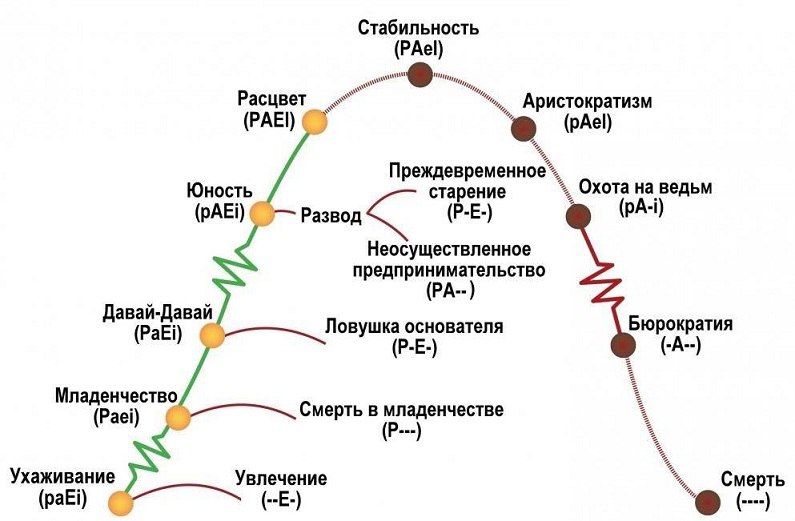
Fig. 1 Life cycle of an organization according to I. Adizes
Organized to demonstrate the achievements of domestic megaprojects, the exhibition, in terms of uniqueness, scale, and innovation, has become an independent megaproject that realizes a long-term comprehensive result.
How did it all begin?
Since its opening on August 1, 1939, the name of the exhibition has changed several times - VSKhV, VDNKh USSR, All-Russian Exhibition Center. She underwent significant metamorphoses and almost died in the dashing nineties. It is interesting to track the stages of the exhibition's life cycle and mark the current situation on the universal Adizes curve.
1935-1941
The decision to build the All-Union Agricultural Exhibition (VSKhV) was made at the Second All-Union Congress of Collective Farmers-Shock Workers. Construction began in the second half of 1935. By July 1937, the pavilions of Belarus, Ukraine, the general pavilion of the Transcaucasian republics, Tatarstan, Turkmenistan, mechanization, the Main Pavilion, the pavilion of beets, vegetables, etc. were already ready. The opening was postponed for a year, since it was not possible to make it in time for the anniversary of Soviet power. They again did not make it by the appointed date and announced a new opening date - August 1, 1939.
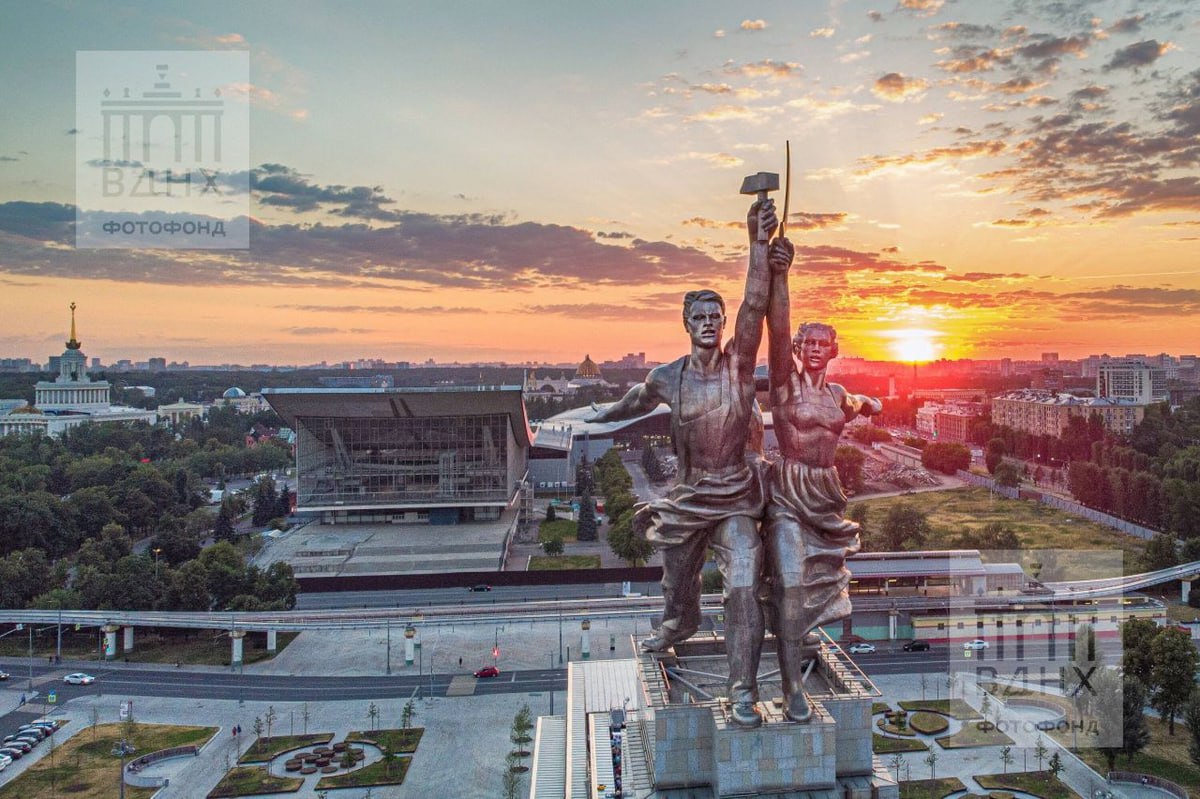
In July 1938, Vera Mukhina's sculpture "Worker and Collective Farm Woman" was brought from the Expo-37 exhibition in Paris. In less than a month, the monument was installed on the driveway to the Main Entrance of the All-Russian Agricultural Exhibition. On August 1, 1939, the All-Union Agricultural Exhibition was finally inaugurated.
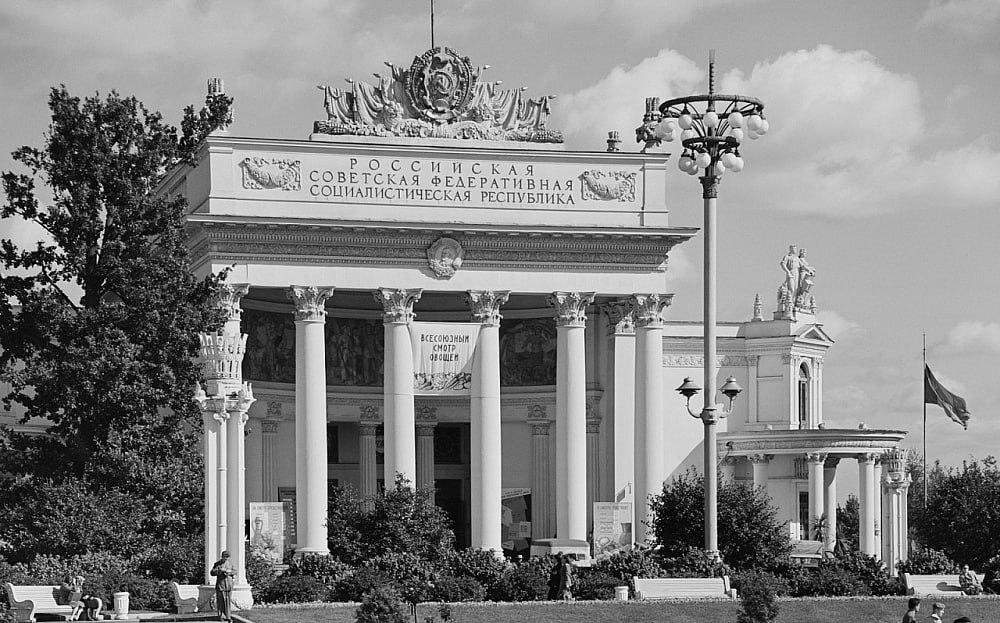
This period corresponds to the "Infancy" phase on the Adizes curve.
1941-1945
On July 1, 1941, by order of the Council of People's Commissars of the USSR, the Exhibition was closed. All livestock presented by collective and state farms for display at the All-Russian Agricultural Exhibition was promptly exported. The rest - the unique collection of the VSKhV library, a darkroom and an archive - were evacuated to Chelyabinsk. The pavilions were mothballed. The workshops of military repair plant No. 20 were located on the basis of the production and technical workshops of the All-Russian Agricultural Exhibition. In one day, up to 60 motorcycles for the front were assembled on its conveyors.
1948-1958
In 1948, the Council of Ministers decided to revive the All-Russian Agricultural Exhibition by 1950. But the reconstruction took not two years, but six. The opening took place only in 1954. Several fountains appeared: "Friendship of Peoples", "Stone Flower" and "Golden Ear". A five-kilometer highway with trolleybus traffic was built. Most of the pavilions were rebuilt. The layout structure of the Exhibition has changed, so the Main Entrance has moved. Architect Innokenty Melchakov built an even more monumental five-span triumphal arch as the new Main Entrance. The sculpture "Tractor Driver and Collective Farm Woman" was placed on top of the entrance arch, but instead of a hammer and sickle they held a large sheaf of ears of grain.
By 1954, the pavilion "Ukrainian SSR" was crowned with a spire in the form of a golden sheaf to commemorate the 300th anniversary of the reunification of Ukraine with Russia.
This period corresponds to the "Youth" phase on the Adizes curve.
1958-1967
In 1958, inspired by the Grand Prix for the architecture of the Soviet pavilion in Brussels, Nikita Khrushchev signed an agreement with Eisenhower on the exchange of exhibitions between the USSR and the USA. The American exhibition in Moscow was supposed to take place from July 25, 1959 for six weeks. At the same time, a Soviet exhibition was planned at the New York Coliseum.
In 1963, the Council of Ministers adopted a resolution "On the restructuring of the work of VDNH of the USSR". The exhibition became year-round. Agriculture gave way to science and industry. The pavilions named on a geographical basis have changed their names. Belarus became "Electrical Engineering", Lithuania - "Chemistry", Latvia - "Physics", Moldova - "Standards", Kazakhstan - "Metallurgy", Armenia - "Healthcare", Ukraine - "Agriculture". Along the way, some pavilions were dressed in modernist clothes.
This period corresponds to the "Blooming" phase on the Adizes curve.
1970-1980
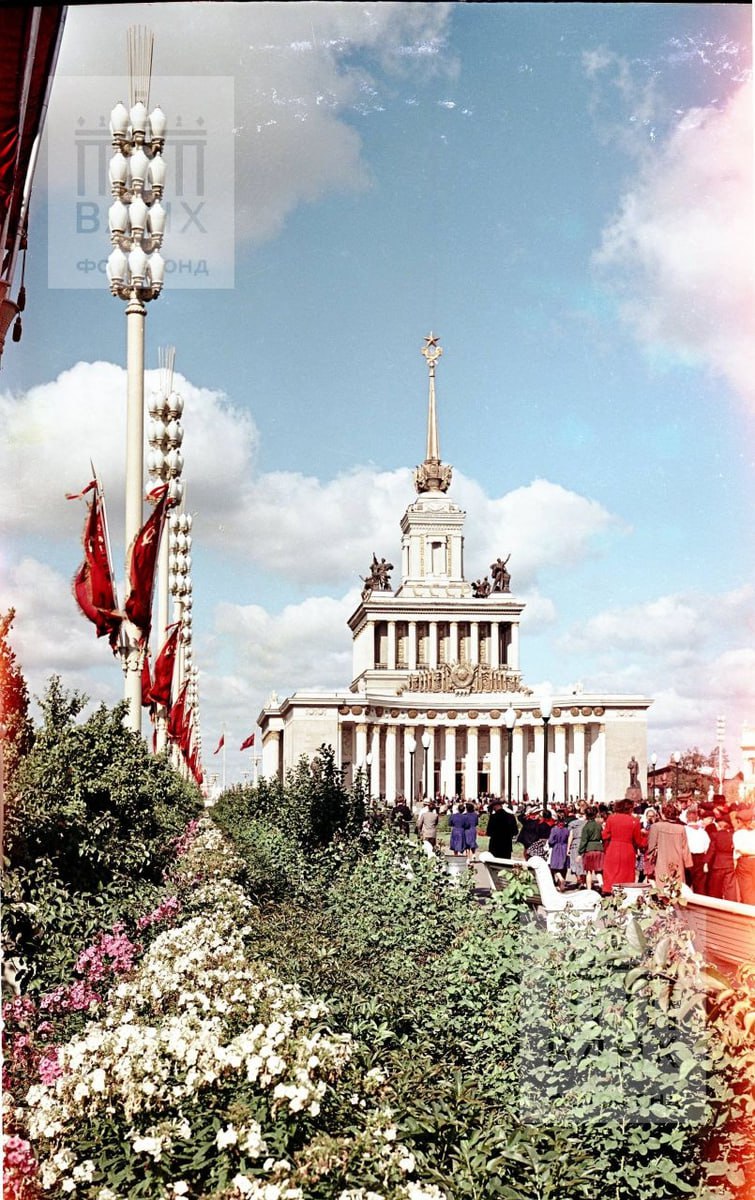
Every year the exhibitions acquired more and more interesting and impressive forms. Thousands of exhibits filled the new pavilions.
Significant events for the USSR and Moscow also took place during this period. VDNKh was chosen as the venue for them. These are the International Youth Festival, the exhibitions "Auto Industry", "Scientific and Technical Progress" and "60 Years of Soviet Cinema", the opening of the first oceanarium in the Union and others.
Foreign exhibitions held at VDNH attracted a huge number of visitors. And even though these were mainly expositions of socialist countries, they were also of great interest to the Soviet people.
This period corresponds to the "Stability" phase on the Adizes curve.
1992-2013
The exhibition turns into the All-Russian Exhibition Center, the All-Russian Exhibition Center. In the mid and late 1990s, most of the exhibitions at the All-Russian Exhibition Center were liquidated, and many pavilions were rented out for warehouses and shops. At the same time, the amusement park was open, and the All-Russian Exhibition Center was still a place where people came to relax. A particularly significant loss is considered to be the exhibits that made up the exhibition of the Space pavilion. Among them are models of the first Soviet satellites.
The system almost slides into the "Death" phase on the Adizes curve.
2013-2018
Return of the historical appearance and name, large-scale reconstruction, new development concept. Work at VDNKh, which started in April 2014, has become the largest public space improvement project in Moscow. The exhibition area is freed from most of the uncivilized trade from stalls and outdated catering.
In 2019, the restoration of the "Friendship of Peoples" and "Stone Flower" fountains was completed. Their launch on April 30, 2019 opened the summer anniversary season of VDNKh and gave rise to festive events in honor of the 80th anniversary of the exhibition.
The exhibition as an organization is experiencing a rebirth, which conflicts with the Adizes curve. A miracle is happening!
November 2023
In 2023, a brilliant idea arose to position VDNKh as a platform where 89 regions of the Russian Federation will not only demonstrate the achievements of their programs and megaprojects, but also actively involve stakeholders. Muscovites, guests of the capital, foreign partners.
And so, a few days ago, the exhibition-forum "Russia" opened at VDNKh. It is now clear that something big is afoot. The scale exceeded expectations. VDNKh has turned into a megaproject of megaprojects.
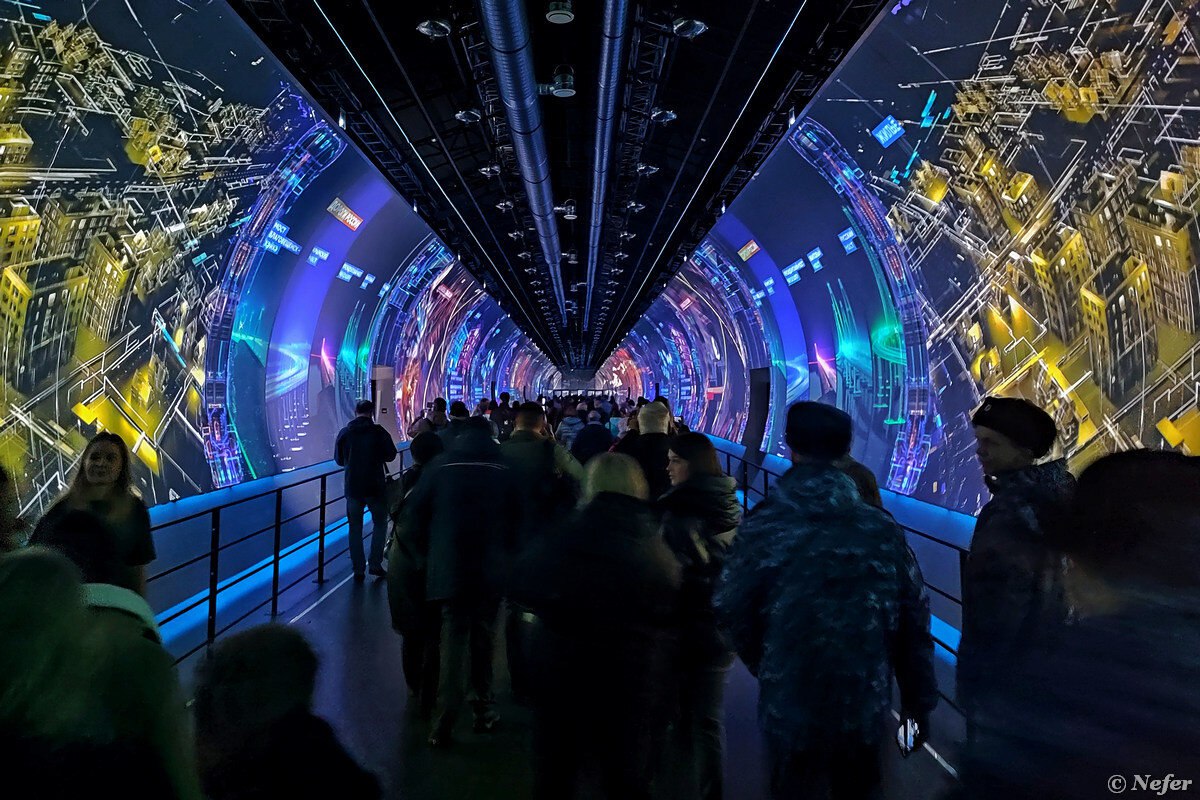
A reasonable correspondence between the scale of the country and the scope of its megaprojects becomes clear to visitors already at the entrance.
Summary: The exhibition as an organized structure is moving towards the "Aristocracy" phase on the Adizes curve.
Postscript: PM Excellence is participating in the exhibition's movement towards aristocracy. On November 23 at 13:30 at the international exhibition and forum Russia 2023 in the pavilion of the Coordination Center of the Government of the Russian Federation, invited PM Excellence expert Alexander Sergeevich Kutuzov will present the standard for managing the program for implementing megaprojects PM GATE.
Sources of information:
1. Adizes Yitzhak "Company Life Cycle Management"