
Russian megaprojects: The Great Siberian Road or the Trans-Siberian Railway
20.04.2026

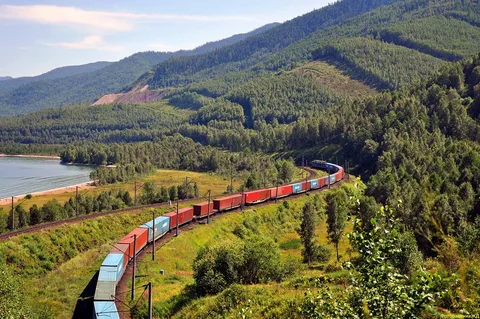
In March, I wrote an article about the Circum-Baikal Railway entitled "The Golden Buckle of Russia's Steel Belt." Today it is ripe to take the next step and remind our descendants about the steel belt itself or the Great Siberian Road or the Trans-Siberian Railway. Moreover, in April there was an excellent opportunity to visit Vladivostok, visit the railway station and ride along the last kilometer of the Russian Empire.

Fig 1. Postcard from the time of construction of the Great Road
I will surprise the unprepared reader with the numbers. The grandiose megaproject took 25 years and cost the treasury 1.5 billion rubles (despite the fact that the annual state budget at that time was 2 billion rubles). In terms of modern money using the gold equivalent conversion method and the cost of 1 gram of gold is 13 thousand rubles, the budget of the megaproject exceeds 20 trillion rubles!
The main provisions of the megaproject were approved by the Emperor and the Cabinet of Ministers of the Russian Empire by March 1891. The official start date for construction was May 31, 1891, when the heir to the throne, Tsarevich Nikolai Alexandrovich (future Emperor Nicholas II) laid the first stone of the road in Vladivostok. In fact, he became the curator of the project.
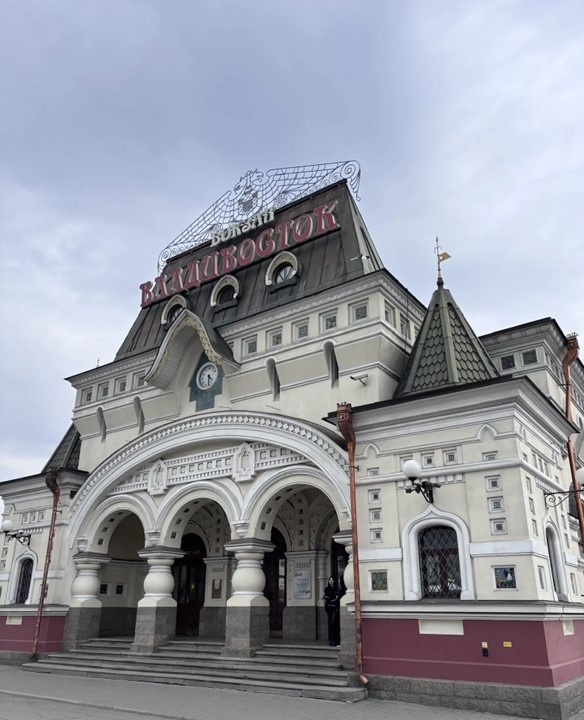
Figure 2. Station in Vladivostok
Design of the road began long before this date. At the same time, technological issues were resolved. The paradox is that Russia learned to make steam locomotives by the middle of the 19th century, but mass production of rails (as part of the import substitution policy) was mastered only by 1870.
The project implementation plan was designed for approximately 10 years using schedule network planning. No one expected that construction would take twenty-five years. Typical of Russian megaprojects, the construction of the railway was carried out in incredibly difficult climatic and natural conditions with careful management of project risks. Engineers and ordinary workers, most of whom were exiles and soldiers, worked all year round, overcoming challenges every day: high mountains, impenetrable taiga with wild animals, stormy rivers, swampy terrain and permafrost. At its peak, about 100 thousand people worked at the construction site. Construction was carried out with strict project monitoring and control.
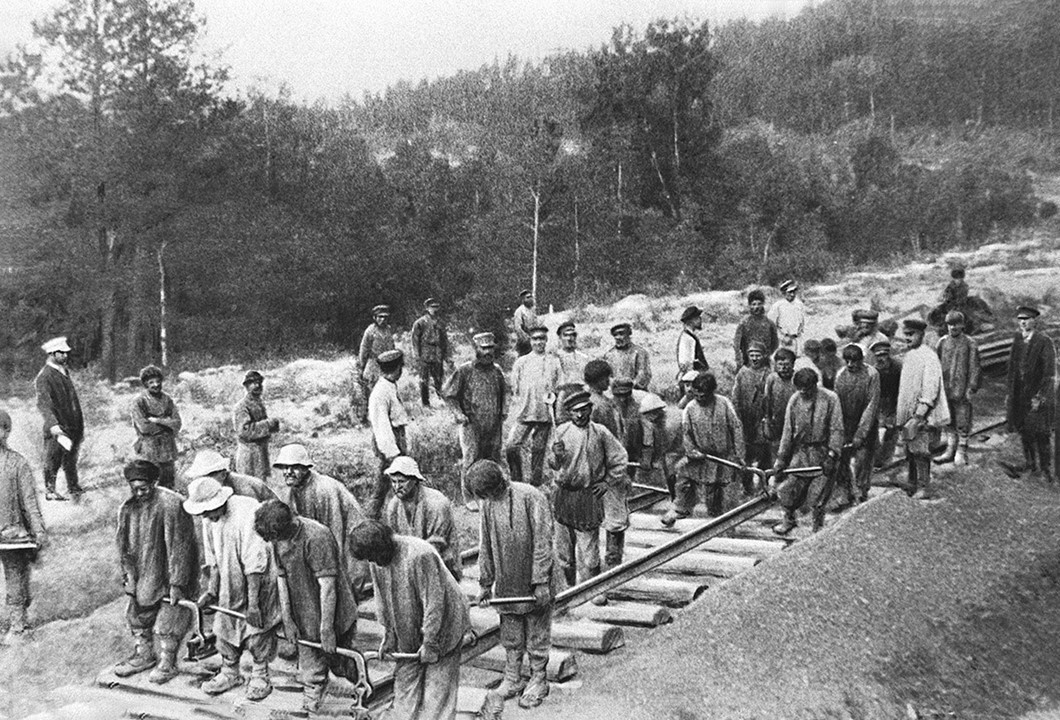
Figure 3. Construction of the Trans-Siberian Railway. Archive photo
Conventionally, the implementation of the megaproject can be divided into three stages.
The first lasted from 1891 to 1904. During this period, the route was laid simultaneously from two sides: from Chelyabinsk and Vladivostok. Both sections were connected to the European part of the country in 1901, but trains started running on the combined rail track only two years later. At the same time, it was interrupted at Lake Baikal, through which the cars were transported by ferry. The Trans-Siberian became completely continuous after another railway section was built around the lake - the Circum-Baikal Railway. This happened in 1904.
The second stage occurred from 1904 to 1916, when the Russo-Japanese War posed a threat to the security of the Chinese Eastern Railway (CER), another section of the Trans-Siberian Railway that ran through Manchuria. Instead, they built a new section along the Amur, which had previously been abandoned due to the complexity of the work. Laying the railway track, as well as building a bridge across the river, took several years. However, upon completion of these works, the route ran entirely through the territory of the Russian Empire.
The third stage is associated with the period of the USSR, when the dilapidated highway was reconstructed several times taking into account new technologies. During the Soviet period, its electrification also began, which ended in the 21st century. It also finally became double-track in our time.
The railway line was laid with unprecedented speed at that time. In 12 years, the builders managed to create 7.5 thousand kilometers of first-class tracks, although during the intervening period they had to overcome many difficulties. We have never worked at such a pace in any country.
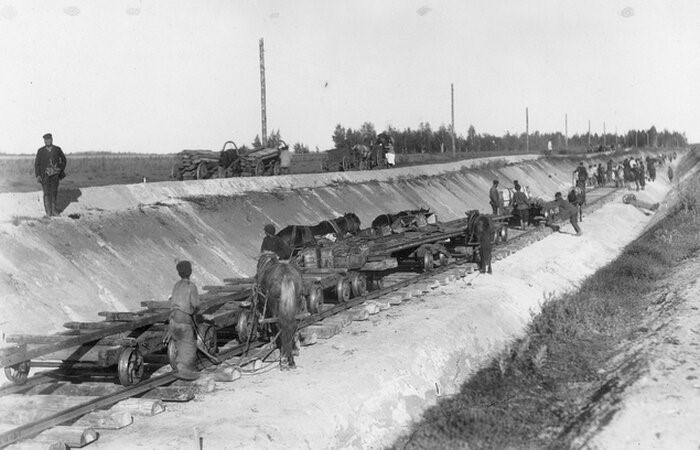
Fig 4. The main force on the Trans-Siberian Railway is horses
During construction, many well-known engineers in Russia at that time participated in the megaproject. Among them, Orest Vyazemsky, who owned a large plot of land in the Ussuri taiga, was very popular. The Vyazemskaya station was named in his honor and today preserves the name of the great Russian specialist. The connection between Novosibirsk and Chelyabinsk railways was carried out by another specialist in the field of construction - Nikolai Garin-Mikhailovsky. The engineer completed his section of the road in 1896.
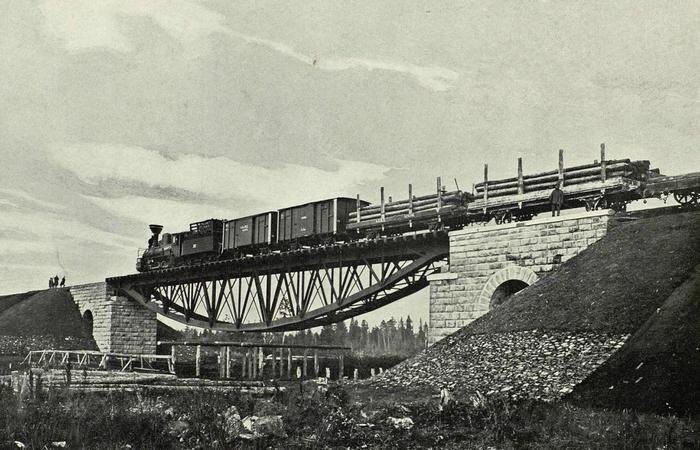
Fig 5. The original Trans-Siberian Bridge
The section between Irkutsk and Ob was built by Nikolai Mezheninov. Today it is known as the Central Siberian Road. Nikolai Belelyubsky was involved in the design and construction of the bridge across the Ob. He was a connoisseur and expert in mechanics and engine creation. Work on laying the Central Siberian section of the mainline was completed in 1899.
The country's leadership decided that one of the main negative factors that influenced the course and result of the war with Japan was poor transport links between Vladivostok and the European part of the country. Among the particularly important tasks, the government highlighted the expansion of the railway network. After the meeting of the Council of Ministers, the creation of the Minusinsk-Achinsk and Amur sections of the highway began. The total length of the route was almost 2 thousand km.
The project came to completion in 1916. The railway line connected Chelyabinsk with the Pacific Ocean. At the same time, the construction of the bridge over the Amur and the Amur Mainline was completed. For ease of use, the entire road was divided into four sections. Rail transport grew every year and by 1912 reached 3.2 million passengers.
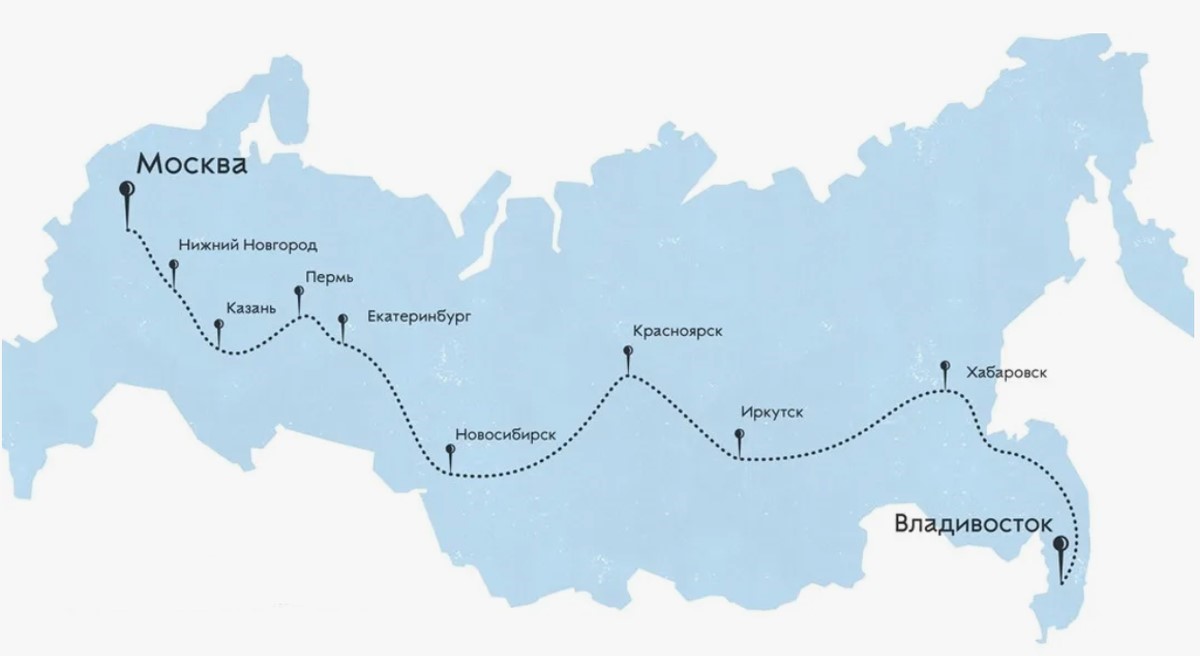
Figure 6. Route of the Trans-Siberian Railway
As a summary:
The Trans-Siberian Railway is the longest on the planet. Its length is 9288.2 km. The starting point of the Trans-Siberian Railway is the Yaroslavsky station in Moscow, and the final point is the Vladivostok station. It took 25 years to build, the road passes through eight time zones, through Europe and Asia, 11 regions, 5 territories, two republics and one autonomous region, 88 cities, crosses 16 major rivers.

Sources of information:
- G.A. Arkhangelsky. Russian industrial revolution.
- The Great Siberian Way: how the longest railway on the planet was built
- Trans-Siberian Railway: the longest railway in the world