
Key indicators for assessing the progress of project implementation and the effectiveness of the management system

According to the Construction Industry Institute (CII), only one in 20 projects meets its planned time and cost. Ineffective project management systems, coupled with growing implementation complexity and a critical shortage of qualified personnel, are preventing large infrastructure projects from being completed within the agreed time frame and cost.
McKinsey Research also showed that 98% of megaprojects have cost overruns of more than 30% and 77% of projects are completed at least 40% late (Figure 1.)
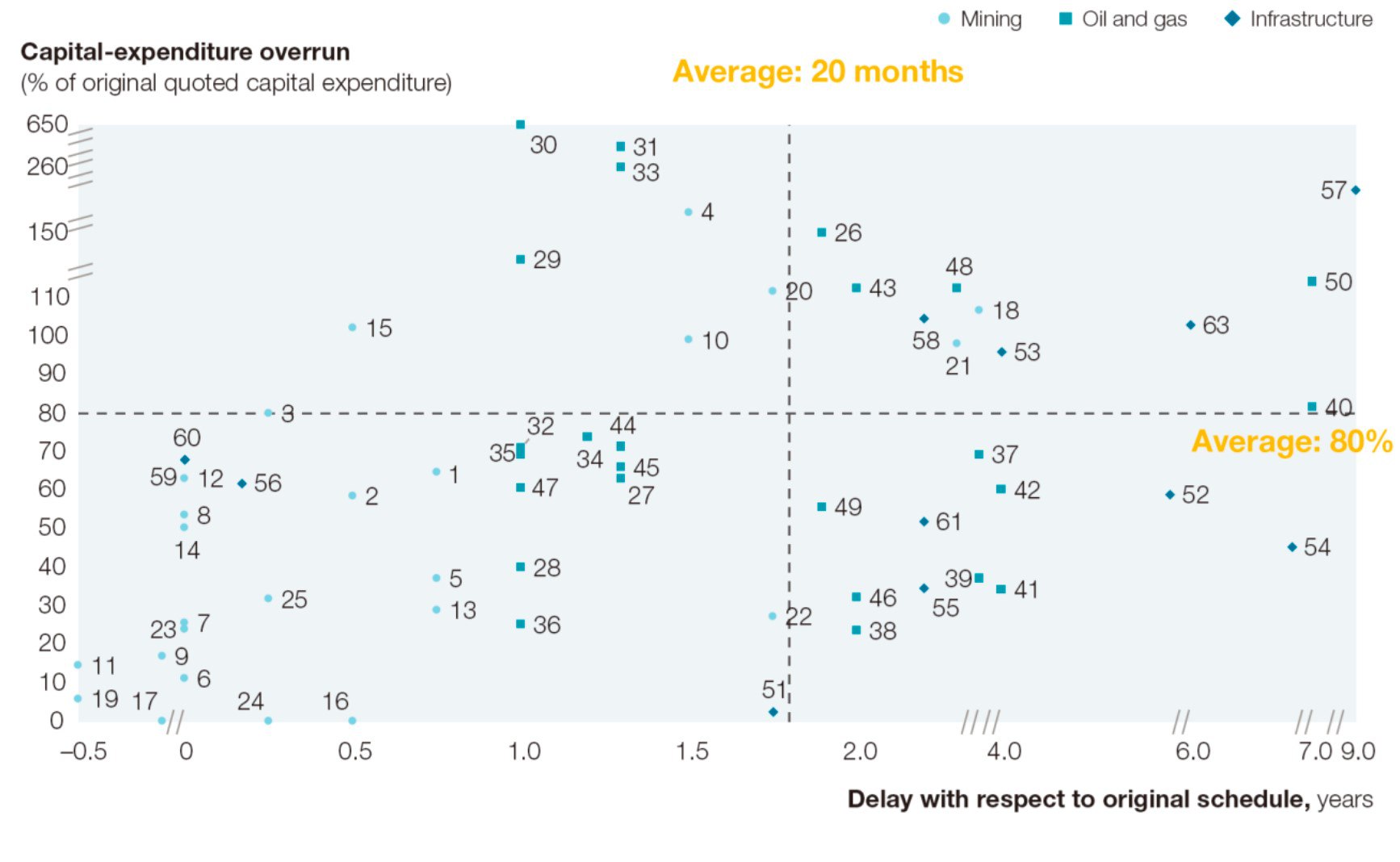
A similar situation is observed in the Russian market - according to PM Excellence experts for 2016-2022, in 90% of large and megaprojects There were problems with timing.
Often, project managers are mistaken in their implementation forecasts until the project "fires" (the deadlines are "burning"). What prevents you from understanding in advance the real picture of the timing and budget of the project? In most cases, it is the subjective and inconsistent use and interpretation of metrics related to progress measurement, performance evaluation and forecasting. This results in a distorted picture since the true progress and effectiveness of the management system is not known.
If all players in the project management industry used the same or similar methods to track project progress and performance, there would be no ambiguity in estimates and forecasts. During a project, clients, contractors and suppliers spend a lot of time agreeing on what metrics should be tracked and how. This process needs to be simplified using a standardized short list of indicators that have already been proven to be effective and associated with successful results on numerous projects.
Given the rapid growth in the number of large and megaprojects in Russia, we at PM Excellence believe that the industry needs standard and objective ways of assessing project progress. This will help relieve project managers from having to "reinvent the wheel" for each individual project.
In the following series of articles, I will try to show a systematic approach to defining key metrics and indicators to solve two main problems:
1) How should you evaluate the progress of a project and obtain realistic forecasts about its completion time?
2) What factors are best used to determine the reliability and effectiveness of a project management system?