
IPA identifies root causes of schedule slippages in the Middle East
07.02.2025


The PM Excellence analytical service presents materials from Ronald Gutcher, an Independent Project Analysis expert on investment projects in Europe, the Middle East, Africa, "IPA identifies the root causes of schedule failure in the Middle East." The article describes the regional specifics of the problems of schedule network modeling. The article provides a classification of factors causing missed deadlines. Recommendations are given for the accurate compilation of schedule network models taking into account these factors. These recommendations can also be applied in planning Russian projects.
The study found that capital construction projects in the Middle East are systematically behind schedule by 30%, which is significantly higher than the global average of about 20%. This lag has been observed since 2010 and is confirmed by new data based on an analysis of 29 completed projects in the region costing between $10 million and $500 million.
The study classifies factors affecting project timing in the Middle East into three groups:
- controlled by the project team;
- organizational;
- external (outside the control of the project team).
Previous IPA recommendations suggested strengthening feedback, creating a database of deadlines, and conducting BEAM meetings (Business Process Alignment Meetings) to set realistic deadlines in calendar-based models. New research focuses on the factors project teams must consider when planning and executing to avoid missing deadlines.
Controllable factors include: poorly integrated teams and a high frequency of disruptive, fundamental changes in the project at late stages, which may be a consequence of insufficient development of project scope during the initiation, design, and planning stages. So in the Middle East, during the construction process, among the changes carried out, 93% are capital, while in the main world only 57% (Figure 1)
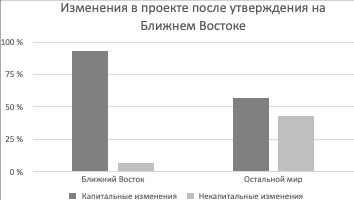
Fig. 1. Changes to the project after approval in the Middle East
Source: IPA (Independent Project Analysis)
Integrating teams early in the planning stages is especially important for projects in the Middle East, where overly optimistic timelines are common. Research shows that teams in this region are less likely to be integrated and fully informed early on than in other parts of the world. In the Middle East, the lack of team integration (coordinated interaction between project participants) is twice as common as in the rest of the world, where most projects are implemented by integrated teams (Figure 2). Thus, projects in the Middle East are twice as likely to require the involvement of a PMC contractor.
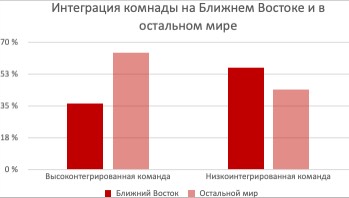
Fig. 2. Integration of the team in the Middle East and the rest of the world
Source: IPA (Independent Project Analysis)
In addition to controllable factors, the timing of projects in the Middle East is influenced by organizational practices, in particular the high turnover of staff in project teams. The change of managers and key specialists between stages of the project undermines the stability of the team, which negatively increases the work timeframes included in the planning. Team stability is one of the key factors for project success. Insufficient understanding of the impact of staff turnover leads to a reduction in the planned deadlines for completing work in schedule network models compared to real ones and, as a consequence, to the failure of these deadlines. Systematic changes of personnel between project and work stages are especially harmful.
A third group of factors affecting project schedules in the Middle East includes uncontrollable conditions such as the use of unskilled labor and extreme heat and humidity. These conditions can reduce productivity by more than 20%. The uniqueness of the situation lies in the fact that these factors, despite their well-known nature, are often not taken into account when drawing up schedule network schedules. Instead of adapting plans to cope with lower productivity during the summer months, companies often respond by increasing the number of workers, which makes the situation worse because it breaks down previously built processes in a facility with fewer workers.
Considering the factors described above, it is clear that there are two important ways to improve the predictability of the project schedule in the Middle East. The first way is to set realistic deadlines in the calendar network model when planning, the second is to increase the integration of the project team and reduce staff turnover. It is also necessary to pay attention to agreeing on the scope of the project before the start of its implementation with all participants and stakeholders and adhere to what was agreed upon during the implementation process.
Link to original: https://www.ipaglobal.com/news/article/new-ipa-research-identifies-root-causes-of-schedule-slip-in-the-middle-east/
Author: Ronaldo Gatcher, Independent Project Analysis expert on investment projects in Europe, the Middle East, Africa