
Vladimir Shukhov. Life is like a megaproject
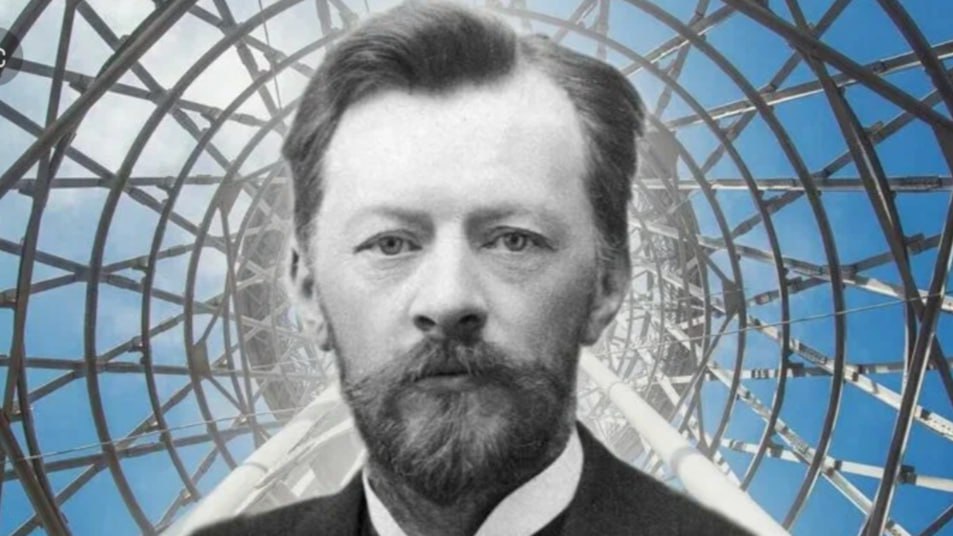
Fig.1 Vladimir Grigorievich Shukhov
An attentive traveler will note the details of the Kievsky railway station in Moscow, the unprecedented design of the tower on the Oka River, the oil barge in Gorokhovets, and the simple roof of the GUM department store on Red Square. What unites them? More precisely, who? Surname Shukhov. Name Vladimir Grigorievich. Russian and Soviet engineer, architect, inventor, scientist, manager of large-scale projects and megaprojects.
Shukhov is not only the Shukhov Tower on Shabolovka. He was also one of the founders of the Russian oil industry, and the inventor of those same arched vaults that are still used in stadium and concert hall projects.
We drive gasoline cars every day and are grateful to Henry Ford. However, it was Shukhov who in 1878 invented and patented cracking - a way to separate oil into fractions in such a way that during processing it was possible to obtain not only kerosene, but also motor oils, diesel fuel, fuel oil, and gasoline.
Under the leadership of Shukhov, by order of Ludwig Nobel, in the winter of 1878/79, the first oil pipeline in Russia with a length of about 10 kilometers was built. It connected Balakhany and the Black City. Shukhov was the first in the world to propose and practically carry out pumping fuel oil through pipes, preheating it and increasing its fluidity.
It was Shukhov who came up with the idea of storing petroleum products in cylindrical tanks and proved the effectiveness of this.
But perhaps the most famous design by Shukhov was a tower in the shape of a hyperboloid of rotation.
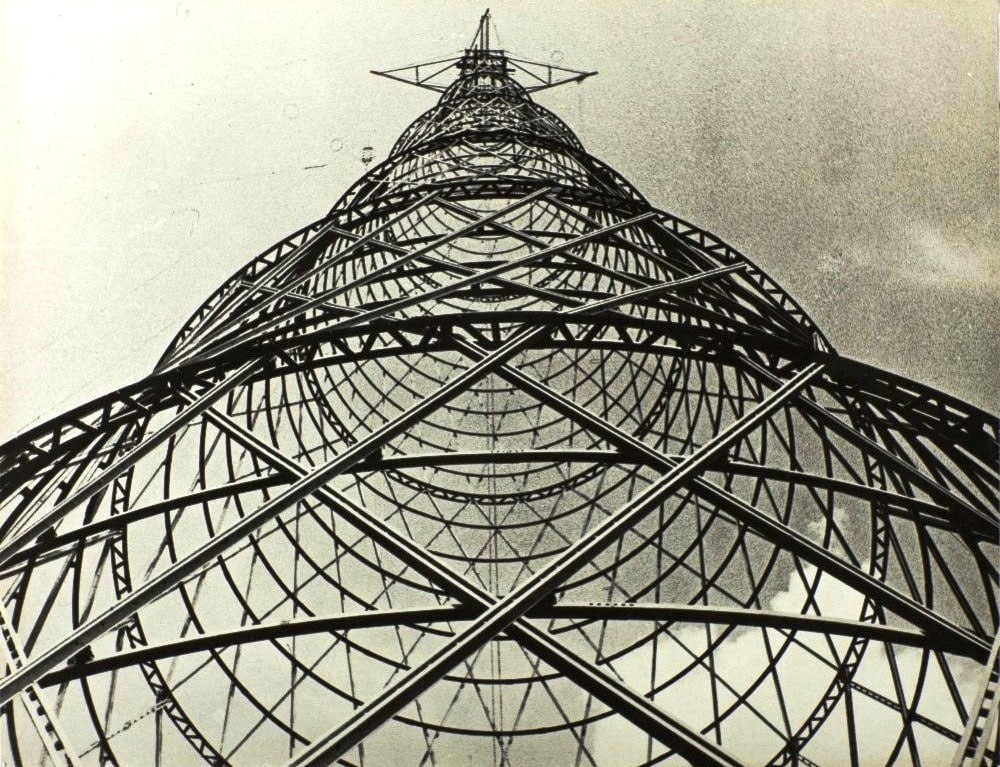
Fig.2 Shukhov Tower
It's the beginning of 1920 outside the window. A difficult and turbulent time for the country and millions of its inhabitants. There is civil war in the east, famine is raging in the southern regions, and in the west the Red Army cannot cope with the onslaught of Poland. It was against this complex background that the architect Shukhov was given the task of building a radio station.
The situation is very much reminiscent of the future megaproject with the Ostankino TV tower, and Vladimir Shukhov has similarities with the head of the TV tower project, Nikolai Nikitin. Both are inventors, engineers and project managers. The goal of both projects (radio station and television tower) is mass communications. The interested parties are the country's leadership. Both projects had significant difficulties.

The project was so ambitious that there is still a story circulating that construction was planned right on the territory of the Kremlin, but they changed their minds due to the fact that the cathedrals and the bell tower of Ivan the Great could interfere with communications. They decided to place the tower in an abandoned garden on Shabolovka.
The station developed by Shukhov relied heavily on the experience of the hyperboloid towers he had previously invented. According to the engineer's plan, the construction itself would also be economical: cranes and heavy machines were not required - Shukhov proposed a telescopic installation method, in which individual sections were assembled together on the ground, in order to then be lifted to a height in turn and installed one on top of the other.
Due to problems with iron, an emergency occurred at the construction site and some sections collapsed. Shukhov was sentenced to "conditional execution". The engineer was given an ultimatum: if there was the slightest miscalculation, the conditional execution would be replaced with a real one.
In such tense and cramped conditions, Shukhov, despite everything, managed to complete the megaproject on time. In March 1922, the 160-meter tower - at that time the tallest structure in the entire USSR - began operating for the first time. And six months later, with its help, the first radio program was broadcast - a concert of Russian music with the participation of Nadezhda Obukhova and Boris Evlakhov.
Vladimir Grigorievich and his students put the implementation of large-scale projects on stream. In essence, they organized a mega-project office. We competently prepared project documentation and schedule network models, supervised contractors, and learned lessons.

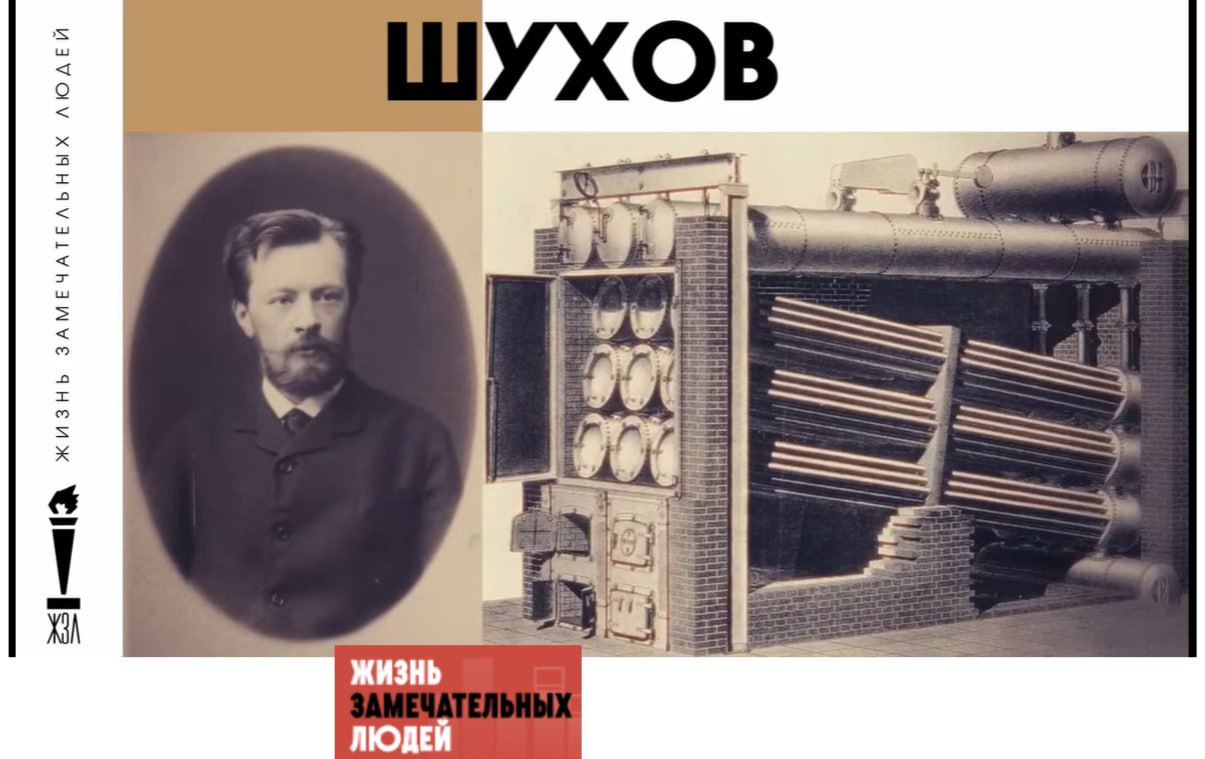
Fig.3 Shukhov. Life of wonderful people
The great Russian engineer Vladimir Shukhov has implemented more than 700 projects with his contracting teams over the years. At the same time, the level of work was at the peak of engineering knowledge of that time, about 200 towers, about 500 bridges, grain elevators, blast furnaces, floating dry dock gates, a rotating stage of the Moscow Art Theater and much, much, much were built.
PM Excellence carefully studies the legacy of Shukhov, as well as other great Russian organizers, designers and engineers, such as Korolev, Shipunov, Nikitin.
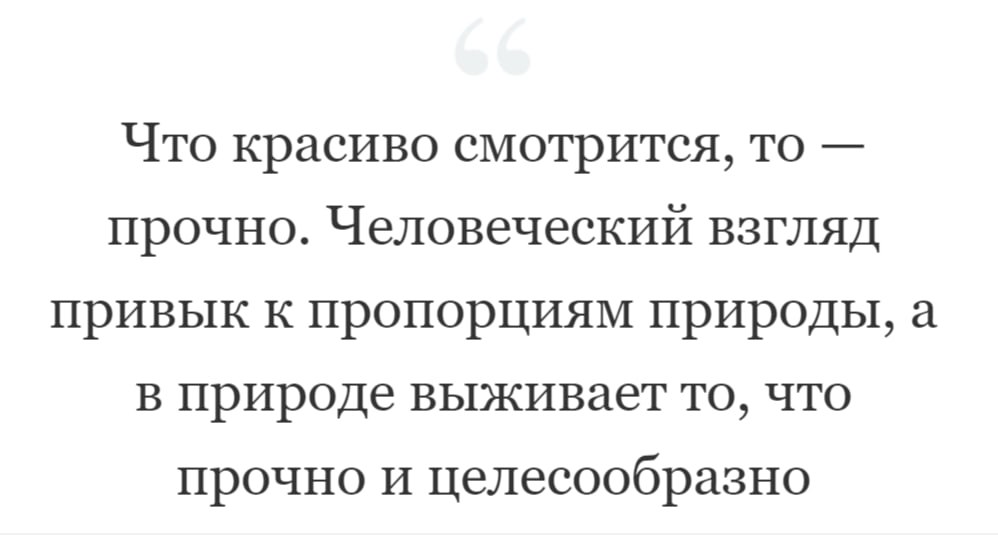
As a summary, a quote from Vladimir Grigorievich Shukhov:
Sources used when working on this article:
- Nikolenko V.Yu. A systematic approach to managing high-tech projects.
- Article "The world that Shukhov built." https://www.culture.ru/materials/256719/mir-kotoryi-postroil-shukhov
- Article "Russian Gaudi". https://lenta.ru/articles/2024/06/20/shuhov/
- Article "Six great creations of the Russian genius Shukhov" https://rg.ru/2014/02/02/shuhov-site.html
- Wikipedia article Shukhov Vladimir Grigorievich. https://ru.wikipedia.org/wiki/Shukhov,_Vladimir_Grigorievich