
- Home
- News
- Articles
- All Articles
- Foreign experience in project management
Time management of Lusail City (Qatar) construction project
16.09.2025

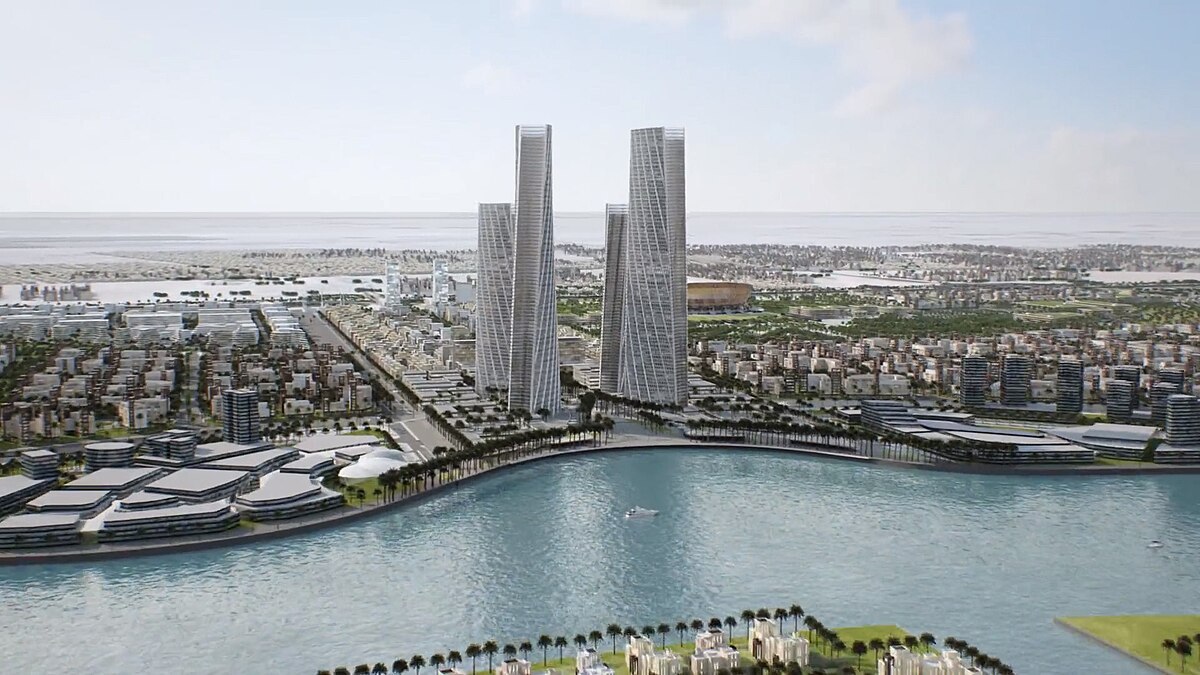
Introduction. Lusail City is Qatar's largest greenfield city development project on the coastline as part of Qatar National Vision 2030. The project began in 2006 and envisaged the creation of a modern smart city with an area of ~38 km² with 19 different districts. Initially, it was planned to complete construction by 2019, later the deadline was shifted to 2020, key facilities were ready only by 2022, and the project was fully completed only in 2025.
Managing deadlines in Lusail City was an extremely difficult task due to the gigantic scale, tight deadlines (including the 2022 World Cup) and many parallel projects. Let's consider how project management standards (PMBOK, PM Guide) were used to plan, monitor and control the schedule network model (CNM), what delays arose and how they tried to minimize them, as well as what tools made it possible - or not allowed - to stay on time at different stages of the project.
Planning a schedule network model of the project
Planning the construction schedule for Lusail City was carried out in stages and covered many sub-projects - from laying infrastructure (roads, communications, metro) to constructing buildings in 19 districts of the city. Scheduling a network model involves developing a work breakdown structure (WBS), defining task lists, estimating durations and sequencing of work, creating a network schedule and critical path, and establishing a schedule baseline. In the case of Lusail City, the developer, Lusail Real Estate Development Company (LREDC), engaged leading international contractors to manage the process - Parsons and Dorsch Gruppe.
The schedule network model included time buffers in case of unexpected delays. For example, extreme heat (which limits daytime work in summer) and possible delivery delays were taken into account. Thus, planners anticipated risks and built in time reserves for key stages.
For efficient planning, separate work packages were allocated and carried out in parallel. In parallel, construction of the first phase of buildings in the Marina District was underway while the design of the next phases continued. This approach corresponds to the fast-tracking method (parallel execution of stages). Thanks to fast-tracking, implementation time has been reduced, although the complexity of coordination has increased.
By the early 2010s, a schedule network model for the entire Lusail City was formed. It was divided into stages: the first phase - basic infrastructure (roads, networks, marina), the second - residential and commercial areas, etc. Each stage had its own time period and target completion dates. Initially, it was supposed to be completed in approximately 13 years (2006-2019), but subsequently the schedule was revised, as we will discuss below. Proper planning helped us begin implementation with a clear time frame.
Monitoring and control of the execution of the schedule network model
Just as important as developing a schedule was ensuring its implementation was monitored over the long project cycle. Lusail City has implemented a strong Project Controls mechanism supported by international project management contractors. Parsons has been providing PM/CM services to Lusail City since 2006. This implies that the project team regularly monitored progress on all work fronts, compared actual performance with the plan, and initiated adjustments if necessary.
Schedule control was achieved through regular meetings, contractor reporting, and the use of software dashboards. Each package of work had its own detailed two-week short-term plan, which made it possible to proactively manage immediate tasks and identify risks of missing deadlines. For example, for individual large-scale projects (such as the Lusail Katara Hotel or shopping centers), detailed two-week work schedules were drawn up, agreed upon between contractors from related disciplines.
Particular attention was paid to monitoring the critical path. The team regularly recalculated the schedule network schedule taking into account actual progress. If any work fell behind on the critical path, corrective measures (adding shifts, reallocating resources, or re-coordinating the work sequence) were immediately considered. For example, if the installation of electrical networks was delayed, more crews could be temporarily transferred to this area to catch up with the schedule.
The status of the project in terms of timing was brought to the attention of management and government customers on a monthly and quarterly basis. Given the high importance of Lusail City (it is the "city of the future" of Qatar and at the same time the location of the World Cup final), control also took place at the government level. The Supreme Committee for Delivery & Legacy, the committee responsible for preparing for the 2022 World Cup, coordinated its infrastructure readiness requirements with the Lusail team. This ensured that tournament-critical facilities were prioritized and resources were allocated to them in a timely manner.
Thus, thanks to the built monitoring system, the project team identified deviations early. Many problems were contained within the time reserves. For example, when difficulties with the supply of materials arose in 2017 due to the geopolitical blockade of Qatar, the pace of work at Lusail Stadium slowed down noticeably. However, thanks to constant monitoring and revision of the schedule network schedule, the consequences of the delays were partially compensated - the stadium was ready, albeit not in 2020, as originally planned, but already in the first quarter of 2021.
Delays and reasons for missing deadlines
Despite careful planning and monitoring, such a large-scale project was not without delays. We will identify the main factors that influenced the Lusail City deadlines and evaluate how effectively the project team dealt with them.
- Global financial crisis 2008-2010. In the first years of implementation, the project faced a global real estate downturn. After the initial contracts in 2006, construction practically came to a halt: the collapse of the real estate market in the region led to the freezing of Lusail for about 4 years. Many investors have put the brakes on investments. This macroeconomic factor was beyond the control of the project team. Only in 2010-2011, when Qatar received the right to host the 2022 World Cup, did the government manage to "reanimate" the project financially and organizationally. The delay in the starting phase required rescheduling: the completion date shifted from the originally planned one.
- Reconsidering the ambitions and scope of the project. Lusail's original plan (2005-2006) was smaller in scale than the final plan. After the victory of Qatar's bid for the World Cup and the adoption of the state infrastructure development program, new facilities were added to Lusail - for example, a giant stadium, additional hotels, and entertainment areas. Expanding the scope of work naturally lengthened the total duration. Officially, the deadlines were revised several times: 2019 → 2020 → 2022 → 2025. Each such adjustment reflected both the delays experienced and the increase in the scope of the project.
- Hundreds of changes during construction. A major infrastructure project usually goes through many adjustments along the way. Lusail is no exception: the customer repeatedly made changes to the design and requirements. A case in point is the Lusail Expressway project, an 18-lane highway connecting the city to Doha. Its construction lasted from 2012 to 2020, and although the road was opened to traffic at the end of 2017, full completion was delayed due to "hundreds of design changes made at the request of the customer." These changes (modifications to interchanges, addition of tunnels, architectural elements like the Al Wahda arches) led to alterations and, as a result, delayed deadlines. Each change was assessed for impact on the schedule network model and decisions were made about additional time or resources. Frequent design changes have become one of the main causes of local delays.
- External geopolitical factors. In June 2017, a number of neighboring countries declared a blockade of Qatar, making it difficult to import materials and equipment. Satellite images from that period showed a slowdown in construction at several Lusail sites, including the stadium. Although the government quickly set up alternative supply chains, months of uncertainty resulted in lost time. Additionally, the COVID-19 pandemic temporarily limited worker mobilization and logistics in 2020. However, work at the 2022 World Cup sites (including Lusail Stadium) did not stop completely - sanitary measures were introduced, bus occupancy was reduced, crews were divided into small groups, etc., in order to continue construction even in the midst of a pandemic. As a result, the pandemic caused only a relatively small delay (about 3-4 months) in the stadium's schedule, which was able to be compensated until 2022.
Taken together, these factors explain why Lusail City did not meet the original deadline and required the program to be extended until the mid-2020s. However, it is important to note: critical deadlines were met. The city hosted the 2022 World Cup - for this event, the minimum launch complex (stadium, roads, hotels, LRT metro) was put into operation.
Estimating duration and adjusting schedule
Lusail City's experience demonstrates the importance of realistically estimating work durations at the start of a project and being prepared to adjust these estimates as the situation evolves. Initially, the duration of the construction of the entire city was estimated relatively optimistically - approximately 12-13 years of active work (plus the preparatory period). These estimates were based on global experience in the construction of "new cities" and large-scale areas, but in reality the project took longer.
The reasons are partially described above: conservative risks (2008 crisis, blockade, design changes) materialized and extended the duration. But there were also optimistic assumptions in the initial estimates. For example, it was believed that the demand for real estate would allow plots to be quickly transferred to private developers and they would quickly build facilities. In practice, some objects were delayed due to market factors. This is not the fault of the schedule planners. However, such delays indicate that the assessment of the duration of a megaproject must include an analysis of not only technical but also economic aspects.
The project team regularly reviewed the schedule network model. Milestones set for the 2019 horizon were recalculated and shifted after the restart of construction in 2011-2012. - the new goal became 2020, that is, we added ~1 year of reserve to the original date. This reserve turned out to be necessary: when closer to 2018 it became clear that the entire volume would not be completed by 2020, the completion of the full development of the city was postponed for several more years (guideline 2022 for the main objects and about 2025 for the final touches). The schedule network model was revised officially: for example, contractors were extended deadlines under additional agreements, and new milestones were introduced.
Time buffers were also used to reduce the impact of delays. At critical points in the schedule, reserves were built in - for example, the infrastructure for the stadium had to be ready several months before the stadium itself, which gave some slack in case of a hitch. Qatari planners also took into account the climate buffer: the hottest months (July-August) are actually less productive, so the schedule network model was often built according to the formula of "working days of the year" with the exception of the hot period. This buffer partially compensated for productivity losses due to the heat without formally missing deadlines.
Lusail's project management team reviewed the plan on time, formally agreeing to new deadlines with stakeholders, rather than burying their heads in the sand. This transparent approach made it possible to avoid management in crisis mode - the schedule network model remained under control, albeit extended.
Ultimately, Lusail City showed that tight deadlines can be met, even while building a "dream city," if professional project management standards are applied. By 2022, the city hosted tens of thousands of World Cup guests on time, which was an achievement of Qatar's project management. The main thing to remember is that managing deadlines does not end with drawing up a plan; it is a continuous process of forecasting and influencing the progress of work. Lusail City has convincingly demonstrated that even in large-scale projects, good time management can turn an ambitious plan into a tangible reality within a reasonable time frame.
Sources:
- Arab Business - "Qatar's Lusail City Begins First Phase of Commissioning" (Shane McGinley, September 17, 2012)
- Worldwide Construction Network - "Lusail City, Qatar" ("Lusail Project", 2023)
- Pearly Gates - "When will the city of Lusail be completed?" (analytical article, no date)
- Hyundai E&C Newsroom - "Interview with our staff working on the Qatar-Lusail Expressway" (February 23, 2021)
- Business Insider - "Qatar blockade slows World Cup stadium construction" (Camilla Hodgson, January 5, 2018)
- Coliseum Online - "Qatar's iconic stadium to open in 2021" (May 21, 2020)
- Gulf Times - "Over 80% of infrastructure projects in Lusail city completed" (April 19, 2018)