
Totalitarian project management: the phenomenon of "Frankenstein's monster"
22.08.2025

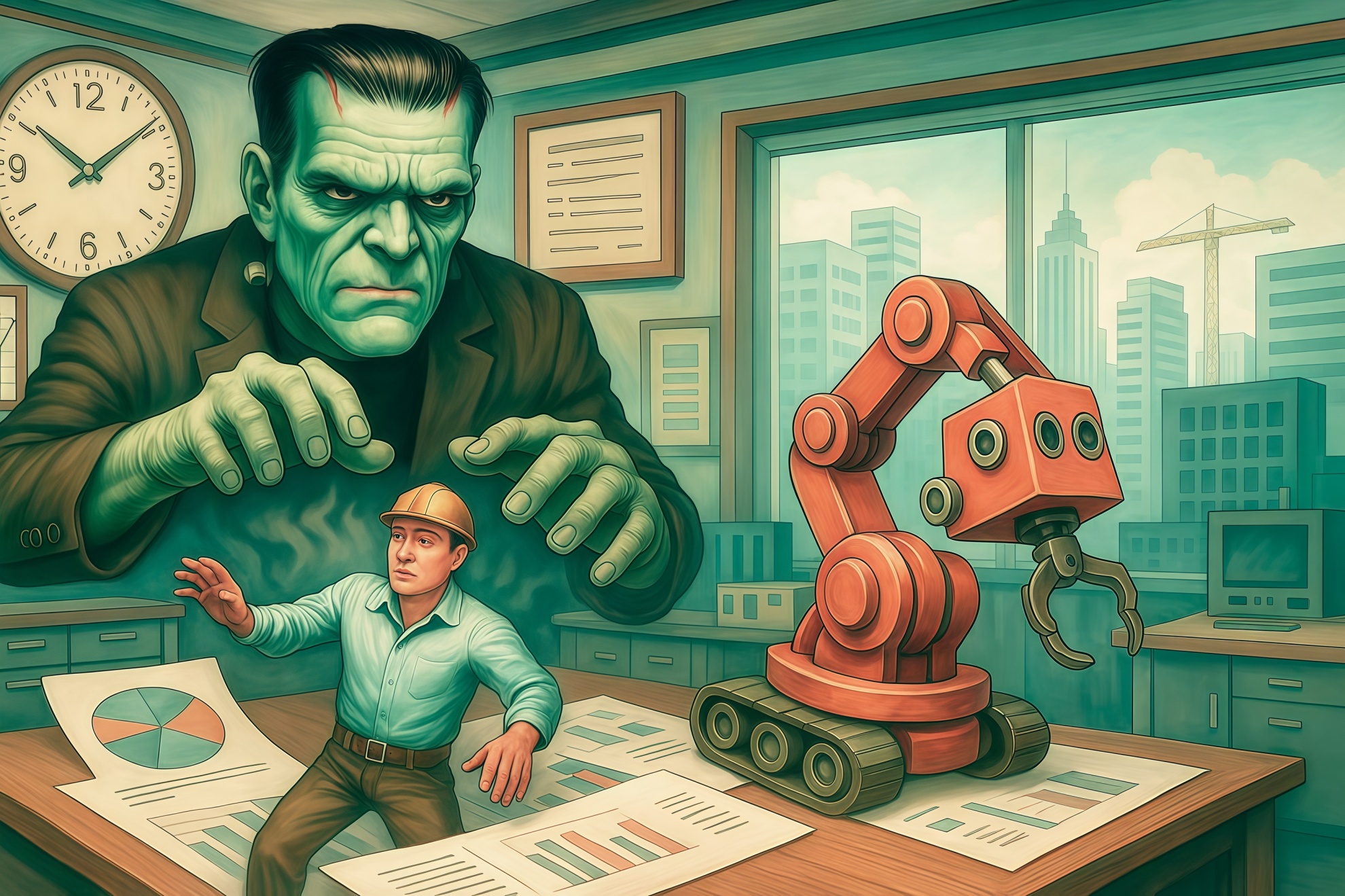
"Remember that I have the power... You are my creator, but I am your master; obey!" Mary Shelley, Frankenstein, or the modern Prometheus
This quote from a classic work reminds us of the complex relationship between the creator and his creation. In project management, control and power are also rarely straightforward. Strict control can turn a cumbersome human-made system into an efficient organizational mechanism - which is how totalitarian project management arises.
According to analytical data from PMI (Project Management Institute), only 48% of projects can be considered successful. However, 40% are in a vague "gray zone" where success and failure are intertwined, and 12% of projects clearly fail.
These figures highlight serious problems in project management. Independent reviews show that up to 70% of projects do not achieve their stated results. The main reasons cited for this are lack of resources, lack of clear goals, weak stakeholder involvement and problems with financial control.
In the context of such outcomes, the idea of increased control and centralization of project management becomes especially attractive. This has led to the emergence of a project management model in which various methodologies, standards and regulations are combined into a single set of procedures, like a "living organism". The most appropriate name for such a model, in my opinion, may be totalitarian project management.
How did Frankenstein's monster come about?
Totalitarian project management is a model in which everything is subject to strict company rules and procedures. The main strength of this system lies in centralized control and full adherence to corporate standards and values. They become not just a recommendation, but a mandatory condition for all participants. This model can be extremely effective, especially in critical situations when the stakes are high and the specifics of project management methodologies fade into the background.
Like its literary prototype, totalitarian project management arose from good intentions: every element in corporate standards seems correct and appropriate, and the set of competencies is attractive and effective. However, instead of a harmonious whole, a structure of processes appears that looks formally artificial, cumbersome and disproportionate.
However, this structure operates based on a strict vertical chain of command and strict subordination. Despite the fact that it consists of fragments of various concepts, its amazing sustainability ensures the achievement of results through strict formalized control over project management processes.
What is the phenomenon of the Frankenstein model?
At first glance, such a description may seem exaggerated. However, if you imagine the world of corporate projects as a circus arena, where a certain "monster" inexplicably moves impossible tasks, acting under the influence of invisible forces, then this model acquires a completely logical explanation.
Luckily, the original story didn't include any details about the monster's creation, avoiding direct copying. But let's focus on the process of "revitalization" - on what gives the Frankenstein model energy and the opportunity to exist, on the "sources of life" of the project activities of large companies.
It is necessary to understand that in any activity, and especially in project management, the "source of life" is, in fact, the "source of resources" that ensures the continuous functioning and ultimately achievement of the project goal.
Let us assume that the invisible force and source of resources of the totalitarian model of project management are the "hidden reserves" of the company. "Hidden reserves" mean a set of unclaimed human potential, undervalued organizational capabilities, technical resources, as well as cost optimization and redistribution of assets within the corporate structure.
Example: As part of a large infrastructure project, limited by time and resources, a totalitarian approach can reveal the hidden abilities of employees, force equipment to work at maximum capacity, and redistribute resources from other structural units or donor facilities. All actions are subordinated to achieving a single goal of the project, and it is these hidden reserves that can play a decisive role in the final success.
Reserves are mobilized under the influence of external circumstances thanks to powerful centralized control. This force seems to bring together disparate elements, stimulating employees and resources that would normally remain unclaimed.
Conclusion: The phenomenon of the Frankenstein model lies in its ability to activate hidden reserves that are not usually shown in standard reporting. They become the "engine" that allows projects to achieve their goals, despite the shortcomings and inertia of the company's cumbersome management systems.
What is the power of the Frankenstein model?
Centralized control The main "strength and power" for this model is a rigid vertical of power and discipline. Control becomes the "great equalizer" that brings all participants under the same responsibility without disrupting the existing organizational structure and staffing. This creates unique conditions in which, despite the professional hierarchy, everyone finds themselves in an equal position.
If we draw a parallel with the famous phrase about Samuel Colt, we can say this: "Nature created people different in strength and capabilities. But Control made them equal."
Why does this work?
In large infrastructure projects, resources are limited and deadlines are tight. Strict order, uniform procedures and personal responsibility make it possible to:
- Increase performance discipline. All participants know that not only the result will be assessed, but also compliance with regulations, reporting formats and approvals.
- Reduce uncertainty. The more control, the easier it is to predict, identify risks and respond to emergency situations.
- Redistribute resources. A strong center can "pull" people, equipment and materials from other departments and direct them to a priority project.
- Use hidden reserves. Despite its cumbersome nature, the model is able to mobilize hidden resources.
- Unite efforts. Control becomes the "great equalizer": from the ordinary performer to the top manager, everyone is obliged to follow the same rules and deadlines for implementation.
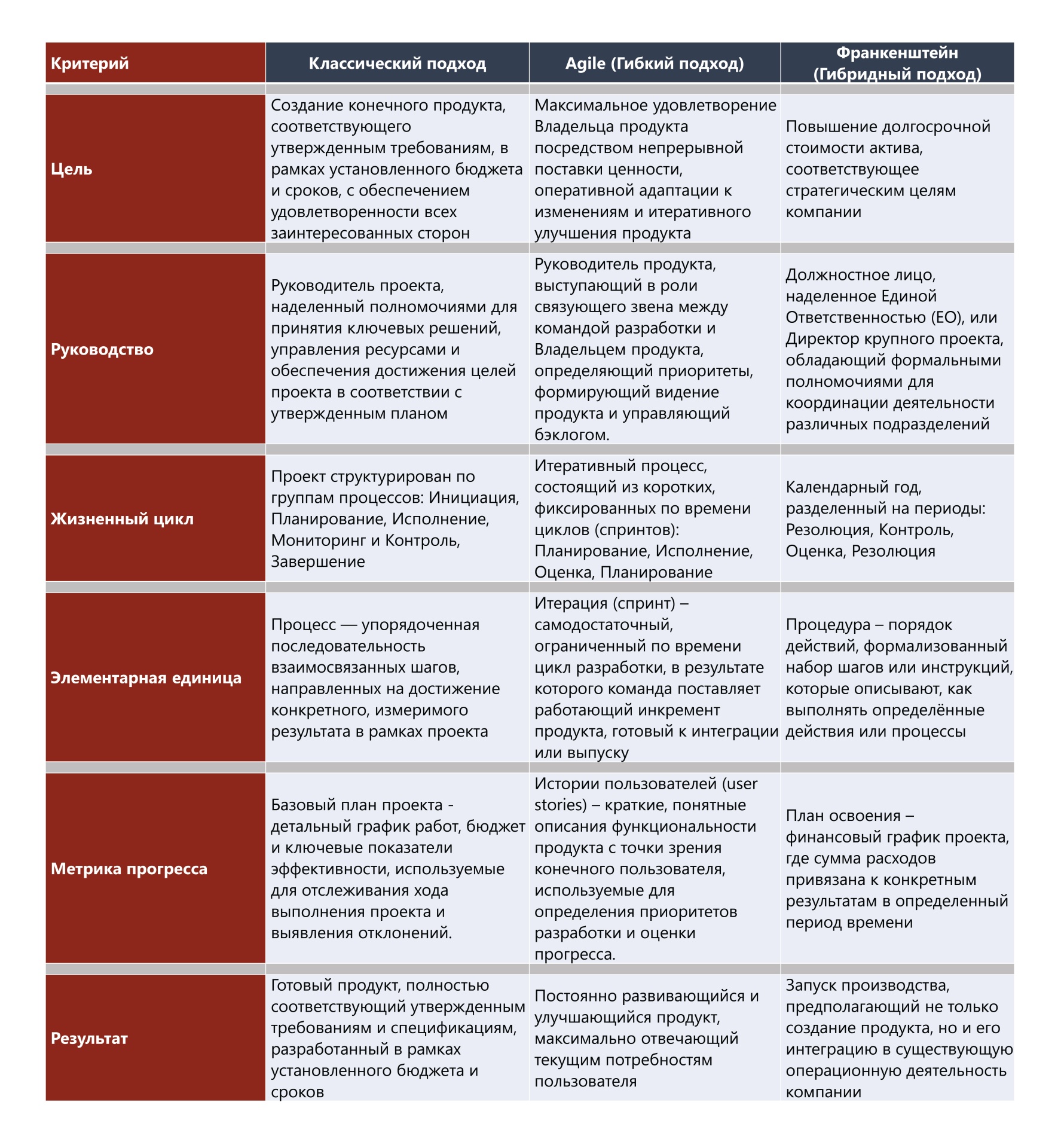
Comparison of approaches
To better understand the place of the totalitarian model in project management, let's compare it with classical and flexible methods. The table below presents the main characteristics of each approach, as well as brief comments for ease of reference.
Pros and cons of the totalitarian project management model
Pros:
- Viability. Even if the processes seem cumbersome, the system survives thanks to the mobilization of hidden reserves and strict discipline.
- Transparency and reporting. Regulations and control create clear rules of the game, reducing the risk of "shadow" agreements.
- Reduced costs. In conditions of strict control, the implemented practices make it possible to reduce unjustified budget overruns.
- Vertical of power. The ability to quickly pull up resources and change priorities ensures the implementation of strategic tasks.
Cons:
- Bureaucracy and slowness. Multiple procedures slow down the response to change, which can lead to missed opportunities.
- Initiative is punishable. Tight control can demotivate specialists, reduce openness and suppress initiative.
- Waiting for resolution. In a rapidly changing external environment, a centralized system may not have time to adapt.
- Feeling comfortable. Managers may stop looking for new approaches using "procedures" and "regulations" as excuses.
Summary
The professional project manager should consider the totalitarian model of project management as an option. By combining the disciplines of the classical approach, the flexibility of Agile and strategic vision, you can create a modern Prometheus, which is capable of delivering results rather than destroying.
The Frankenstein phenomenon is a paradoxical phenomenon in which the production costs and bureaucracy of large companies' management systems are offset by the ability to mobilize hidden resources and achieve project goals, often contrary to expectations.