
PM GATE - a new standard for managing PM Excellence programs

8 months after the release of the project management practice standard PM GUIDE - PMC contractor PM Excellence releases new PM GATE Mega Project Program Management Standard.
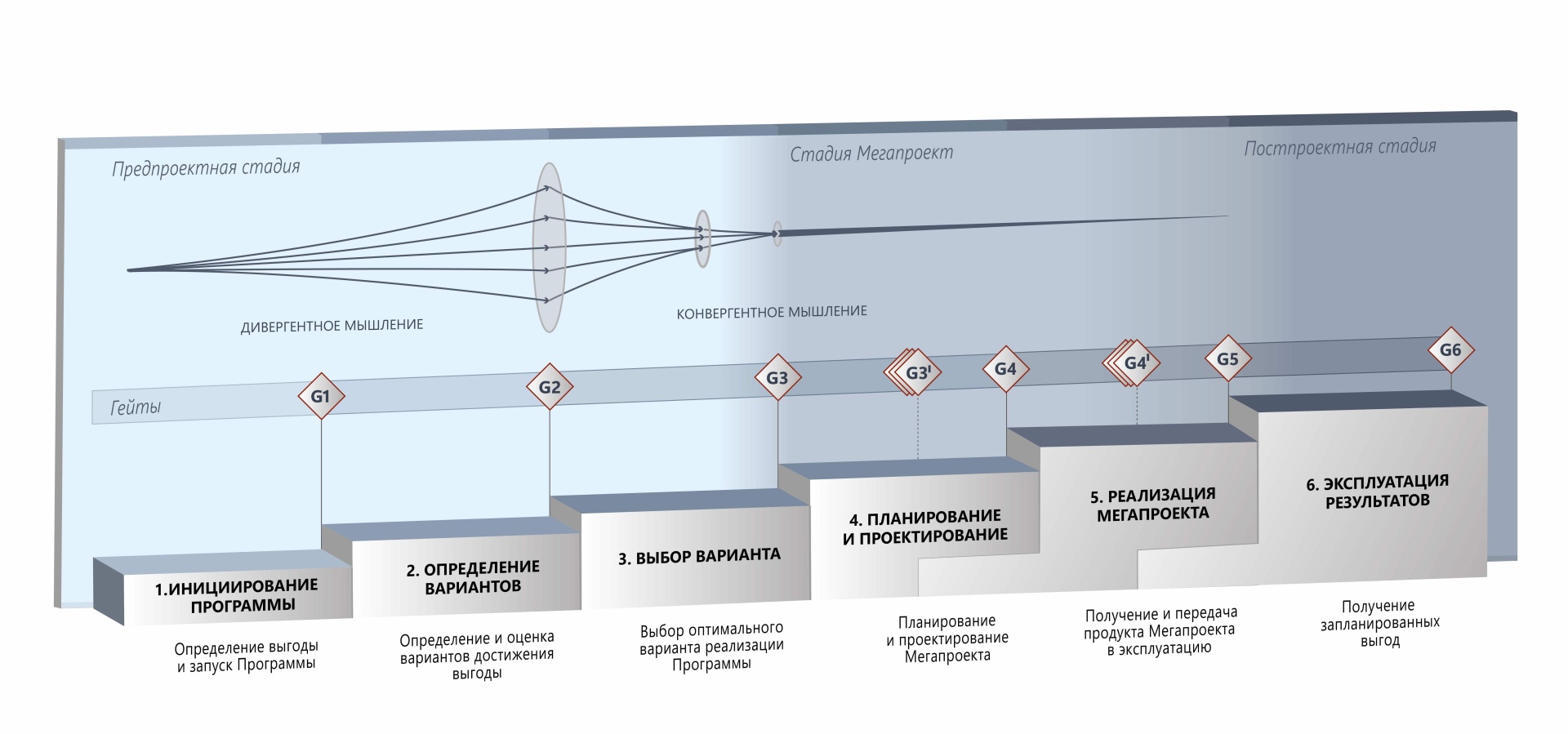
PM GATE - a program management standard, based on a gate approach and describes 6 sequential stages of program implementation. The standard focuses on benefit management throughout the program life cycle, from concept creation to operation of megaproject results.
PM GATE was created based on an analysis of the best Russian and foreign practices in managing programs for the implementation of large-scale projects and megaprojects, as well as the extensive experience of PM Excellence experts in managing large-scale projects and megaprojects.
PM GATE is designed for large-scale projects and megaprojects in large oil and gas fields, government infrastructure projects, road construction, port reconstruction projects, energy infrastructure, railway infrastructure and high-speed highways.
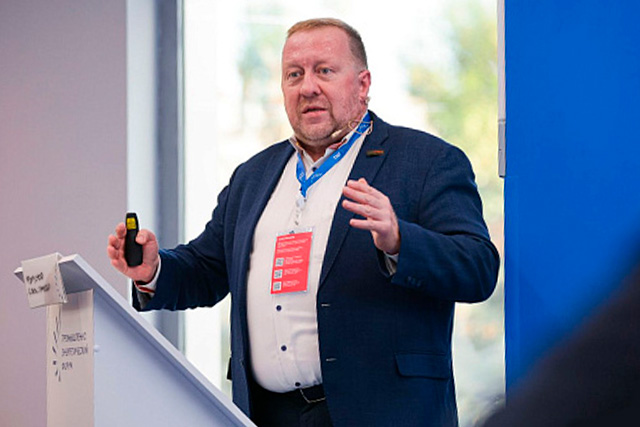
About the PM GATE standard, managing benefits from the implementation of the program and megaproject, the role of the megaproject program manager - in an interview Alexander Kutuzov, PME, invited expert in managing large-scale projects and megaprojects PM Excellence.
Alexander Sergeevich, PM GATE - what is it? How does this relate to the gate model?
This is the program management standard for megaproject implementation. Megaprojects are distinguished by their scale, large volume of attracted resources and budgets, and long implementation time. In addition, you should always think first of all about the benefits that this megaproject pursues. And not necessarily financial. They can be socio-economic, political, cultural. And the benefits are not always visible immediately. In addition to benefits, there may also be multiplier effects. For example, this is the benefit that comes from building roads. At first it does not bring direct benefits, but it manifests itself later. This may be a result that cannot be measured in money - in the form of a reduction in road deaths. Benefits rarely remain the same over the life of a program; they often change over time.
It is important not only to build a large facility, but also, first of all, to be able to manage the benefits, both during its planning and during the creation and further operation of the facility.
Once we begin benefit management, we move into program management. Here, the immediate implementation of the megaproject itself is one of its successive stages, along with the pre-project stage and the stage of exploitation of the results of the megaproject.
The sequence, the order of these stages, as well as gates - decision points during the transition from one stage to another, the principles of decision making make up the gate model of the PM GATE standard. By the way, different decisions can be made, including about stopping the program in a timely manner or changing its benefits (sometimes these points are called kill points).
The pre-investment stage consists of three stages, in which the benefits and options for achieving them are determined, and an option for implementing the future project is selected. The megaproject stage, where planning, design and implementation of the project itself is carried out, and the immediate stage of exploitation of the results obtained, where the planned benefits are achieved.
The gate approach itself when implementing large investment projects is not some kind of novelty or invention. Its foundations were laid in the middle of the last century during the implementation of large-scale projects in the aviation, space, oil and gas industries. Almost all large companies that regularly lead large-scale projects have their own gate approaches.
What is new about PM GATE then?
PM Excellence experts have extensive experience in managing large-scale projects and megaprojects. We have encountered the use of different approaches in different industries, both in foreign and Russian companies. The main task in creating a standard is not to invent something new, but, on the one hand, to select the best from various models (we analyzed more than 10 models of the largest Russian and foreign companies), on the other hand, it was important for us to introduce what we consider proper and working (we call these innovations), especially in the conditions of the Russian market.
We also tried to follow the principle of the necessary minimum - "more is possible, less is not possible", selecting the "basis" - models for different companies from different industries.
Thus, PM GATE represents the necessary minimum set of steps for managing a megaproject implementation program, built on the basis of an analysis of Russian and foreign practice, as well as the extensive experience of PM Excellence experts.
By the way, the same approach was applied when creating PM GUIDE - a project management standard, where we identified 12 minimum required mandatory management processes, took the best from Russian and international standards, and also introduced a number of "novels" reflecting the successful practice and experience of PM Excellence.
When managing a program, it is important to understand why we are building certain facilities, to look at how we achieve benefits and whether there are any changes in them. As a rule, megaprojects are very long-term projects that are part of programs. Their implementation can take decades. Therefore, the gate model approach is perfectly applicable here. Its essence is to move to the next stage in the development of our program only after the result of the current stage has been achieved and a decision has been made to continue, or, if the result does not suit us, to make adjustments or stop the program. These decision points are called gates.
You talked about novellas. Can you give an example for PM GATE?
One of the main novelties is a stepwise transition between some stages through intermediate gates. So, for example, we can begin some general construction work and the purchase of equipment with a long manufacturing cycle, without waiting for the release of the entire set of working documentation.
Tell me, who is this management standard aimed at? Who is its target audience and who might need it? From your words it is clear that the benchmark of the standard is megaprojects. But do you have a consumer profile?
First of all, large companies that have programs for implementing megaprojects (they are often called "major investment projects"). We provide them with a clear, transparent path to manage program benefits in the first place. Here we interact with shareholders and top officials of companies, or with investment departments, for whom it is important to identify and achieve benefits in the long term (by the way, not only financial ones). The second level of interaction is the program management commands. PM GATE describes a clear sequence of management steps in program management.
You said that this management standard helps you stop in time and make some adjustments along a certain path. What other business goals and objectives can it solve?
The very first thing is to answer the question: "Why are we doing all this?" Those. PM GATE helps us identify and plan the benefits we want to achieve. It is very important to keep the answer to this question in mind throughout the program. When a program has been implemented for 10 years or more, there is a high risk of forgetting why it all began. It is important to be aware of the connection between these benefits and keep your finger on the pulse if they suddenly change. For example, it was a monetary benefit, but then we understand that the object will no longer bring profit, and we consider the socio-economic and political benefits. It also happens the other way around. Creating and managing a benefit plan is the main focus of the standard.
PM GATE also allows these benefits to be translated and decomposed into program projects. The standard provides a bundle of benefits that we plan to achieve with the technical parameters of the project and megaproject. It also sets the rules for change management in a two-way mode: if the benefit plan changes, corresponding changes occur in the program projects, and vice versa, changes during the implementation of projects can lead to changes in the benefit plans.
The third important point is the ability to "brake or turn in time." Large and megaprojects are planned for years, or even a decade, so the presence and functioning of a mechanism for timely decision-making in connection with emerging risks is necessary - the ability to make timely decisions about changes or stopping the program.
However, all these three points relate not to PM GATE itself, but to the principles of the gate model on which it is built.
It turns out that the project ends at the moment of commissioning, and the program extends to the further life of the facility, right?
Yes, the program lasts much longer than the actual construction itself. And to manage the program and its implementation, we must determine how the program ends. We must understand what benefits we will achieve by this date. If we take the development of an oil and gas field, then there is usually a business plan for 20-50 years in advance and this, of course, is already a program where the field development stage itself can last only 3-5 years.
What are the main challenges faced when implementing megaprojects?
The first is the lack of professional program, megaproject and project managers. Of course, in most cases they are formally appointed. The problem is that these are often managers who are not properly qualified in program and project management. Moreover, it is common for this to become a "social burden" to their main job. People don't understand who the program manager is, who the megaproject manager is. I won't say that they don't have a chance of success, but in most cases this is the root of failures in program implementation.
The success of any program and project is based on professional managers of the program, megaproject and its constituent projects. They must be not only experienced technical specialists, but also know and be able to apply modern program and project management technologies.
Program and megaproject managers have a very important role that is often not given enough importance - they must manage the project stakeholders very well. Manage customer expectations from the project results, change them on time, somewhere say "no" harshly, and somewhere vice versa - take the other side. We very often see controllers - "helpers" - in the post of program or megaproject manager. In fact, they do not take responsibility, but only come and say: well, it didn't work out.
This is very convenient for masking failures in management.
Tell me, please, what is the management standard - is it some kind of book, some kind of blocks?
The standard is a brochure, about 30 pages. We tried to be very concise, brief, but at the same time succinct. The standard describes 3 stages, 6 main stages. We have extensive experience in program management, and we know well what each stage describes, what needs to be done in it, and what decisions must be made to move to the next stage. We tried to give the most accurate and correct definitions to all stages and actions.
Here the customer downloaded the PM GATE brochure. How to work with the material?
In this brochure we have described the semantic entities that should be present at each stage. The title of specific documents depends greatly on the corporate culture in which the program manager works. For example, there is a benefit plan. In one corporate culture it can take 3-4 pages, and in another it can be a full-fledged feasibility study of several tens of hundreds of pages. The program manager should take the brochure and use it to create a document that fits the company culture.
But the document is not an end in itself; it rather records the result. In each gate, in addition to the package for making a decision, which must be reached at the end of the stage, the decisions themselves are listed that must be made in order to move on. Managing programs and a major megaproject is not like managing a bus stop project. This is truly a large complex, with a huge amount of resources, time, effort, and so on - a great variety of everything. Of course, our standard will not answer all questions.
Are there foreign analogues of PM GATE?
Yes, of course. Firstly, it all started with the Stage-Gate methodology in the second half of the last century, which was picked up by oil and gas companies and the aircraft industry. After them, the standard began to penetrate other industries. But again, let me clarify, this was just an approach, and PM GATE is a standard for managing a megaproject implementation program, including one focused on Russian reality. In it we have combined different things that are most effective. If something was suitable, we left it; if something needed updating, based on our experience, we changed it.
In Russia there is no other such open standard for program management actions, although many large companies have their own internal similar standards. There are only Western analogues, which do not always fit our realities. That's why we make standards from scratch. Last year we made a standard for managing a separate project PM GUIDE, now we are doing PM GATE, next year we may be aiming at the Portfolio level. In both of these standards, in addition to selecting the best existing model, we have introduced our advanced experience, which reflects the current realities of Russian practice. And I know for sure that in some parameters we are already moving along the path not even of import substitution, but of "import advance."
What challenges did you and your team overcome while working on the standards in your line?
The first is the conceptual apparatus. It was often formed on the basis of interlinear translations of Western standards. Because of this, the meaning was lost. The second difficulty is the clash of opinions. This is inevitable if the team has many serious professionals with different experience. I had to take on the role of the main expert and make the final decisions.
You mentioned last year's PM GUIDE. Tell me, what does it have in common with PM GATE and what are their differences?
What is united, first of all, is the development principle. It is an open standard and all materials are available. Our main task is that the standard should work de facto, not de jure.
The second point common to these standards is that they are collected from the most successful fragments of many corporate standards, and also reflect our extensive experience - novellas. Now our team, without false modesty, is one of the most professional in Russia. We have experience in management, check-ins of dozens of large-scale projects and megaprojects in various companies and industries. We know very well what works and what doesn't.
The difference between the standards is that these are different levels of management. If PM GUIDE is a standard for managing an individual project, then PM GATE is a standard for managing a program for implementing a complex project, a megaproject. Although these are different levels, PM GUIDE has links with PM GATE and vice versa.
Where can I check PM GATE?
With texts of standards PM GUIDE and PM GATE can be found on the website PM Excellence. We have good graphics for both standards in the public domain. These are beautiful posters and can be downloaded in excellent resolution.
You talked about other standards that are planned for release. Tell me, in what areas and areas will they be used?
Our plans include a standard for managing the company's Portfolio. This is an even higher standard than program management. A company's Portfolio may include several programs. Portfolio management often has no deadlines - the process continues throughout the entire life cycle of the company. We try to ensure that our standards in this line are universal, we focus on the main semantic entities, without reference to the industry. Of course, we are still more focused on large construction projects and infrastructure facilities. But do not forget that this is not only construction - there are also individual projects: process control systems and IT. They should not be overlooked.
Can you name a couple of current large-scale projects where, in your opinion, PM GATE can and should be applied?
In most large-scale projects: in all large fields (oil and gas), large infrastructure projects of a state scale, in road construction, port reconstruction projects, in the construction of railway infrastructure, high-speed highways, energy infrastructure facilities (for example, nuclear plants). According to our analytical service, there are currently about 200 projects in the "megaproject" category in Russia. But in many large corporations we see an almost complete lack of professional management at the program level. And this definitely needs to change. It is important to use effective tools to ensure that projects and programs achieve their intended benefits.

If next year we make a Portfolio management standard, we will have a full line of management - from a single project to the portfolio of an entire large corporation.
__________________________________________________________________________________________________________________
Read about news in project management in the Telegram channel of Alexander Kutuzov, PME "Megaprojects with Kutuzov".