
Megaprojects of the Russian oil and gas industry.
25.07.2025


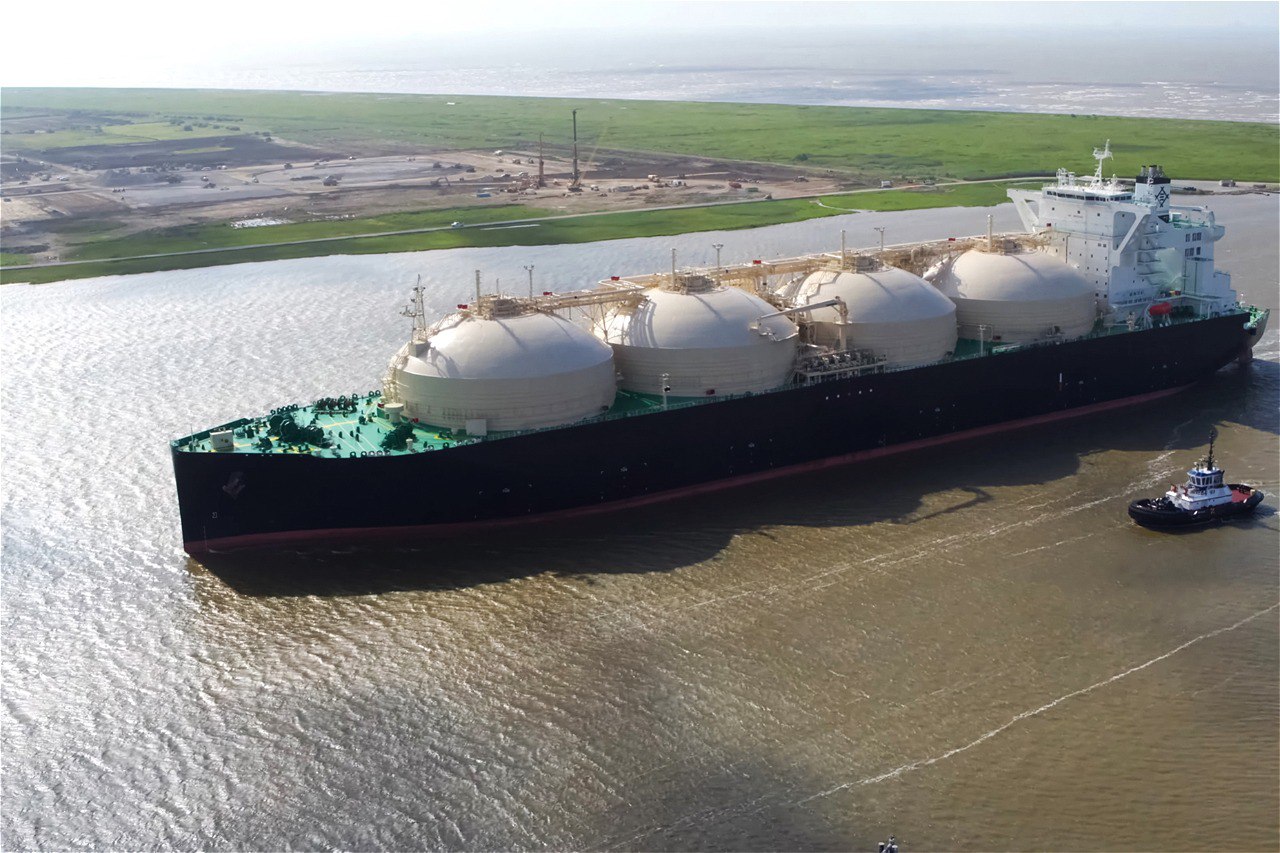
We present an overview of megaprojects that can change the energy map of the world. These are not just words, but the reality of today. Despite external challenges, the Russian oil and gas industry demonstrates stability and significant potential for development.
A period of dramatic change has arrived. Development is oriented towards the East, the Arctic beckons with the prospects of enormous resources. The new strategy includes not only the export of raw materials, but also their deep processing into products with high added value, i.e. investments in petrochemicals. The projects under consideration cover the development of deposits and infrastructure development, but more importantly, they become centers of economic growth and the foundation of future changes. They act as a driving force and catalyst for innovation in the field of sustainable technological development. This includes expanding the use of renewable energy, introducing smart grids, energy storage technologies, developing unmanned aerial vehicles (UAVs) and harnessing the power of artificial intelligence and robotics.
Our review of megaprojects is intended to demonstrate to the general reader the volume and scale of work of domestic oil and gas companies, presenting them as a single portfolio of projects for the future, taking into account national priorities:
Gas chemical complex in Ust-Luga
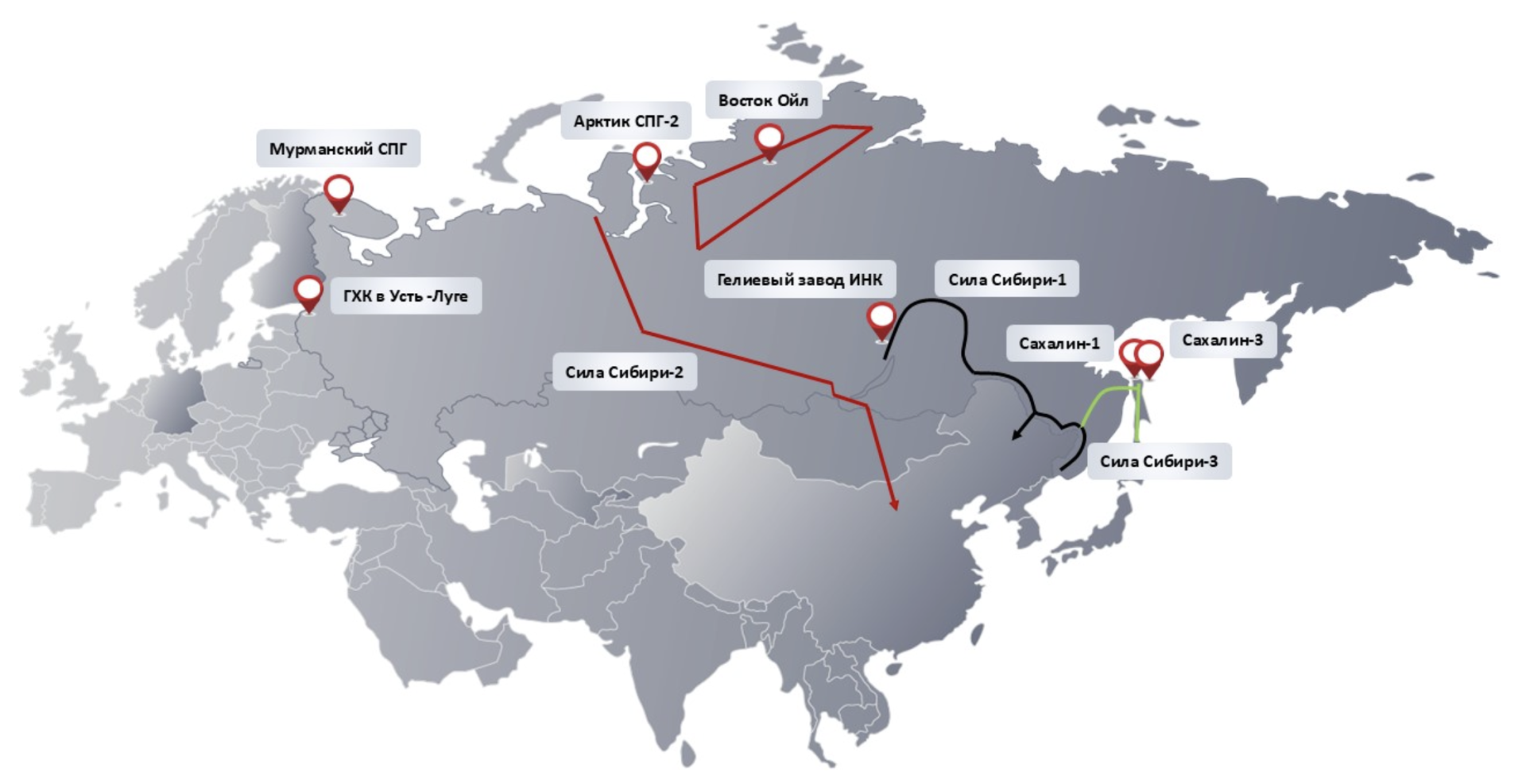
In Ust-Luga (Leningrad Region), a gas chemical complex of Gazprom and RusGazDobychi is being developed - a project designed to link the extraction of raw materials with deep processing and export of high-margin products. Its essence is to create a complete technological cycle: natural gas is pumped into separation lines and processed into LNG and other gas fractions. The engineering basis is formed by the infrastructure: an onshore plant with cryogenic units and a gas chemical cluster, where up to 3.8 million tons of fraction will be supplied via pipeline for the production of over 3 million tons of polymers annually. The complex is supplied with raw materials from the northern fields of Gazprom; ethane-containing natural gas is supplied through the main system; the 19 billion cubic meters unused after fractionation are sent back to the Unified Gas Transmission Network. Construction readiness has reached more than 50%, the first stage should start in stages in 2026-2027. When reaching its design targets, the enterprise will process up to 45 billion cubic meters of gas per year, producing about 13 million tons of LNG and 2.4 million tons of LPG, which will strengthen its position in the market and create a new export flow through the local port hub. The social effect will be manifested in the creation of more than 25,000jobs at the peak of installation and over 5,000 permanent positions during the operation period, which will become a driver for the regional budget and the development of logistics infrastructure.
Murmansk LNG
Particular attention is paid to the Murmansk LNG project, which should become a key logistics link for the transshipment of liquefied natural gas from the Arctic to export destinations. The implementation of the project makes it possible to increase the flexibility of supplies, reduce the load on the route along the Northern Sea Route and ensure year-round shipment of LNG by sea. The project was announced in the spring of 2023, and the operating company Murmansk LNG was established in December of the same year. The terminal will be located in the waters of the Kola Bay, between the villages of Belokamenka and Kulonka. The production scheme involves the use of Arctic Mix technology based on mixed refrigerants, as well as the construction of a gravity-type plant. Liquefaction will be carried out from gas supplied through the Volkhov - Murmansk - Belokamenka gas pipeline. The length of the branch will be more than 1,300 km, the throughput capacity will be about 40 billion cubic meters per year, of which 30 billion cubic meters will be intended for the needs of the plant, and the remaining volumes will be used for gasification of the northern regions of Karelia and the Murmansk region. Construction of the LNG terminal will be carried out in stages from 2027 to 2030. The site was selected taking into account the availability of free generation capacity and opportunitiesCenter for the construction of large-capacity offshore structures.
Arctic LNG-2
Continuing the logical arc from the Baltic coast to the Arctic fields, "Arctic LNG-2" is already being formed on the Gydan Peninsula in the Yamal-Nenets Autonomous Okrug - Russia's next step in the global liquefied gas market, based on the principles of technological independence and processing with high added value. The new complex, being built by Novatek, is based on a modular design with gravity foundations: such an architecture makes it possible to quickly assemble and transport production lines directly in the waters of the Gulf of Ob and make the most of the short construction season in the harsh Arctic climate. In total, the three trains will produce up to 19.8 million tons of LNG per year and up to 1.6 million tons of stable condensate. The resource base is the Utrenneye field with recoverable reserves of about 1.4 trillion cubic meters of gas and 90 million tons of liquid fractions, which guarantees long-term utilization of the plant. Investments are estimated at approximately $21 billion, and the key market could be Asian economies, primarily China and India, where cargo will be sent via the Northern Sea Route, thereby diversifying routes and reducing dependence on transit through Europe.
Vostok Oil
An equally convincing example of Arctic scaling is demonstrated by Vostok Oil in the Krasnoyarsk Territory, where Rosneft unites 52 license areas into a single production and logistics cluster. The Vankor group, Payakh, West Irkinsky area and other assets have a total resources of over 6.5 billion tons of oil, which makes it possible to plan stable production at about 100 million tons per year by 2030. Now in Taimyr there is an accelerated development of clusters, construction of a main oil pipeline to the Northern Sea Route terminal and using its own generation using associated gas, which will reduce the carbon footprint. The export strategy relies on the year-round navigation of the icebreaker fleet, creating an alternative corridor for the supply of raw materials to Asia and strengthening the Arctic infrastructure. Particular attention is paid to the localization of contracts and the creation of new jobs: today the project will employ thousands of specialists, and at the peak of construction, the need for personnel will increase manifold, stimulating the development of the social sphere of the region.
Power of Siberia - 2
The next logical stage in the reorientation of export flows to the east is the project of the Power of Siberia - 2 gas pipeline, which ensures the transportation of resources from Western Siberia to China. Its route will be laid through the territory of Mongolia and, according to the preliminary configuration, will cover about 6,700 km, of which about 2,700 km will pass through Russian territory. Design began in September 2020; technically, the route involves the use of pipes with a diameter of 1420 mm and the construction of five compressor stations. Unlike the previously implemented "Power of Siberia" gas pipeline, which was focused on East Siberian fields, the new route will ensure the supply of gas from the Bovanenkovo and Kharasavey clusters in Yamal. The total transportation capacity should be up to 50 billion cubic meters per year, which will significantly increase the share of Russian gas in China's imports by the early 2030s - from the current 5% to a possible 20%. The project, among other things, is considered as a tool for expanding gas supply to the Krasnoyarsk Territory and the Irkutsk region.
Sakhalin-1
Against the backdrop of the transformation of the international energy landscape, the Sakhalin-1 project has acquired special significance as a symbol of technological sustainability and adaptation. The implementation of this offshore complex, one of the largest in Russia, after the departure of foreign participants, continues under the management of the new Russian operator Sakhalin-1 LLC. Today, restoration and stabilization of production has been ensured. The development covers four fields in the Sea of Okhotsk - Chayvo, Odoptu-more, Arkutun-Dagi and Lebedinskoye. Production facilities include the Yastreb drilling rig, the Orlan and Berkut platforms, an onshore treatment complex and an oil loading system through the terminal in De-Kastri. Total annual production is about 8 million tons of oil and 10 billion cubic meters of gas. Products are supplied to the Asia-Pacific region through a pipeline and tanker supply chain. The project has become a platform for high-level engineering achievements: nine of the ten longest wells on the planet were drilled here, including a record length of 15,000 m. The Berkut platform also remains unique - its superstructure weighing over 42,000 tons is recognized as the heaviest in the history of offshore construction.
Sakhalin-3
The next promising direction of the gas strategy in the Far East is the Sakhalin-3 project, which creates a resource support for the Sakhalin-Khabarovsk-Vladivostok gas pipeline and future supplies to China along the Far Eastern route. Gazprom owns licenses for the Kirinsky, Ayashsky and Vostochno-Odoptinsky areas, where large fields have been discovered and are being prepared for development. The base for export is the Kirinskoye field, which was put into commercial operation in 2014, with a design capacity of 5.5 billion cubic meters per year. This is the only Russian offshore asset where production is carried out exclusively using an underwater production complex (SPC) without offshore platforms. The central element is a manifold at a depth of 90 m, connected to the onshore technological complex. Gas is supplied to the main line, and condensate is supplied to the Sakhalin-2 system. The expansion of the project is associated with the launch of the Yuzhno-Kirinskoye field (from 2027), where reserves of 814.5 billion cubic meters of gas and 130 million tons of condensate are confirmed. The planned capacity is up to 21 billion cubic meters per year. The site is being developed using domestic MPC technologies. Additionally, by 2030, it is planned to commission the Ayash cluster, where open oil reservesThe Triton and Neptune structures can provide production of up to 10 million tons per year. The project plays a key role in the long-term balance of supplies to the domestic market and Asia.
Helium plant INK
Developing the gas chemical area, the Irkutsk Oil Company put into trial operation a helium plant based on the Yaraktinskoye oil and gas condensate field, which is one of the largest in Russia. The launch of the enterprise was a key step in the second stage of a large-scale project to create a gas chemical cluster in the Irkutsk region. The new plant provides a closed technological chain for processing natural and associated gas with the extraction of helium, ethane, propane and other components. The production capacity of the helium block is up to 10 million liters. per year. In terms of technological solution and scale, the project has no analogues in Russia and is one of 15 operating helium installations around the world. The scheme used is based on equipment supplied by foreign companies, the contract with which was concluded in 2018. Helium is in demand in medicine, energy and high-tech sectors. The high content of this component (up to 0.285%) in gas from Eastern Siberia makes processing economically feasible. The implementation of the INK project complements strategic initiatives in the region and demonstrates the potential of private capital in the development of gas raw materials.
In conclusion, the successful implementation of these large-scale projects directly depends on the creation of an effective infrastructure that supports advanced technologies and their integration into existing networks.
Sources:
https://www.gazprom.ru/; https://www.rosneft.ru/; https://www.novatek.ru/; https://minenergo.gov.ru/; https://rostransnadzor.gov.ru/; https://arcticspg.ru/; https://gt-tomsk.ru/; https://neftegaz.ru/; https://iy.kommersant.ru/; https://monocle.ru/ and other open sources.