
Megaprojects. Baikonur - construction site of the century
04.09.2025

Unique large-scale projects and megaprojects that are being implemented in Russia are interested in benchmarking solutions and technologies. Sometimes such a comparative analysis lies on the surface. Our ancestors did 80 percent of the work for us according to the Pareto rule.
I dedicated the last Sunday of March to a trip to the Smolensk region. The village of Klushino, the city of Gzhatsk, now Gagarin. You probably already guessed what the theme of the trip was? In Gagarin, we were given a magnificent tour of the Museum of the First Flight, which became the reason for writing this and future articles about the megaprojects of the Great Epoch.
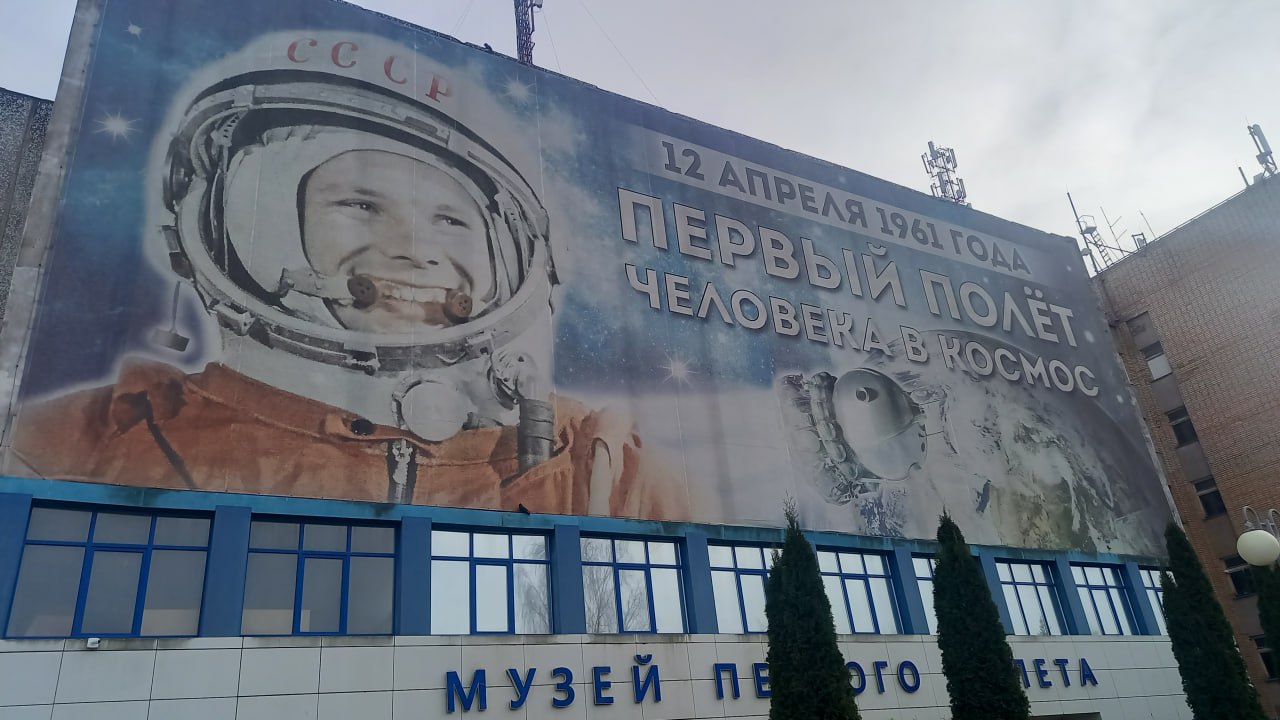
Fig.1 Museum of the first flight, Gagarin city
Initiation of a megaproject
So, let's go back 70 years ago, to the era of the space program. In May 1954, a resolution was adopted on the creation of an intercontinental ballistic missile, the famous R-7. A new testing site was needed. It is necessary to find a sparsely populated area, the length of which would be at least 7 thousand kilometers. Mandatory requirements include a vast, sparsely populated area, the presence of a railway and sources of fresh water.
Several options for the possible location of the test site were considered: the Mari Autonomous Soviet Socialist Republic, Dagestan (the western coast of the Caspian Sea), the Astrakhan region (near the city of Kharabali) and the Kyzylorda region.
The chief designer of the R-7, Sergei Pavlovich Korolev, recommended building a test site in the Kyzylkum desert. He considered the most important factor to be the proximity of the object to the equator - thus using the speed of the Earth's rotation. In addition, the Mari, Dagestan and Astrakhan variants of the site location had restrictions on the placement of radio control points.
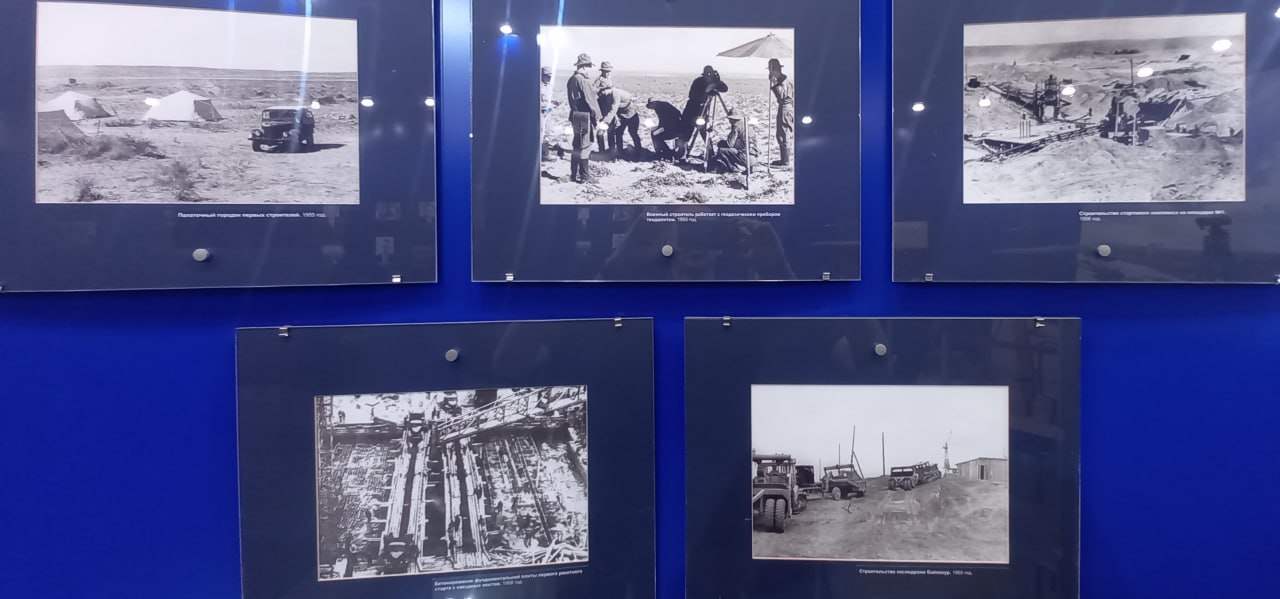
Fig.2 Photos from the future facility
For a combination of reasons, a decision was made to build a spaceport in the desert in Kazakhstan, east of the Aral Sea. An additional advantage of the place as a launch site was the weather, the presence of more than three hundred sunny days a year.
For the construction of the facility, a significant area of desert was allocated approximately in the middle between two regional centers of the Kyzylorda region of Kazakhstan: Kazalinsky and Dzhusaly, near the Tyura-Tam junction.

Planning
All work had to be completed in two years in order to carry out the first rocket launch in 1957.
From December 1954 to May 1955, a reconnaissance expedition worked in this area, which included dozens of military specialists of various specialties: rocket scientists, builders and designers of military facilities, specialist scientists from the missile research institute-4 of the Ministry of Defense, military medical epidemiologists, radio wave propagation specialists, topographers, geologists.
The project schedule looked like this:
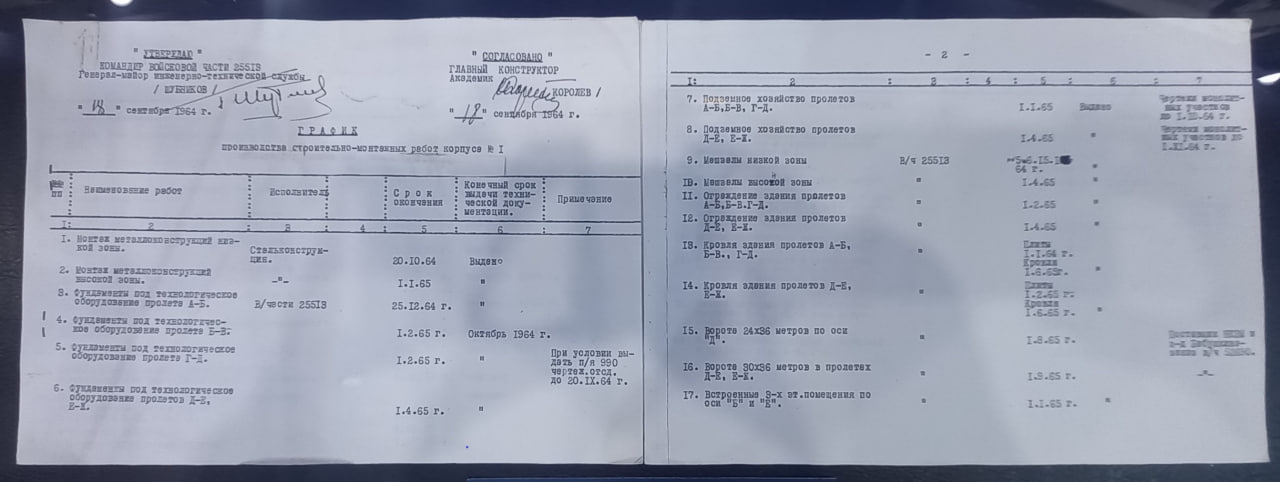
Fig. 3 Construction schedule of the facility, agreed upon by Korolev
On February 12, 1955, the Central Committee of the CPSU and the Council of Ministers of the USSR, by joint resolution No. 292-181ss, approved the creation of the research test site No. 5 of the USSR Ministry of Defense (NIIP No. 5 of the USSR Ministry of Defense), intended for testing rocket technology. The area where the test site was formed in the first half of 1955 had the code name "Taiga".
Professional builder Major General Georgy Maksimovich Shubnikov was appointed head of the construction project. The first detachment of military builders arrived at the Tyura-Tam station on January 12, 1955.
Implementation of the megaproject
Construction work on the project began in the second half of winter 1955. At first, military builders lived in tents; in the spring, the first dugouts appeared on the banks of the Syr Darya, and on May 5, 1955, the first permanent (wooden) building of a residential town was laid.
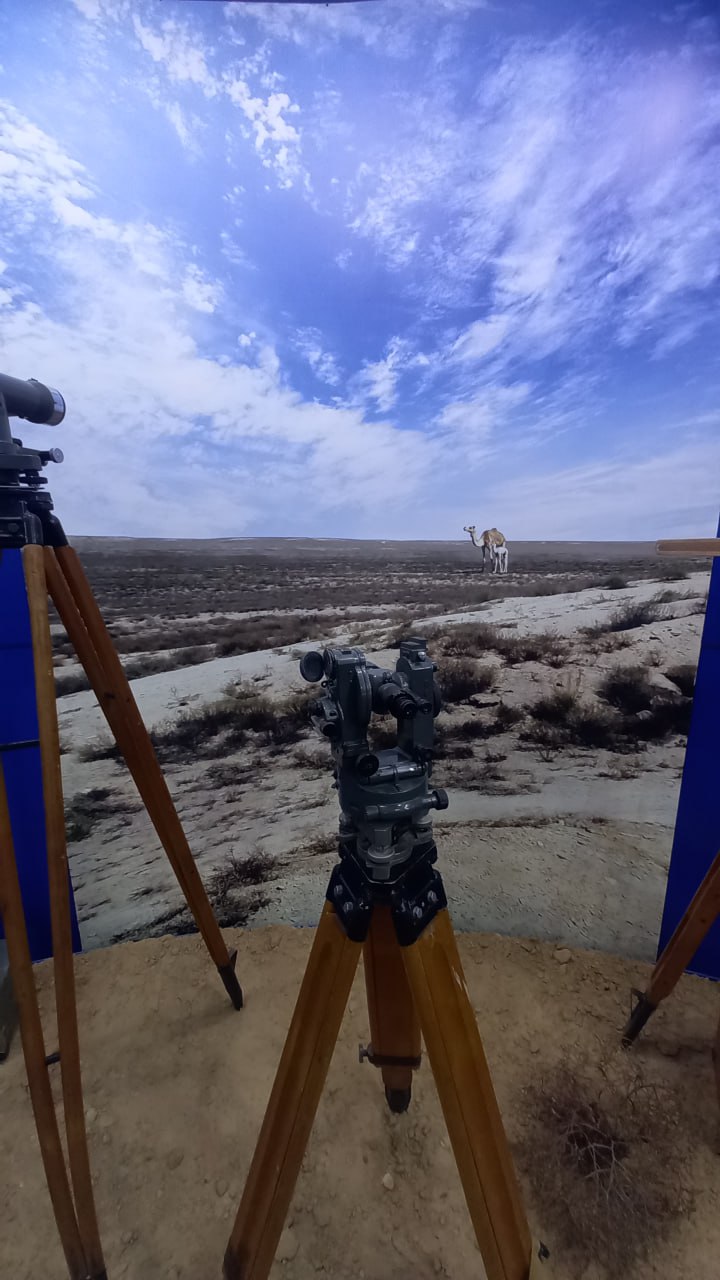
Fig. 4 Diorama of the Museum "The Beginning of Construction of Baikonur"
The official birthday of the cosmodrome is considered to be June 2, 1955, when the directive of the general. headquarters, the staffing structure of the fifth research test site was approved and a project management headquarters for the construction of the facility was created - military unit 11284. In total, about 3 thousand people worked at the construction site.

The construction of the cosmodrome became a real test for the workers: in the summer they endured 50-degree heat, and in the winter they ate in an open-air canteen. Dust storms also interfered with work. With the onset of heat, construction soldiers had to wear a hat and dark glasses, otherwise it was impossible to work because of the sand.
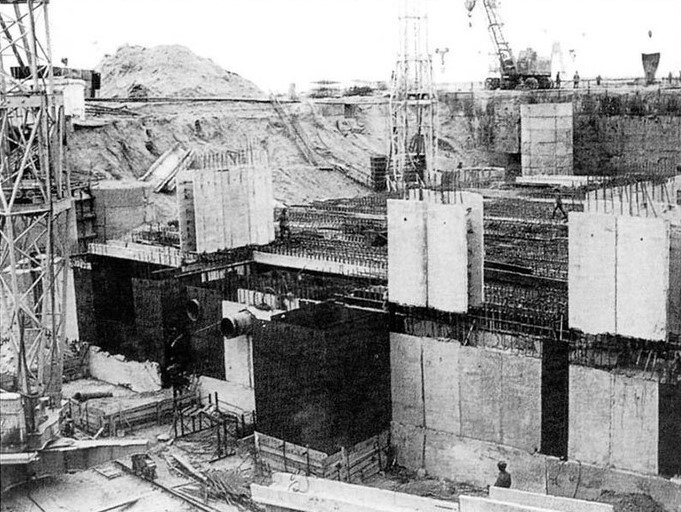
Fig.5 Construction. Source - wikipedia.org
The construction site roared 24 hours a day and 365 days a year. One of the construction participants, Lieutenant Colonel Pyotr Tolstik, said that after the shift it took three hours to move away from the incessant roar of the engines. The desert shook from this roar.
During the construction of the pit, an ancient fire pit was discovered at a depth of about 35 meters. Experts estimate its age at 30 thousand years. Naturally, this did not stop the construction of the century.
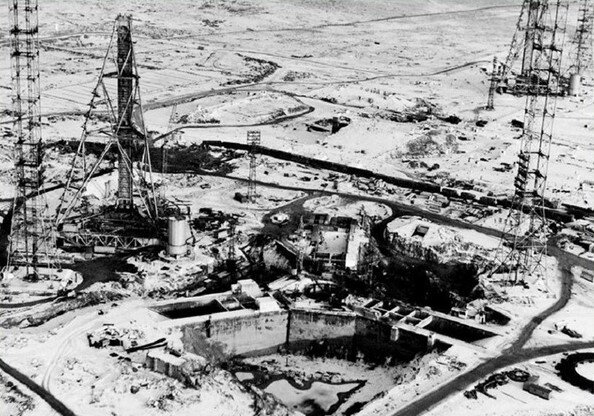
Fig.6 Polygon. Source - wikipedia.org
The work took place under strict control of the timing and quality of construction. The chief designer personally inspected the construction site. Korolev was an extremely demanding leader. According to retired Colonel Sergei Alekseenko, he carefully monitored the implementation of his instructions.
Testing and launch
At the start of testing and launches, there were 527 engineers and 237 technicians at the test site, the total number of military personnel was 3,600 people.
Exactly two years after the first permanent wooden building of the residential town was laid on May 5, 1955, already on May 5, 1957, a special commission accepted the first launch complex of the test site, and on May 6 the first R-7 rocket was already installed at this complex.
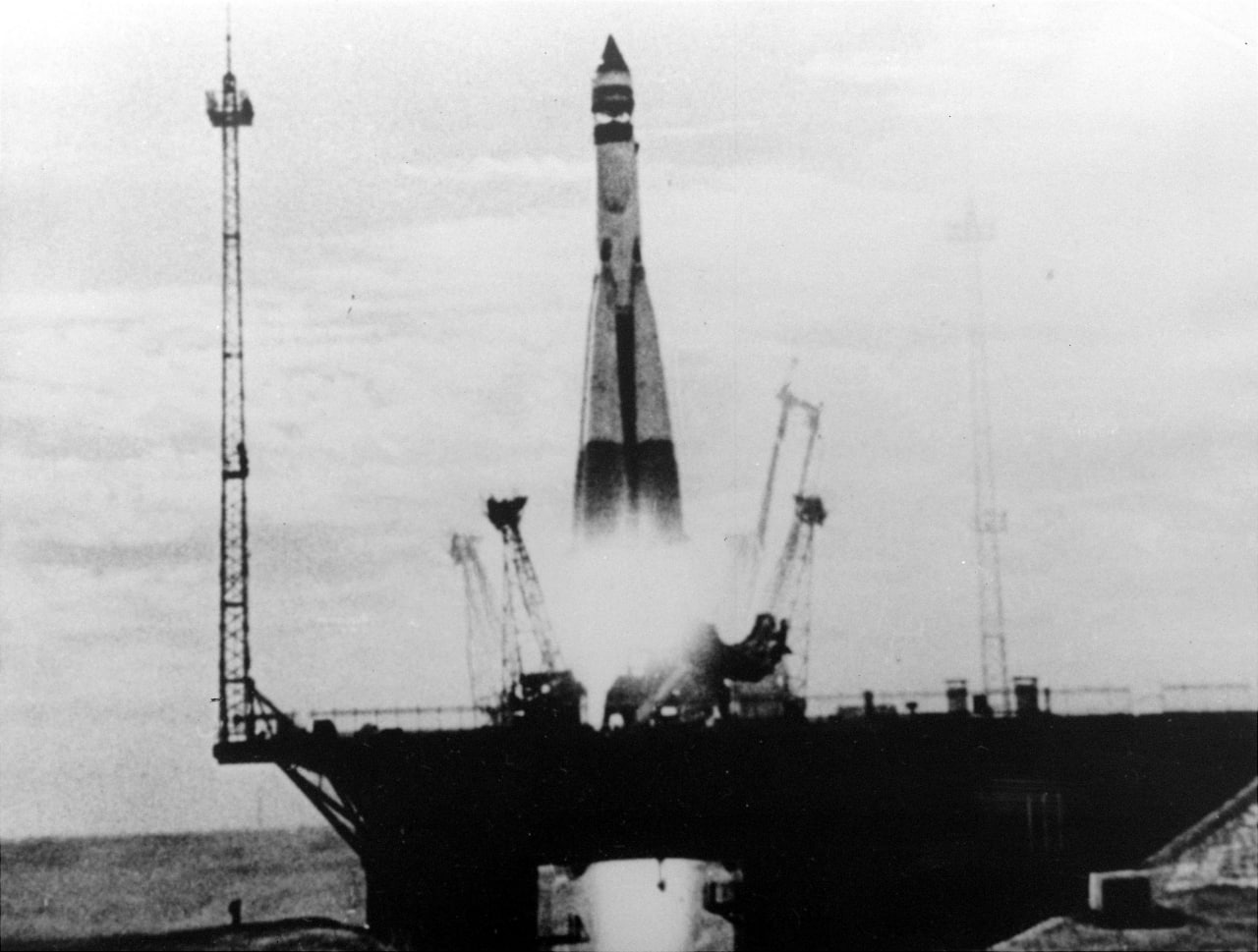
Fig.7 Launch of R-7 from the Baikonur launch pad
The launch pad for launching the R-7 intercontinental ballistic missile was designed only in 1957 and built in the same year. In order to achieve a given flight range from the rocket, the designers installed on it a system for synchronous tank emptying (SOB) and an automatic system for regulating engine operating modes. This made it possible to reduce the guaranteed fuel supply.
On August 21, 1957, the R-7 intercontinental ballistic missile was successfully launched. Three months later, the world's first artificial Earth satellite, PS-1, was launched. In the 1970s, several lunar rovers were launched from the cosmodrome.
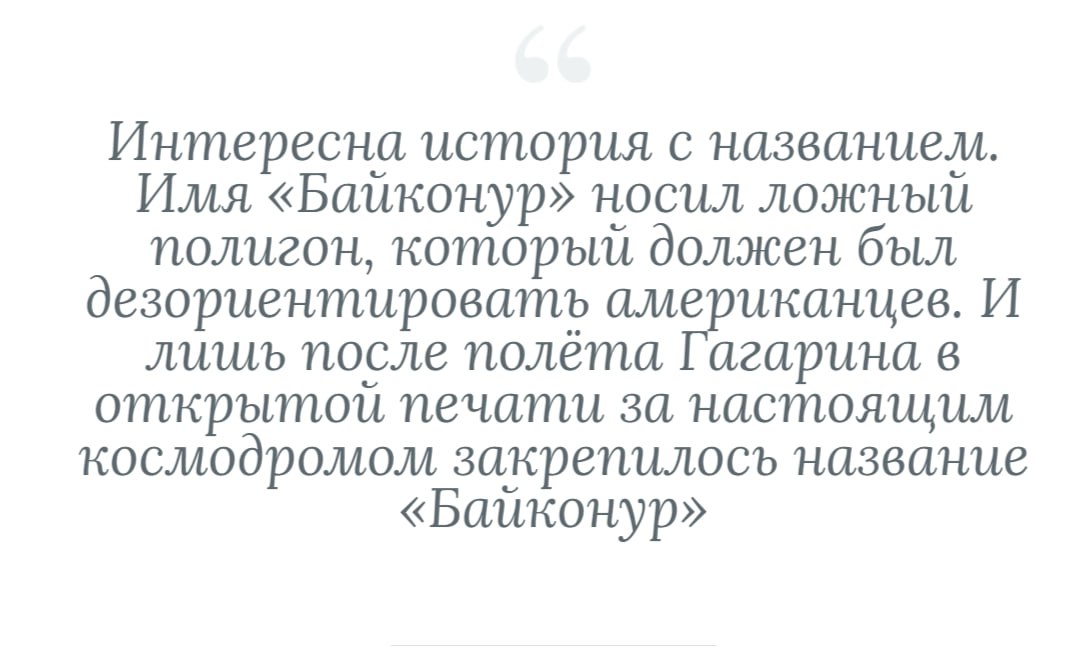
From the chronology of the landfill's work, I will also note a sad date. On October 24, 1960, during testing of the R-16 ICBM, a fire occurred, which killed 76 military personnel and industry representatives, including the commander-in-chief of the Strategic Missile Forces, Chief Marshal of Artillery Mitrofan Ivanovich Nedelin.
Conclusions
Despite a series of crises caused by the collapse of the Soviet Union, Baikonur remains the country's key cosmodrome, given the fact that it has actually been leased from Kazakhstan since 1994.
Baikonur today is 470 kilometers of railway tracks, 4 launchers for testing intercontinental ballistic missiles, 2 airfields and 15 launchers for launch vehicles.
My uncle, Major of the Strategic Missile Forces Arkady Ivanovich Novikov, who participated in the construction of the cosmodrome in Plesetsk, often said that:
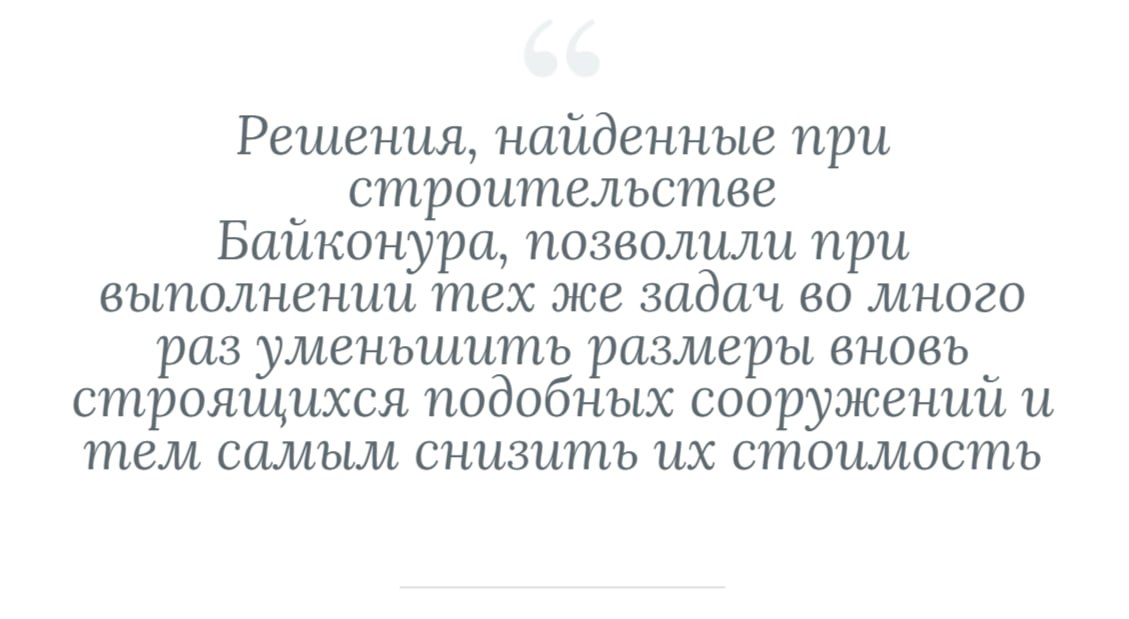
How long has the Vostochny megaproject been under construction there? The decree on its construction was signed in November 2007. Soon to be 17 years old.
As a summary:

Company PM Excellence actively uses the secrets of Soviet management of large programs and projects in the services provided by the PMC contractor. Company trainers PM Expert Examples of the achievements of the Soviet space industry and Sergei Pavlovich Korolev personally are widely used in educational courses and trainings. Let's win together!