
Climate megaproject or the history of the Kama Hydroelectric Power Station
31.10.2025

My parents are from the Perm region. I myself spent a lot of time in the summer in Dobryanka and Berezniki and was amazed at the enormous size of the Kama Sea, the reservoir of which did not exist until the middle of the last century. Its appearance is a direct consequence of the ambitious project to build the Kama Hydroelectric Power Station. In 1954, the mighty Kama River was "tamed" by a dam, marking the beginning of a new era for these places.
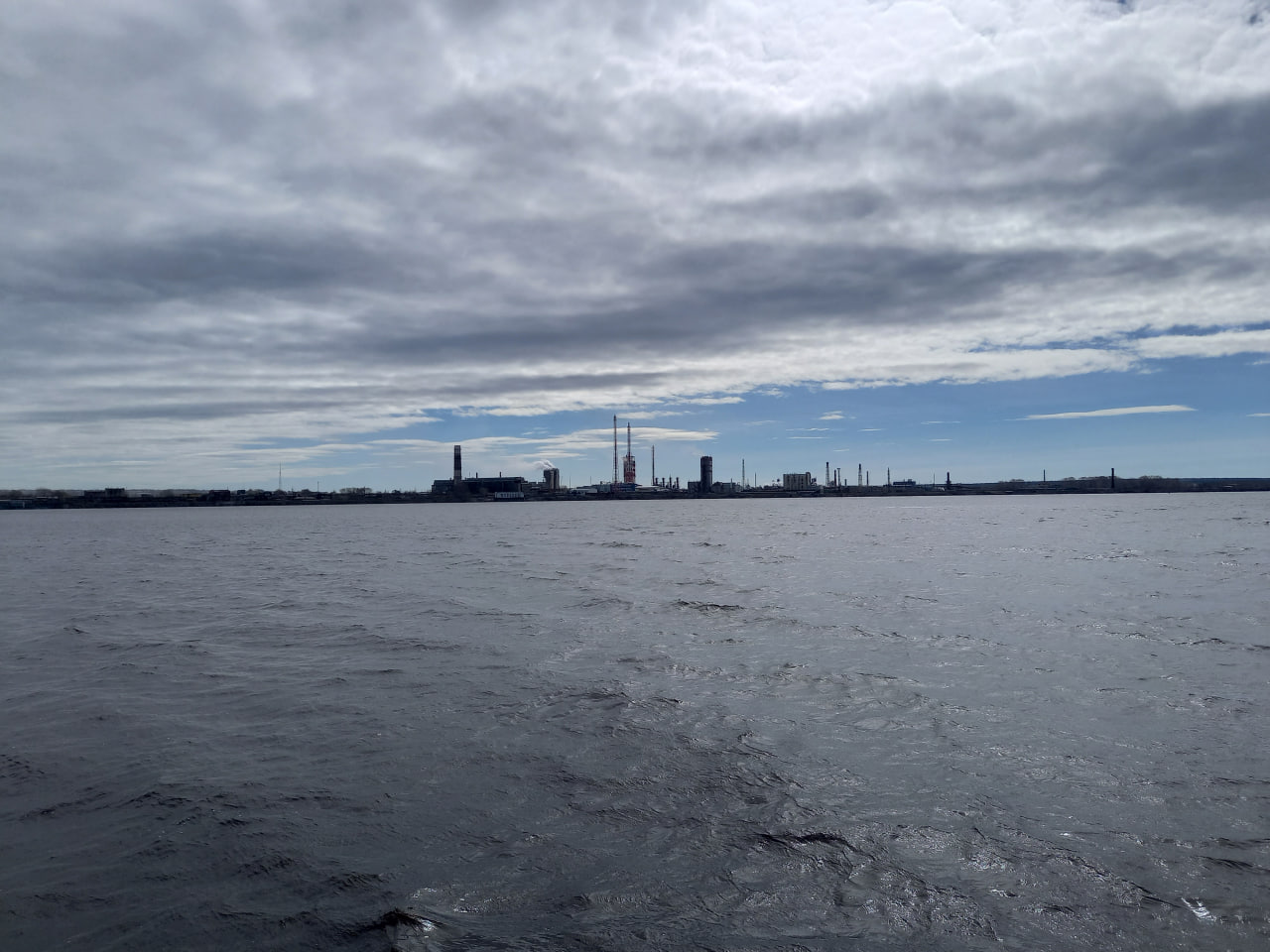
Fig.1 On the shore of the Kama Sea. From the author's personal collection
The appearance of the huge "Kama Sea" was one of the parts of the grandiose plan to create the Volga-Baltic route to replace the Mariinsky water system that had existed since the 19th century. The decision to build the Kama hydroelectric power station was made back in 1930, but work proceeded with long interruptions.
The design of a cascade of power plants blocking the mighty Kama River began in 1932. Within a year, construction settlements appeared near the ancient village of Levshino and the small village of Gaiva. During construction, the labor of camp prisoners was also used. The schedule network model provided for completion of construction by 1940. But as a result of geological research, it was discovered that sulfate rocks consisting of gypsum are widespread in this area. Due to the high risk of collapse, the construction was mothballed in 1937, and the workers were transferred to the Kuibyshev hydroelectric station under the leadership of the People's Commissariat of Heavy Industry of the USSR.

Design work resumed only after 4 years. A team of engineers led by B.K. Alexandrova prepared a new project. To avoid the difficulties of building a dam in sulfate rocks, the number of hydraulic units was increased, and the foundation of the dam was placed in sandy-clayey rocks. The "black swan" prevented the successful continuation of the project. The Great Patriotic War began.
Already when designing the Kama hydroelectric station in the 1930s, it was clear that its construction would lead to the flooding of a vast area both along the banks of the Kama itself and along its tributaries: Chusovaya, Sylva, Obva, Kosva, Inva.
The flood zone included villages and factories, forests and pastures, architectural monuments and areas of archaeological value. Well aware of the consequences, the designers of the hydroelectric power station tried to minimize them from the very beginning: meetings on the issues of deforestation and the transfer of residential buildings from the flood zone were held regularly, each time identifying more and more new problems.
We learn about the scale of the upcoming flooding from scattered archival documents stored in several funds of the State Archive of the Perm Territory. A number of figures (secret at that time) were announced in October 1934 at a meeting of the Srednevolgpermstroy commission. In particular, it was predicted that the total area of land flooding would be more than 160 thousand hectares of land in the floodplain of the Kama River and its tributaries, including more than 80 thousand hectares of forests and shrubs. Experts predicted that Berezniki, in particular, "will lose all the hayfields and ¾ of the estate lands."
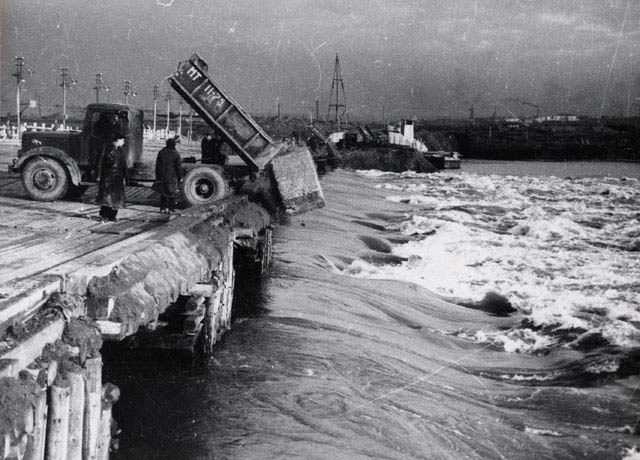
Fig.2 Construction of the Kamskaya HPP
In the flooded area, according to initial estimates, there were about 8 thousand farms, 117 enterprises, 12 crossings, 10 bridges. The costs of moving all buildings were estimated at 47.5 million rubles.
In April 1954, the regional commission for the acceptance of areas prepared for flooding announced other figures for transferred buildings: 3,250 privately owned buildings, 243 collective farm buildings, 1,447 local Soviet buildings, 1,543 objects of enterprises of union subordination.
Construction of the dam began in 1949. They were the first to build access roads and develop residential settlements. On June 18, 1951, the first cubic meter of concrete was laid in the body of the dam and after 2 years the Kama riverbed was blocked. The first 2 hydraulic units produced current on September 18, 1954.
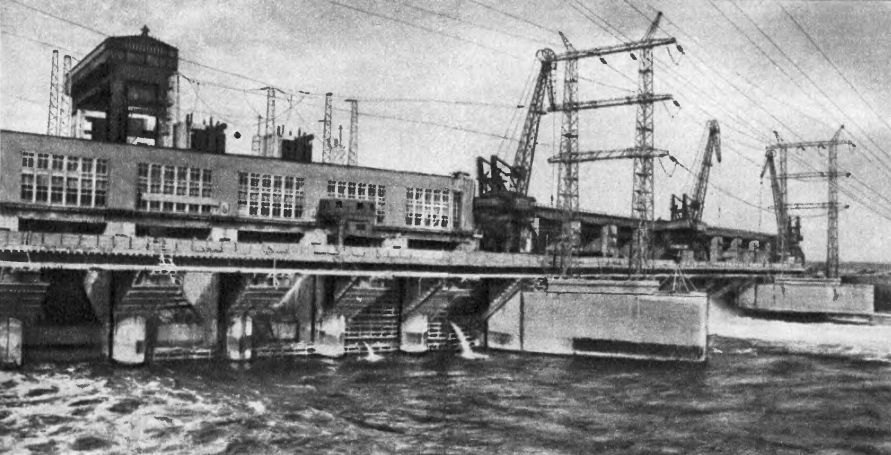
Fig.3 Kamskaya HPP
Over the course of several years, the water level in the Kama rose by 21.5 m. Up the Kama, the water spread 350 km, reaching the mouth of the Vishera. The Dobryansky district was hit the hardest, where more than half of the local collective farms fell into the flood zone - 11 out of 20 - and more than 1.5 thousand families were resettled.
In the Urals in the 19th century there were only two mountain cities. One of them was Dedyukhin, the second was Yekaterinburg. The Dedyukhinsky salt plant was one of the leading industrial enterprises of that time. The history of the city of Dedyukhin ended in 1954. It was completely flooded.

Such historical settlements as Nizhnechusovskie towns, Verkhnechusovskie towns (the current settlement was built on the opposite bank) completely disappeared; a significant part of Usolye, Ilyinsky, and the ancient mining towns of Dobryanka and Chermoza were flooded, and many villages were liquidated. Monuments of history, architecture and archeology were located in the flood zone. The territories of the Chermozsky, Dobryansky and Maikorsky metallurgical, Pozhvinsky machine-building, Usolsky and Lenvensky saltworks were flooded.
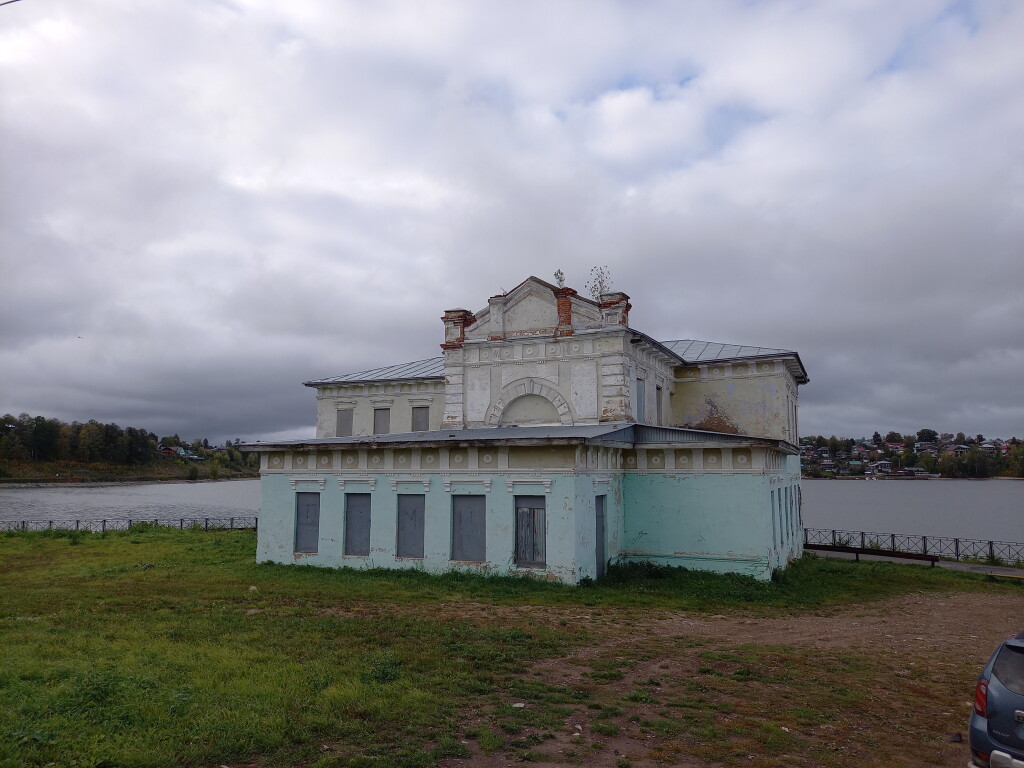
Fig.4 Dobryanka. Factory administration building. The plant itself is flooded (in the background). From the author's personal collection
The construction of the Kamskaya hydroelectric power station was an important milestone in the development of the energy sector in the Kama region. On one side of the scale were reliable power supplies and convenient shipping, which meant the development of freight and passenger transportation. On the other: destruction of forests and land, archaeological and architectural monuments, interference in the ecosystem and violence against nature.
The second bowl also included thousands of people who, having barely recovered from the consequences of the Great Patriotic War, were forced to feel like nomads in their native land.

The common good here, too, turned out to be inseparable from personal tragedy, although archival documents convince us that the actions of the builders during the implementation of the megaproject were carefully thought out, and the consequences were foreseen.
Uncontrolled changes in the ecosystem in the reservoir area continue. Experts warned that with the creation of the reservoir, the period of freezing and opening of the Kama River above the dam will change. The banks are collapsing, the riverbed is filled with sediment. The multifactorial influence of the reservoir on the flora and fauna of the Kama region is still unclear. Many scientists say they are powerless to make predictions...
As a summary: when planning and designing large-scale projects and megaprojects, assess indirect consequences, including on the ecosystem with a horizon of 10+ years. That is why the megaproject manager is required to have the competencies of a strategist and leader.
Sources used when working on this article:
- Alexander Glushkov. Creating the "Kama Sea": how the construction of a hydroelectric power station changed the Kama region in the middle of the 20th century. https://properm.ru/news/2019-02-26/sozdavaya-kamskoe-more-kak-stroitelstvo-ges-izmenilo-prikamie-v-seredine-xx-veka-2718648?ysclid=m6huklkbc4763957738
- How the Kama Sea appeared. The birth of a giant. https://telegra.ph/Kak-poyavilos-Kamskoe-more-Rozhdenie-giganta-istoriya-poyavleniya-Kamskogo-morya-08-01
- History of the construction of the Kama reservoir. https://stroim.top/istoriya-stroitelstva-kamskogo-vodohranilischa/
- Lecture by A.V. Chashchukhin and D.A. Reneva. Kama Sea: projects, implementation and consequences. https://drugieberega.psu.ru/obraz/lekcziya-a-v-chashhuhina-i-d-a-reneva-kamskoe-more-proekty-realizacziya-i-posledstviya/
#megaprojects #history