
- Home
- News
- Articles
- All Articles
- Schedule and network planning
Scheduling and network planning: Lessons from navigation for megaprojects

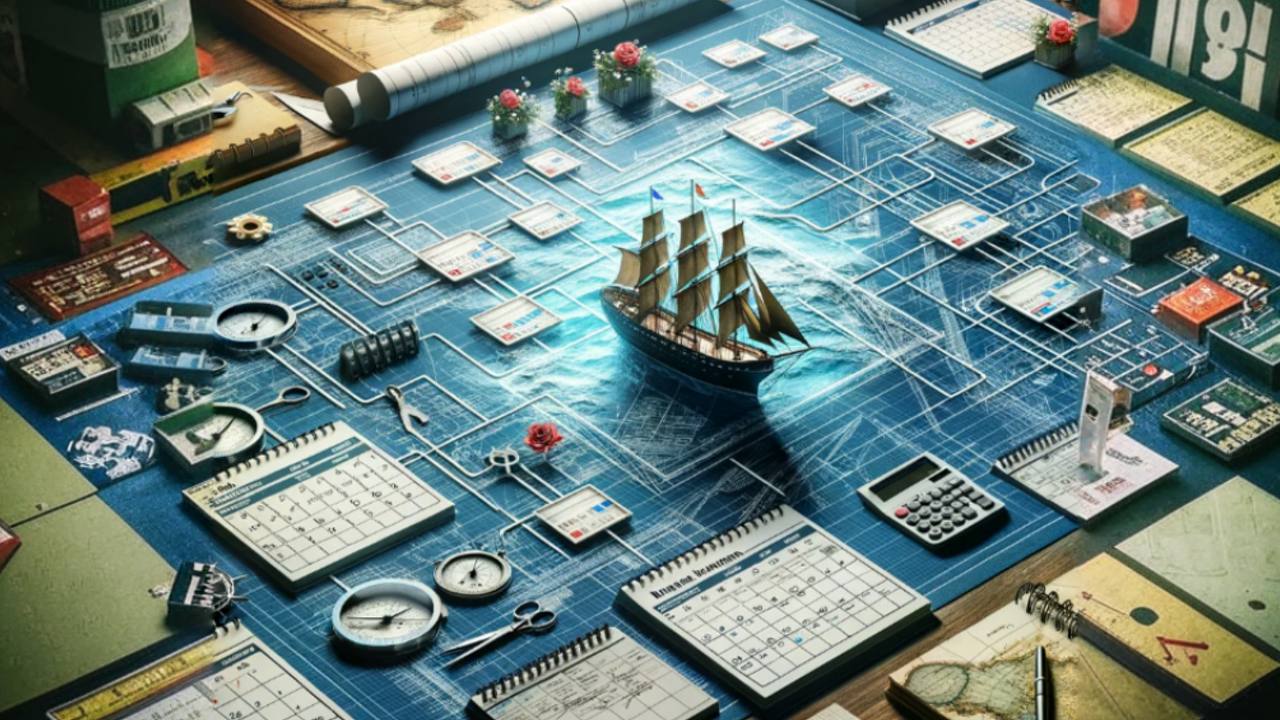
If you think about it, a megaproject resembles a large ship: it moves forward with enormous inertia, requires precise coordination and does not forgive mistakes. And scheduling and network planning is the very tool that allows the project to stay on course, avoid collisions and achieve success. Based on project management experience and observations of maritime analogies, here are the key principles to consider.
1. Constant Forward Lookers: Planning Ahead
Each vessel is obliged to conduct surveillance by all available means. Likewise, a megaproject must have dedicated specialists who look at the planning horizon, monitoring possible risks, problems and opportunities. This means that the schedule network model must be current, detailed and regularly updated. If you're not looking a few steps ahead, you're already losing.
Example: In one of the large-scale projects, we introduced the role of "horizon managers" who analyzed risks and opportunities for 3-12 months in advance. This allowed us not only to avoid many problems, but also to find new ways to optimize deadlines.
2. Risk Management: Be Paranoid
As they say in the rules of navigation: if you doubt the danger of collision, assume that it exists. This principle fits perfectly into project risk management. If there is a possibility of missed deadlines, the schedule network model should take this risk into account, and the team should be prepared to make prompt adjustments.
Practice: Incorporate what-if analysis into your network model. This allows you to see potential threats in advance and prepare an action plan. It's better to be safe ten times than to make a fatal mistake.
3. Inertia: Proactive instead of reactive
A large tanker, even at a complete stop, continues to move for many miles. In megaprojects, the inertia of processes is just as great. If you take action when the problem is already on board, it may be too late. All changes and adjustments must be included in the network model in advance.
Tip: Proactive planning is not just an option, but a necessity. Divide the schedule network model into three levels: current period (1-3 months), medium-term horizon (6-12 months) and long-term goals (12-24 months). The further you look, the higher your chances of avoiding unexpected problems.
4. Error in navigation: Percentage of readiness as "area"
A captain at sea thinks not of a point, but of an area-the zone where the ship is likely to be located. In projects, the analogue of such uncertainty is the percentage of readiness. This figure is often the subject of manipulation and unreliable forecasts. Relying only on it means ignoring the real picture.
Recommendation: Approach the completion percentage critically. Include in your planning metrics that reflect real bottlenecks: delivery stages, installation, commissioning. This is the only way to understand how much the project is really moving towards the goal.
How scheduling and network planning ensures "seven feet under the keel"
Scheduling and network planning is your captain's bridge from which you manage the project. Its strength is that it allows you not only to record current progress, but also to calculate the consequences of each action many steps ahead. Use these sailing lessons in your projects:
-
Create a team of "forelookers" who will anticipate risks and opportunities.
-
Adhere to the "better safe than sorry" principle when managing deadlines.
-
Work with inertia: plan all key actions in advance.
-
Think in terms of areas, not numbers, constantly questioning reports.
Scheduling and network planning is not just a tool, it is a management philosophy that helps to avoid "collisions" and move confidently towards the goal. Be the captain of your projects, and then "seven feet under the keel" will become not just a wish, but a reality.