
GOK on time: how to manage projects in the mining industry

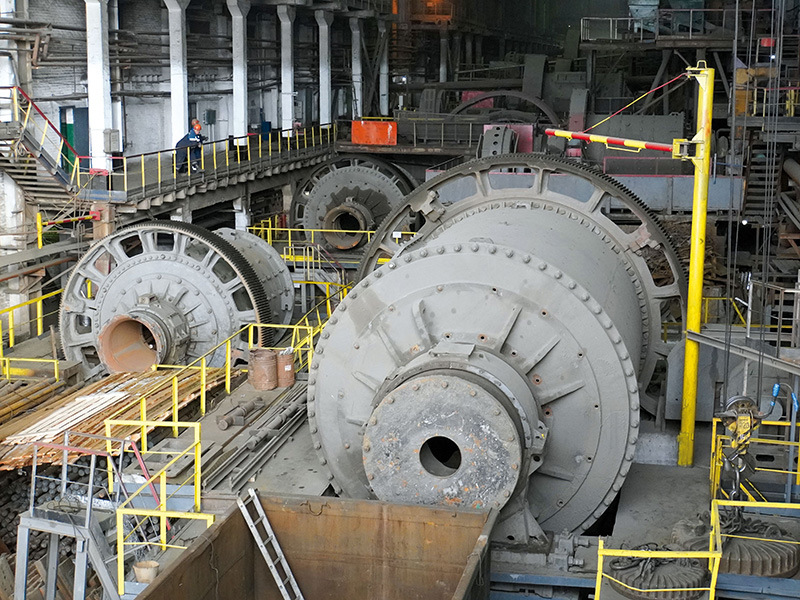
This article is a reprint of materials from the magazine "Mining industry". Link to original publication: https://dprom.online/mtindustry/gok-v-srok-kak-upravlyat-proektami-v-gornoj-otrasli/
Who is to blame: the notorious Russian mentality, builders, fools and roads, or perhaps Western sanctions? We spoke with the senior vice president of PM Excellence, a PMC contractor, about how to effectively manage projects in the mining industry in modern conditions. Alexander Kutuzov, PME.
- Alexander, the emergence of PMC contractors is a relatively new phenomenon for our country. Explain what this structure does?
- The PMC contractor is responsible for professional operational management of the project. The word "integration" is a tired one these days, but it best sums up the PMC contractor's primary goal: ultimately connecting everyone to everyone. This structure operates on the basis of a unified schedule network model, identifies priorities and manages risks. Essentially PMC contractor performs most of the functions of the project manager, leaving him to make key decisions.
- But in many cases it happens that project offices have already been formed, managers have been appointed, and there are technical customers. Will the PMC contractor duplicate their functions?
- Unfortunately, today many project teams are understaffed due to an extreme shortage of project management specialists, and the qualifications of these specialists are often insufficient. Therefore, the PMC contractor is more likely to supplement such teams with its resources.
If we talk about technical customers, then project management functions are indeed often assigned to them - in accordance with GOST. But, as a rule, they do not fulfill this role. Most often, we see that in Russia technical customers control the volume and quality of work, documentation, but this is not project management.
- Do Russian companies, in particular mining companies, often engage PMC contractors?
- More and more often, and this trend is typical both for our country and for foreign customers. This is especially true for the implementation of large-scale projects, where professional management needs to be launched from the very beginning.
But in Russia I see the following: in 80% of cases, a PMC contractor is invited when everything has already gone wrong and when the project is already on fire. That is, at first the company decides that it can cope on its own, and then, when the thunder has already struck, it turns to us. But still, in 20% of cases we enter the project at the start.
This applies not only to the mining industry; the same approach is typical for construction workers, oil workers, and companies from other industries.

- Indeed, the PMC contractor is a universal player. For example, your team has had the opportunity to build not only mining and processing plants or oil production enterprises, but also, for example, Olympic facilities. Is there really something in common in managing these projects?
- Of course, projects in the mining industry have their own specifics, but from the point of view of management and the tasks of the project manager, the implementation of projects, especially large ones, follows the same algorithms.
I have already said that the PMC contractor solves integration problems. First of all, this is management integration, which is often underestimated. Yes, the technological processes at all facilities are different, the objects are different, but the management process (creation of teams, schedule network models) is generally the same.
- You say that projects in the mining industry still have their own specifics. What is it - what is the vision of the PMC contractor?
- First of all, we see the specificity of industry projects in their complexity: it is necessary to launch many interconnected objects by one deadline. As a rule, the construction of a mining and processing plant involves a complex of 5-10 projects, each of which is complex in itself: an enrichment plant, a thermal power plant, a quarry, infrastructure facilities.
This requires not only serious qualifications of management teams, but also management coordination of all elements. Therefore, in such projects, we pay special attention to the role of the complex project manager, maintaining a consolidated picture of the project implementation (Big Picture), proactive risk management, and effective and prompt change management.
- What are the main risks today for projects in the extractive industry?
- I won't discover America. It's better to give the top 5 from our latest registers of risks and problems in our projects in descending order of priority:
- understaffing of the project management team due to staff shortages;
- a multiple shortage of "helmets" for contractors at construction sites;
- long approval times;
- delays in delivery of key technological equipment due to overload of manufacturers' capacities;
- low quality of design documentation.
It is clear that every project has its own pain, but I am sure that now these risks are among the top of all projects in the industry.
- Today everyone is talking about the shortage of personnel in the mining and other industries. How do you explain the current situation? Where have the specialists gone?
"But it's not just that they "disappeared." Since about 2020, we have recorded an increase in the number of large strategic projects in the country; they are initiated by both the state and business. Perhaps it was not so obvious at that time, but we recorded the trend. Hence the sharp demand for specialists at various levels, from the project manager to construction workers. That is, demand has increased, but supply has not increased much.
The second point: foreign EPC contractors have actually stopped their work in Russia, in any case, all the major players have left us. But they came, among other things, with their workers, their managers. We also lost this resource.
In addition, there is now active construction of infrastructure facilities in new Russian territories, some specialists have left there.
Hence the struggle for personnel: managers, technicians, engineers, workers. At the Krasnoyarsk airport, I recently saw a billboard: construction workers were invited to work at a mining and processing plant, and simply astronomical salaries were indicated there. They are trying to solve the personnel issue by attracting foreigners, including from the CIS and other friendly countries.
At the same time, here's the nuance: many market participants are planning the project as if nothing has changed, as if we have access to an unlimited human resource. Hence the crazy plans and impossible deadlines.

- You highlighted the shortage of builders as a separate item in the list of risks. So this is actually just as big of a problem?
- Of course. Contractors are facing a huge shortage of construction trades representatives. In mid-summer, contractors at all our sites promised to increase the number of "helmets" by 2-3 times to close the thermal circuit. Unfortunately, most of these plans failed. There are simply no workers; there are absolutely not enough of them in all regions of our presence.
- So how to conduct construction in such conditions?
"The only way is to hire specialists in advance, offering competitive salaries and conditions. Moreover, the second point is now becoming very important. Information about what, where and from whom spreads very quickly on social networks, especially if conditions, including household conditions, are poor.
In any case, it is necessary to plan work taking into account the chronic shortage of personnel; this fact must be included in advance in schedule network models. If this risk does not materialize, we can easily move the graph to the left. But reality shows that schedules are drawn up taking into account the excess resources on the market, so they often contain very optimistic deadlines to please the financial models of projects.
- Are the long approval periods that you mentioned related to the work of supervisory authorities?
- You know, the situation with the supervisory authorities has now improved, all processes have accelerated significantly.
The question here is rather that in large companies the speed of decision-making turns out to be very low. I explain this by the fact that there is no centralized project management. In the end, it looks like this: a "khural" of 50-100 people gathers, who must discuss everything in 2-3 weeks; these weeks turn into a month, or even more. A kind of collective irresponsibility appears, relatively speaking, when the role of the leader and the powers of the participants are not clearly defined.
In addition, we often implement projects in companies that already have ongoing activities. For example, a mining and processing plant is already operating, but a new factory is being built and a new deposit is being developed. And as a result, difficulties arise. The simplest example is the supply situation.
For operational activities, it usually happens like this: once every six months, the company collects lists, makes a bulk purchase, receives a discount - and everyone is happy. But when implementing a project, materials are needed now, and a day or week of delay results in missed deadlines.
- What way do you see to eliminate this internal bureaucracy?
- Creation of separate design blocks, differentiation of design and operational detail. Many companies are now doing just that.
- You named failure to meet delivery deadlines as the next risk in the ranking. Are these the consequences of modern geopolitical events?
- Yes, I believe there is no need for comments here. There are equipment manufacturers in Russia, but they did not count on such an influx of orders. They are overloaded, they do not have enough resources, primarily, again, human resources. Suppliers from China, Turkey, South Africa, India and other countries are also seeking to fill the vacated niches.

- Do you note that projects in Russia are being frozen for this reason? Are deadlines being moved?
- In most of the projects that we are leading, due to the sanctions, the main process equipment and its manufacturers were replaced. This entailed redesign and changes in logistics. There was no stop; rather, there were pauses; the deadlines shifted to the right.
The implementation of some projects occurred without significant delays. Here, among other things, priority management technologies helped: the allocation of minimal launch complexes, the organization of rapid response and forecasting centers, and so on.
- You placed the risks associated with the low quality of project documentation in fifth place in the rating. Why do they arise?
- Design institutes are now overloaded in the same way as equipment manufacturers. Trying to increase speed, they lose quality.
In addition, during the period of infatuation with Western contractors, we used our design institutes as adapters. That is, foreign specialists carried out the documentation through their designers, and we in Russia "refined" it to comply with GOSTs, SNIPs, and so on. And during this time we have lost, so to speak, mature specialists.
Here is a real story that we heard from employees of one of the design institutes with which we worked. He said that in the 2000s, when there was little work, his colleagues quit en masse, even going so far as to become taxi drivers. But these are people with unique competencies; the industry needs them now, but it is no longer possible to gather them. And a new generation of specialists has not yet appeared - a generation gap has formed.
Another problem is the unsatisfactory management of the design institute on the part of the customer. I see two points here. The first is that the designers are given the wrong task. The second is that the specialists who will operate the future facility become involved very late. Conventionally, the chief engineer of a mining and processing plant comes when all the main decisions have already been made, but have not been agreed upon with him.
He looks at the project and says: "Listen, I think this should be different." Of course, these specialists are busy, they are busy with the existing production process. But it is obvious that the authors of the project and the exploiter look at the same things differently.
- What other systemic difficulties do you see in the mining industry from the point of view of project management?
"We see that when implementing most large-scale projects, fires are put out, not prevented. The horizon for detailed planning and risk identification is no more than 1-2 months, and this is a systemic problem. Of course, there are always high-level schedules in the form of road maps, but the devil, as they say, is in the details.
In our experience, detailed graphs of the third and even fourth levels are usually available, but they are "hand-drawn", that is, they do not correspond to the real situation. We always start by developing an "honest" schedule network model that reflects realities and risks, including lack of resources.
At the same time, we immediately begin to work on reducing backlogs and bringing indicators to the guidelines. It is important that the project management always sees the true state of affairs and relies on a reliable forecast in order to understand where to spend precious resources.

- You mentioned that most customers come to PMC contractors to put out such "fires." How do you work in this case?
- Unfortunately, this is true. Here is one of our recent cases. The company tried to implement the project on its own, but encountered difficulties. She has three more projects ahead. The CEO contacted us to understand what went wrong so as not to make the same mistakes in the future. We call this analysis a check-up.
In the process of such work, we can give a real assessment of the situation and a forecast: in what time frame and under what conditions can the project be implemented, what kind of team and what means and tools are needed for this.
In addition, we can compare this project with others in the industry based on our experience. In June of this year, we released the first version of our PM Benchmark study. We interviewed 47 internal and external experts on 17 different aspects and obtained numerical scores. An expert assessment showed that project management costs can range from 2 to 7% of the budget.
- Let's say the check showed how much money and how many people are required to complete the project. But the customer does not have such resources. What to do in such a situation?
- As a rule, people contact us when the decision to move to the project implementation stage has already been made. And here we usually suggest that the company compare the costs of this work with the cost of one day of delay. Usually this is tens and even hundreds of millions of rubles.
We have extensive experience managing large-scale projects across multiple industries, and we have seen that the cost of not hiring key project management professionals on time is up to 80 times greater than the "savings."
- Have you ever encountered the fact that the reason for the delay in the implementation of a project was the ineffective work of the contractor? Is it worth changing the contractor in this case?
- For us, an ineffective contractor is a contractor with unsatisfactory project management. It all starts with a headache, and missed deadlines, defects, and lack of helmets at the construction site are the consequences.
We have our own performance criteria, and the first thing we look at is the contractor's allocation of roles and the qualifications of those he places in those roles. It often turns out that there is simply no project manager on the customer's side. That is, of course, he is, but he is a good builder, a technician, and he does not know how to manage projects. The second thing we look for is planning and a realistic schedule. And only then we evaluate the organization of work at the industrial site, the quality of supply of materials and equipment, and documentation.
Unfortunately, we encounter ineffective contractors quite often, because, as I said, we are often invited to a project when problems with deadlines arose, and in many cases they arose precisely through the fault of the contractor.
Is it possible to change the contractor in this case? Yes, there have been such precedents in our practice. But it is better to take such a step at the initial stage of the project; closer to the end, this can already result in missed deadlines. We have only one example of a painless replacement of a contractor: this was done when there were more than three years before the end of the project.
If the period is shorter, we, as a rule, refuse radical solutions and introduce direct control from the customer, including with our help as PMC contractor.