
The "Tsunami" effect during the implementation of megaprojects: why even an ideal plan perishes
30.09.2025

Project management is often compared to a sea voyage: the team is the crew, the plan is the navigation chart, and the risks are the storms and reefs that we have learned to navigate. But what to do with a threat that comes from outside, from afar? A threat that appears over the horizon and hits the final stage of the project with a sudden destructive wave, sweeping away all plans? The most appropriate name for this situation is the Tsunami Effect.
What is the Tsunami Effect?
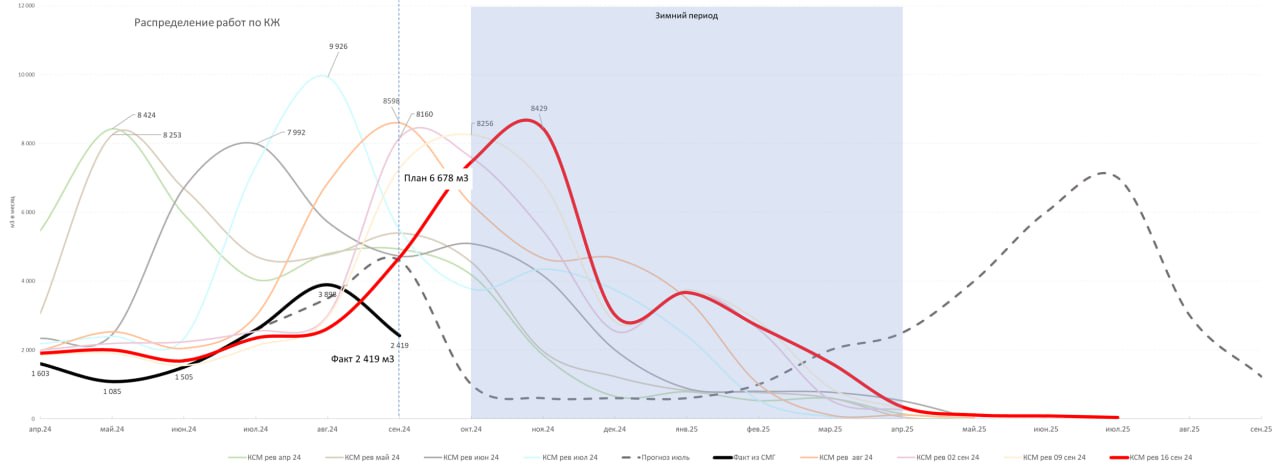
The "Tsunami" effect in a project is a sharp increase in the volume of unfulfilled tasks at the final stage, which covers the project like a giant wave of labor costs, leading to an uncontrollable crisis.
This is not just a shift in deadlines, but an accumulated disaster in which a colossal amount of work needs to be completed in an extremely short time frame. Its direct consequence is a forced increase in resources, work in emergency mode, multiple budget overruns and complete discredit of even the most well-thought-out plan.
The main danger: you lose strategic initiative and begin to deal only with the consequences. You are doomed, but trying to survive!
Why Tsunami?
As in nature, this wave is formed far from the outline of your project - in the internal activities of the participants and is directly connected with the subcontractors and suppliers of your counterparties. Its cause is not internal errors of the team within the project, but events that affect the activities and performance of the supplier, such as disruptions in the supply of equipment components, bankruptcy of the supplier's partners, system failures among counterparties and force majeure circumstances.
Problems arise outside of your visibility, but their consequences fall on the critical path of the project, paralyzing work and making it impossible to both begin and complete key stages of work.
Causes of the Tsunami: where do the problems start?
The underlying causes of the Tsunami effect are related to the quality of management and hidden processes within the organizations of project participants. These problems originate in the depths of the financial, production or management system and remain invisible to the owner for a long time.
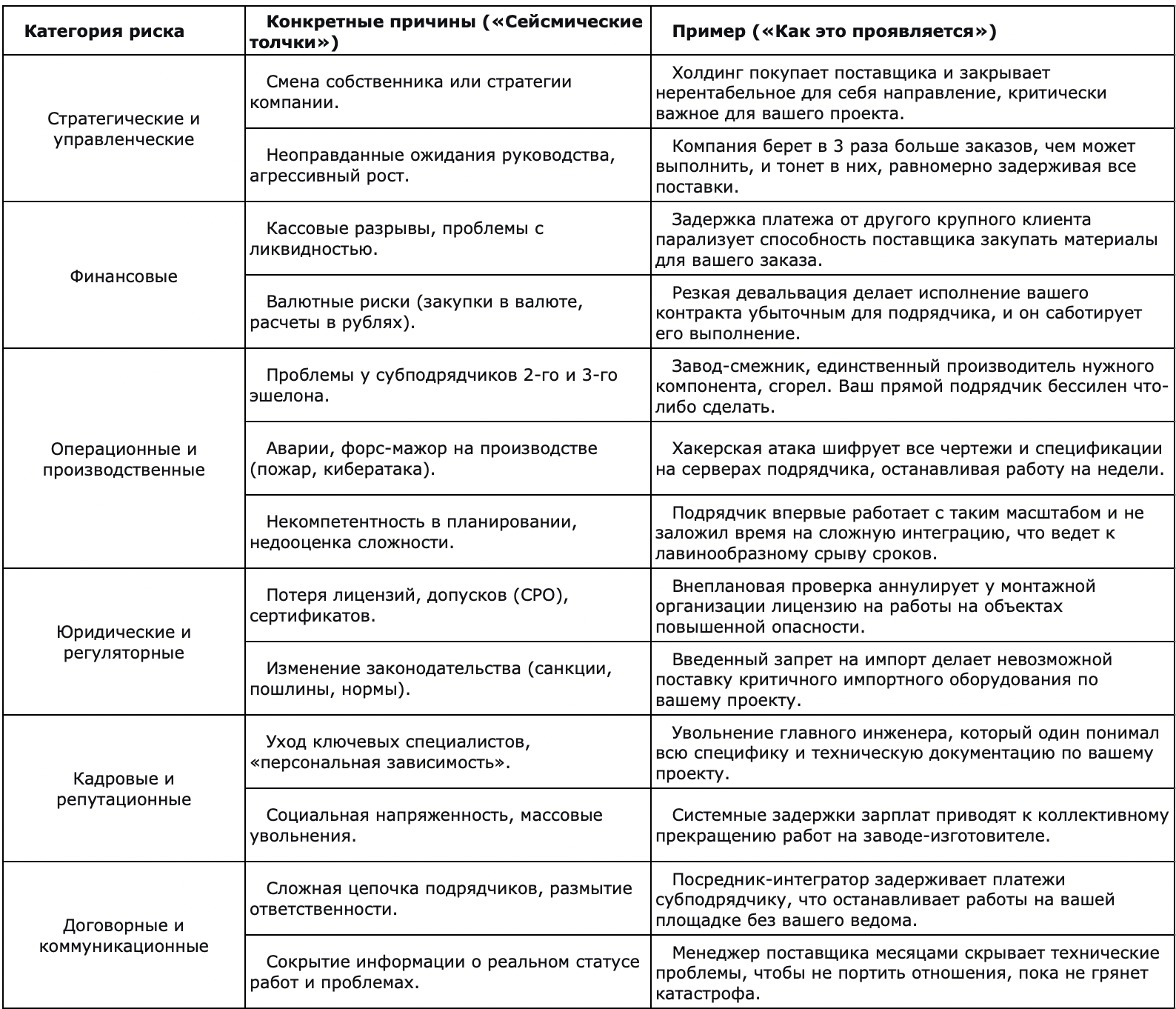
Mechanics of disaster: from imperceptible wave to destruction (using the example of megaprojects)
The Tsunami effect develops progressively, going through three key stages.
1. Stage: Ocean Wave (Design and Contracting Stage)
The problem already originates in the financial or operational system of the suppliers. However, it remains invisible during the planning, design and contracting stages. From the outside, everything looks perfect: contracts have been signed, schedules have been approved, guarantees have been provided. Standard risk monitoring tools that focus on project processes, deliverables, and stakeholders fail to capture underlying threats from service and materials providers.
Example: The customer distributed the work between contractors and suppliers: design, construction and installation work, utility networks, equipment. On paper there is an ideal picture: contracts have been concluded, estimates have been agreed upon, schedules have been drawn up. But errors in volume calculations and underestimation of the complexity of work and system integration creep into the project. At the same time, contractors, trying to "get into the project," promise more for less money. This leads to a chronic lack of resources, procurement failures, poorly qualified personnel and an irregular pace of work. For a long time, such problems remain "invisible" to the team within the project, but their cumulative effect inevitably rolls up and affects the results.
2. Stage: Shallow water (Preparation for construction and installation work)
The wave of problems reaches the "shallow waters" - the stage where theoretical plans collide with the reality of execution. Here, for each job to start, four critical factors must converge simultaneously:
- Design documentation issued for the execution of work.
- All necessary approvals and permits.
- Workers and equipment on site.
- Materials and equipment that have passed incoming inspection.
This is where the supplier's hidden problem, pushed against the strict requirements of the schedule, begins to "rise." Its speed, the possibility of a quick solution, decreases, and the height and scale of the consequences for the project increase sharply.
Example: The day has come to begin monolithic work on the foundations for the equipment. Everything is ready: the reinforcement frame, formwork, concrete pumps are installed, teams of reinforcement and concrete workers have entered the site, permits have been received. But concrete is not delivered to the site. The concrete unit with which the contract was concluded cannot pay the subcontractor for the transportation of concrete to the construction sites due to the sudden blocking of the current account by the tax office. The problem went from being hidden to becoming apparent, instantly stopping work on the site and triggering a growing effect of shifting the complex of subsequent works.
3. Stage: Hitting the shore (Accumulation of problems and missed deadlines)
This is the moment of full-blown disaster. Failure of a delivery or service on the critical path of a project triggers a chain of problems at the final stage of implementation:
- Accumulation of problems: All subsequent tasks that depend on the backlog are moved forward according to schedule.
- Peak load: The postponed tasks are "compressed" to a later date, creating an unrealistic amount of work that requires an increase in resources at the final stage of the project.
- "Wave of labor costs": A gigantic, unmanageable wave of work volume is being formed that must be completed in an extremely short period. This leads to missed deadlines for commissioning the facility, rush jobs, overtime, errors, budget overruns and a drop in quality.
Example: Delays in deliveries of unique window fittings from a European manufacturer led to the bankruptcy of your façade glazing supplier. This required new procurement and the conclusion of new contracts for the supply of glazing. Finishing work, including the installation of engineering systems, had to be carried out in winter without a closed warm contour of the buildings. This caused delays in the completion of a set of works, multimillion-dollar costs for temporary shelter and heating, payment for additional work and overtime hours for workers, as well as the risk of loss of finishing quality due to low temperatures and claims due to the delay in the completion of the project.
This final "wave of labor", like a tsunami, sweeps away all carefully constructed plans, budgets and resources, like light buildings on the shore.
Figure:
How to prevent a Tsunami?
The Tsunami effect cannot be avoided with a 100% guarantee, but it can be predicted and the consequences can be minimized. The key to success is to create a culture of truth and trust within the team, and build a strong management system to mitigate the effects of the Tsunami on the project.
Tools to combat Tsunami
1. Pre-exposure preparation (Prevention)
Goal: prevent the threat before the start of the project.
- Project management audit, examination of contractors' work schedules and their supply chains.
- Plan of work and mobilization of contractors for 3 months (people, documents, equipment, permits).
- Diversification of risks (several suppliers of services and materials).
- Strict contract conditions (fines, audit), risk insurance.
2. Monitoring and communication (Early detection)
Goal: catch the first shocks of the wave.
- Regular meetings with contractors (including leading questions).
- The purpose of the "Tsunami Sentinel" is to monitor indirect signals.
- Monitoring and control of the project, continuous assessment of output.
- Daily work with leftover materials and their placement into jobs.
- Setting up time and budget buffers.
- Check-up of the project.
3. Response (When a threat is signaled)
Goal: minimize damage when the wave is close.
- Quickly assess the criticality of the problem.
- Honest analysis and escalation (CIRP without silence).
- Direct dialogue with the top management of the service and materials supplier.
- Updated work and mobilization plan for the contractor for 3 months.
- Launch of Plan B (alternative suppliers/resources).
- Unwinding the critical path and redistributing resources.
- Monitoring of project results.
4. Post-Analysis (Lessons Learned)
Goal: turn a crisis into a manageable experience.
- Debriefing: where were the signals missed?
- Formalization of practices (work and mobilization checklists, production control, daily accounting of materials).
- Introducing standards into corporate procedures.
- Maintaining organizational memory.
Remember: there is nothing more valuable than wasted time.
All listed tools have been tested and tested on large-scale projects and megaprojects by a PMC contractor PM Excellence (pmexcellence.com). The set of tools is called the "Tsunami Analysis Method". This method helps to identify hidden risks and build alternative scenarios.
The Tsunami effect is devastating, but with the right measures you can not only survive, but also take risk management to a new level.