
- Home
- News
- Articles
- All Articles
- Reducing project timelines
Excessive freedom of the contractor - risks of missing project deadlines

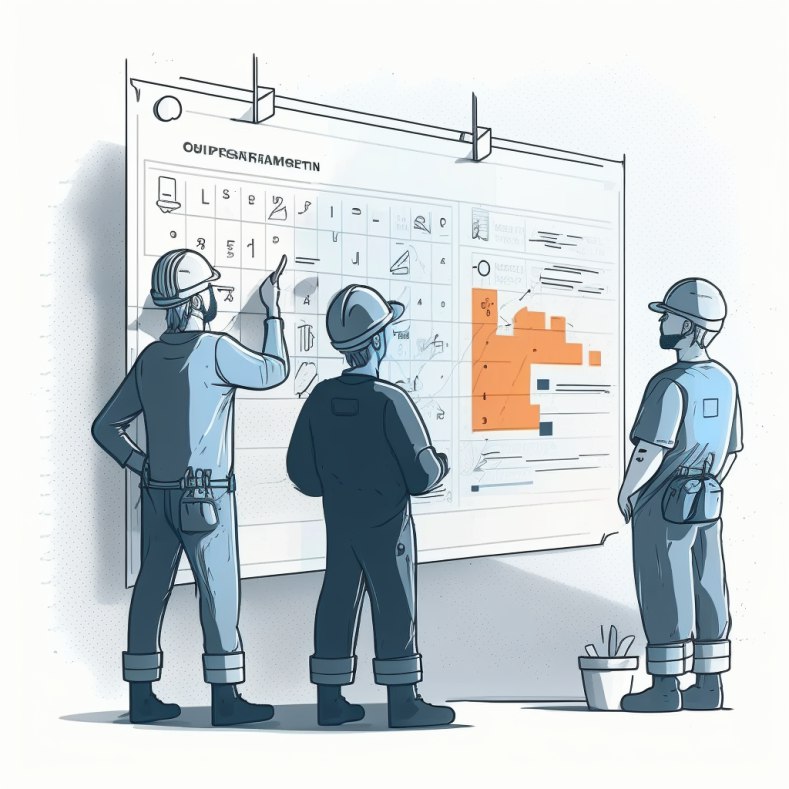
Taking part in the development of plans for projects to overcome crisis situations, the PM Excellence team has repeatedly encountered a very strange picture: a customer interested in implementing a project on time becomes a "hostage" of the contractor, who at the beginning of the month essentially confronts the customer with the fact of what work he has completed and plans to perform.
When asked why the customer does not have a long-term plan that the contractor is obliged to follow, the customer replies: "The contractor is interested in meeting the deadline so as not to pay a late fee. Under the terms of the contract, he has no obligation to report in our format. If the deadline is missed, he will have to pay a large fine."
With such a development of events, the probability of failure to meet the project deadlines is very high. After all, in essence, the customer does not have the opportunity to carry out regular monitoring, assess risks, or promptly influence the situation, which is completely left to the contractor. And the problem is often not even the desire or unwillingness of the contractor to complete the work on time, but the fact that the contractor promptly carries out the most "expensive" work under the contract (where a large volume can be completed with relatively small forces), leaving the "cheap" ones for later. And when the turn comes to carry out these "cheap" works, the contractor leaves a limited resource for them, directing the main forces to other projects. Sometimes unscrupulous contractors take into account future fines for missing deadlines as a planned loss, realizing that they will be able to compensate for it by intensifying work on other projects. As a result, all risks fall on the customer, who receives project results later than planned and, as a result, begins to receive a return on investment later.
How to reduce the risks of missing project deadlines due to the above reasons? There are several mandatory steps you need to take.
1. At the stage of selecting a contractor, indicate the requirement: to develop a top-level schedule network model with mandatory detail in the event of signing a contract (requirements for the level of detail of the model should also be specified in the contract).
During the selection process, the contractor may not have the data to form a detailed schedule network model, but he must demonstrate an understanding of the order of work (types of work, their duration, technological dependencies, control points, etc.). This model should not be unchanged - later, during the process of detailing, there will be clarifications.
2. The selected contractor must developThere is a schedule network model of level 3 (at least) and agree on it with the customer. Specify project reporting requirements in the contract
We cannot allow a situation where the contractor reports only upon achieving top-level control points. The contract must contain an obligation for the contractor to report at least once a month (and from a certain stage of the project - once a week). The report format should also be attached to the contract - and it is highly desirable to provide for the integration of this format with the schedule network model (generating a report from the model).
This will allow the customer to constantly keep a "finger on the pulse", see risks and potential problems, make timely decisions and, in
if necessary, implement corrective actions.
3. Use the schedule network model to generate daily-monthly schedules
This step will reduce the likelihood that the contractor will prioritize work not depending on what the project needs, but solely in its own interests. It is the correct updated schedule network model that can show the priority work that needs to be performed at each moment.
Situations may arise when it is really necessary to perform non-critical work (for example, due to the temporary availability of some unique resource), but in this case, the implementation of this work must be agreed upon with the customer in advance.
4. Carry out constant monitoring of the situation on the project in accordance with the requirements specified in the contract
Sometimes I have seen how the customer, having formed a methodology for project management and interaction with the contractor, setting requirements for planning and reporting, ceases to follow his own methodology as the project progresses. This is justified by lack of time, other priorities, etc. In such a situation, the contractor again becomes the "owner of the project."
Having set requirements for planning and reporting, it is necessary to monitor the situation on a regular basis (both to receive and analyze the contractor's reporting, and to monitor the correctness of the contractor's schedule network model and the correctness of its use.
The listed steps are far from the only ones that customers need to implement as part of project management, but they are the ones that will help minimize the risk of the contractor taking over control and subsequent failure to meet deadlines.
The article was written jointly with Evgeniy Plotnyagin, RMR, PME.