
- Home
- News
- Articles
- All Articles
- General Project Management Issues
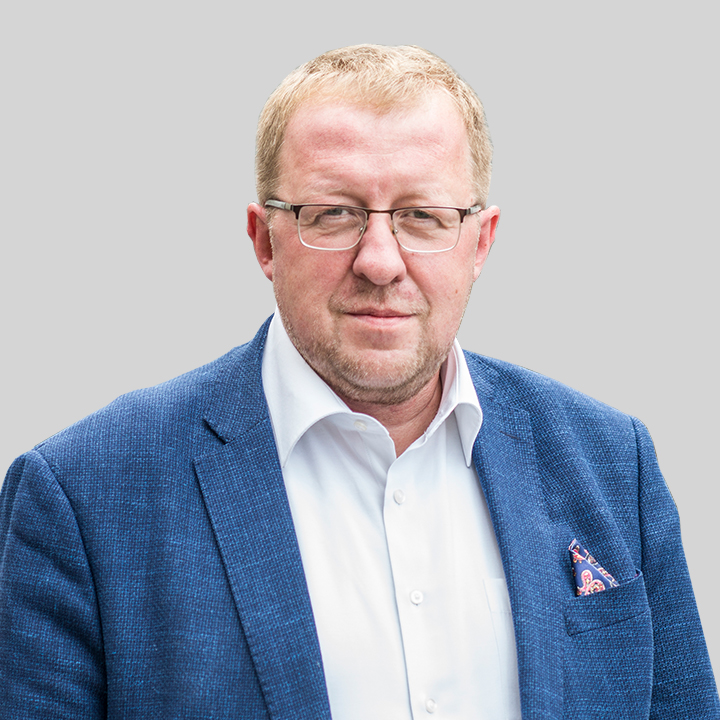
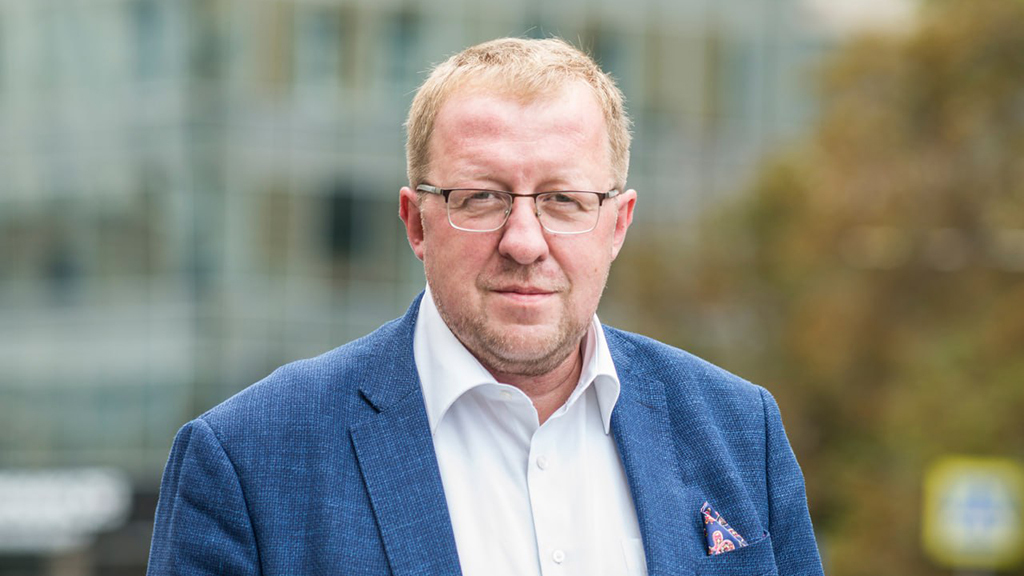
Alexander Kutuzov: "A large-scale project is like a large ship. It is equally inert and difficult to maneuver."
Today, project activities allow companies to quickly introduce innovations and adapt to market changes in the shortest possible time. According to the results of recent studies, in Russia, projects in many companies are launched also because in the new realities, business requires rapid import substitution and digital transformation. It is these trends that will become key in the development of project management in Russia in 2024-2025.
Over the past years, the authors of the study write, Russian companies have realized that transparency of management processes and effective communication are important for the implementation of any project. However, for this to happen, it must be headed by an experienced leader. The search for such managers, as well as defining the boundaries of their responsibility and powers, is now the biggest challenge for companies in the field of project activities in Russia, he said in an interview with Vedomosti Alexander Kutusoin, expert in project management with 20 years of experience, founder of the company PM Expert for project management training and project manager certification, and Senior Vice President at PM Excellence, providing project management services in the oil and gas, mining, metallurgical, energy industries, as well as in the construction of infrastructure facilities, sea and river ports. PM Excellence's clients include Gazprom, Rosneft, Rosatom, Evraz, Rosseti, Sberbank, Renaissance Capital, and Olympstroy Group of Companies.
"The main thing in projects is people and their management"
- Now Russian companies are launching many projects in order to quickly introduce innovations and respond to market changes in a timely manner. What management challenges do they face?
- The speed of change today is indeed faster and faster, the needs of companies are growing, and therefore they are paying more and more attention to projects. Almost every company creates a project office, and gradually the understanding comes that the most important thing in project management is people and their roles in the project. It is very important that these roles are properly distributed. Otherwise, nothing will work, no matter what project methodologies the company writes (and now many companies write entire talmuds of project methodologies) and no matter what management software it implements.
Excessive passion for software has been present in Russian projects from the very beginning, when at the end of the 1990s. Western oil companies came to Russia and brought the fashion for implementing projects. The first versions of PMBOK (Project Management Body of Knowledge - a kind of encyclopedia on project management, which contains methods, approaches, tools and techniques necessary for the effective implementation of a project. - Vedomosti. Capital) appeared in the West at that time. At that time, we copied Western technologies in everything, but forgot our own.
I worked with oil companies and saw that they were looking for ways to make their projects successful. Of course, the main interest was fueled by project management software, for example Project for solving project management problems, Spider Project, the first Russian project management system, Oracle Primavera P6 for integrated project and portfolio management.
In fact, companies were putting the cart before the horse. Already in 2010, according to the classic Gartner curve (it reflects the technology maturity cycle), after the euphoria of the first years, they fell into the so-called "valley of despair", that is, they saw that there were no results. From 2010 to 2020, business people often discussed why projects in Russia do not work. And only now the understanding has come: the main thing in projects is people and their management, not software. Software is just a tool. And it must be in skillful hands, and these skillful hands must be connected to a smart head. Now I see that along the same Gartner curve, we have finally begun to reach the "performance plateau" stage, when confidence arises and the benefits of the technology become obvious.
- What helped you reach the productivity plateau? And what problems still need to be solved?
- The main thing is that companies realized the importance of managing people in a project. But problems remain. We are often invited to do a so-called check-up or audit of a project, to see what is going wrong and what needs to be changed.
We start with the structure and often see an imbalance of responsibility and authority: the manager has great responsibility, but no real authority. For every small change, he runs to senior management. Or, conversely, the project manager has broad authority, but his responsibilities are not clearly defined.
- What do you mean by responsibility?
- Responsibility exists when it is possible to answer two clear questions: what a person is responsible for and to whom. An imbalance of responsibility and authority leads to the project stalling. Each industry has its own characteristics, but if we boil everything down to one denominator, then the problem is most often the same - the roles of people in the project are poorly defined and the wrong person is at the head of the project.
More often we see a good builder, a good miner, a good oilman at the helm. This specialist understands all the technical aspects of the profession, but does not cope well with the role of a manager, that is, with the role of a person who connects everyone and creates integration. And in any project there are always two circuits of integration - technological and managerial. The techie typically drives technology integration. And he often forgets management integrations - deadlines, money, resources, risks, because people of this type are aimed at solving specific technical problems, and not at managing people.
We often tell such techies: we will give you a team of 100 people and three to four more contractors, think through all the risks. And people begin to give up because they have a completely unsuitable psychotype for this. It's one thing to understand technical problems when a person is given tasks and he solves them in the best possible way. It's quite another thing to manage a large team. Only 5% of the population is suitable for project managers. They must have certain skills.
What are these skills?
- I would separate two frequently encountered roles that contrast: the one who manages the conveyor and the one who manages the project. The first one works on an assembly line and does the same job for eight hours. Or such people are engaged in operational work, and everything works like clockwork for them. These are often the chief engineers of facilities, such as factories.
The second type are people who lead projects. A project is always something new, unknown and risky. What we do for the first and last time. A person must match his psychological type; he must like to work constantly in conditions of uncertainty. Of course, there are similar standard projects, but a specific mining and processing plant, a specific plant or a specific deposit differ in their conditions. And here it is extremely important that a person knows how to work under risk conditions, and often in an irregular schedule and in a ragged mode. After all, in projects it happens that sometimes you have to work seven days, 20 hours a day, and sometimes you can, as they say, "smoke bamboo." The problem is that often a good operator is placed as a project manager as a social burden. They tell him: "Come on, you can also manage the project."
"They often put good violinists or pianists at the head of the project, but not conductors"
- Can you give specific examples of problems with project management?
- Once we managed a project at an oil and gas field. And there they appointed a person as project manager who was considered for the position of chief engineer, but was never hired. He is a very experienced oil worker, and he had some management experience; he had previously managed an existing enterprise.
The project had timing issues, which often happens when a techie is leading a project. He usually deals only with technical details and manages everything manually, reacting to problems that arise, but not thinking ahead. We joined the project and first of all launched our technologies for reducing deadlines, based on creating an "honest" calendar network model and promoting critical chains.
But we immediately began to have serious clashes due to the difference in approaches. This manager had the approach of a man from an existing production, and we approached the project as a project: this meant that there had to be planning, proactive work and willingness to take risks. We had disagreements for six months, but then he saw that our methods worked and became their supporter.
This example once again shows the difficulties faced by techies who find themselves in the managerial chair. But it also happens differently - an effective manager who knows nothing about the industry and the project is appointed as the project manager. There's usually no point either.
The question is where to find two in one, that is, a qualified technician and a good manager at the same time. In Soviet history there is only one example of the ideal combination of two roles. This is Sergei Pavlovich Korolev, who was a brilliant engineer from God and at the same time managed the most complex projects without any PMBOK. There are few such "stars", but there are many projects.
- If there are few such people, but there are many projects, then who should be put in charge so that the projects are successful?
- We need a manager with technical experience, not a technician with administrative experience. In my opinion, this is very similar to the role of a conductor in an orchestra. I myself played the violin in a student orchestra when I studied at the Physics and Technology Institute. For a long time I did not understand what the conductor was doing. He doesn't play any instrument, but he knows the musical score, understands music and writes scores. These are like plans in a project. And then he controls the interaction of the musicians: here - louder, here - quieter, here this one enters, here - that one. Essentially, a conductor is a manager who knows music. At the same time, there are always people in the orchestra who play the violin or piano better than him. If we draw a parallel, we can say that good violinists or pianists are often put at the head of the project, but not conductors.
- But you can teach project management? What is needed for this?
- Here we need to figure it out: one is born or becomes a project manager. If a person is essentially an operations worker, then no matter how you teach him, he will not become a project manager. Because for this he needs to be a leader, be able to communicate and work with stakeholders at different levels. But we often see a dangerous situation: large-scale projects are headed by charismatics, people follow them, respect them, and fear them. But, according to our estimates, in two thirds of cases these charismatics are engaged in manual control and lead a multi-billion dollar project into the wrong direction. From a project management point of view, they have no qualifications. It is rare to meet people who, on the one hand, are charismatic, and on the other, have systems thinking.
Nevertheless, the problem can be solved if two people are put in charge of the project: the leader is a charismatic person who charges everyone with energy and confidence, and his deputy is a person who sorts everything out in accordance with management technologies.
We also often see that charismatics, after failing several projects, sometimes come to the conclusion that they need to learn. I know of two cases where technicians learned and became good managers. They simply changed their focus from solving technical problems to solving management problems.
There are few such people, but in general, any manager can take a basic training course in project management; this gives an idea of what tasks to assign to the team and, in any case, systematizes knowledge. I would also recommend finding a mentor among good leaders. For example, project managers often come to me for hour-long consultations.
If there are still few professional project managers in Russia, where does the rosy statistic come from that every five out of 10 company projects are successful? I've seen this statistic in a number of studies.
According to my assessment, in our country more than 90% of projects are seriously behind schedule. It is clear that there were difficult times of "black swans", but those times have passed. And I often see project teams that seem to sit and wait for new "black swans" on which failures could be blamed. Of course, large-scale projects are affected by economic and political changes. But the second significant reason is always ineffective management. Now many large-scale projects have missed their deadlines, and the entire economy depends on the delivery of these projects. The problem is already visible on a national scale.
But we don't like to wash dirty linen in public. And that's why they often lie. There are two types of lies. In 80% of cases, it is due to ignorance: there is no real schedule, there is only a drawn one, and people themselves have little understanding of where they are going. But in 20% of cases, people lie deliberately, knowing full well that they are not meeting deadlines. This is a dangerous lie. Because of this, big problems begin in projects. And in the pictures in the presentations everything is very beautiful: a lot is written there about software and about excellent methodologies.
Another problem: our large companies now have too much bureaucracy. Often, the creation of project offices leads to the fact that the number of pieces of paper only multiplies, and projects do not move forward.
"Calculate the cost of a day of delay"
- What do you do when you are invited to a project where all the deadlines are missed?
- First of all, we outline the goal of the project, that is, we determine its content and highlight the so-called minimum launch complex. That is, we decide what needs to be launched to start production. Then we put the calendar network model of the project in order, because we often see that the schedule is hand-drawn and does not correspond to reality. Rather, it shows the deadlines that management wants to see. Everyone knows that these deadlines are impossible to meet, but no one has the courage to say so.
We often use schedule compression methods, that is, we look at the longest chains of different actions and, to put it scientifically, look for critical or near-critical paths - we launch the Center for Rapid Response and Forecasting, where we include top managers of the highest level. We convene very short and small meetings and present the most important problems of the project to them. It is very important to know where the truly critical situation is.
In burning projects with missed deadlines, we often see that everyone has different understandings of where to go next, and everyone just rushes to put out the fires. We say that it is important to set priorities. In fact, large-scale projects are very similar to large ships, they are also inert, it is difficult to slow them down and direct them to a different path. I have experience in navigation, so I understand perfectly how this happens.
- So, do you manage to bring the project to completion and make it effective?
We often carry out projects where the cost of one day of delay is tens or even hundreds of millions of rubles. We always say: count the cost of a day of delay. And then the question of what kind of team is needed and how many planners there should be is quickly removed.
I would like to note that projects in Russia are almost always productive, but not always effective. They are effective because sooner or later we launch the object. But we often launch it in emergency mode at the last moment, when all the deadlines have already been missed.
Why is everyone silent? Because they think: if I go and tell the truth now, they will fire me, otherwise I'll work for another year. We often see the development of such negative motivation in large-scale projects. The top officials are dragging out the project with all their might, and the team is interested in keeping the project going as long as possible: everyone understands that they will not receive bonuses for delaying the project, but they receive good salaries and are busy with something. Of course, there is no sabotage, but there is also no motivation for heroic deeds.
Finally, it's also about our management style: we are reactive, not proactive. Constantly monitoring the project is not about us; we meet once a quarter for a risk session and see what's going on with the project. For comparison, it's completely different for Americans - if they see that something has gone wrong in a project, they immediately introduce strict monthly, daily and, if necessary, even hourly control, just to get back on schedule.
Our situation is the opposite: we only live according to plan 20% of the time, and 80% are outside the plan and in complete chaos. Project management is precisely what is needed in order to be more effective. And project management must be implemented by a professional project manager. It will be better than any project office. He will choose the right tools and understand specific situations. Remember the famous saying "look for a woman"? To paraphrase, I will say that my main recommendation is to look for a good project manager, and you will succeed.
Source Vedomosti https://www.vedomosti.ru/ideas/management/characters/2025/01/21/1084315-bolshoi-korabl-inerten