
625 meters above the abyss - project management for the construction of the highest bridge in the world
25.08.2025

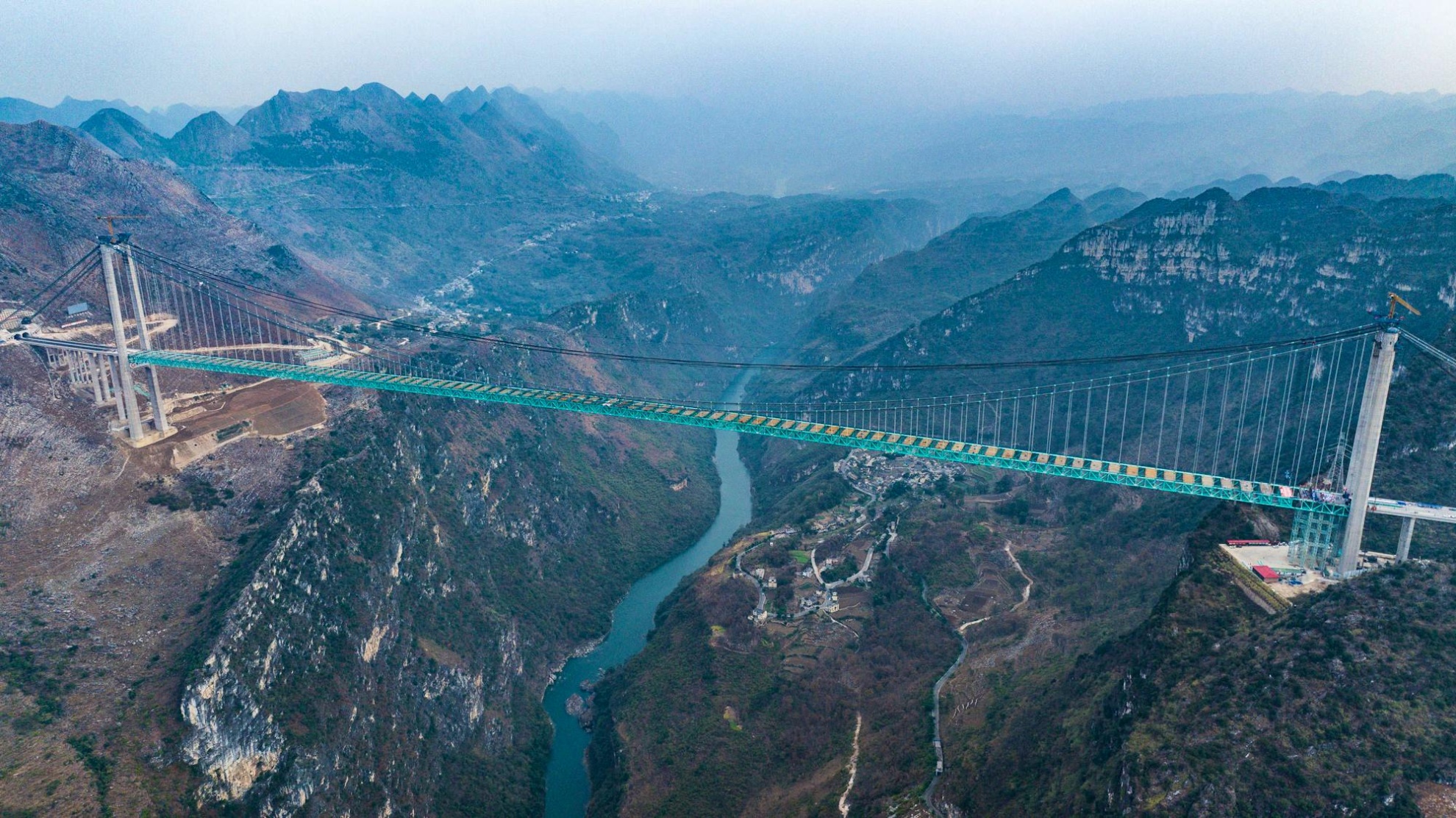
In the province of Guizhou, China, in the center of a picturesque but inaccessible region, a unique engineering structure is being built - a bridge over the Huajiang Grand Canyon. This suspension bridge, passing at an altitude of 625 meters above the river, will be the tallest in the world. It crosses a gorge known as the "Crack of the Earth". Construction is taking place within the framework of a megaproject for the regional infrastructure development using modern approaches to schedule network planning and project management standards. Construction started on January 18, 2022 and is currently nearing completion. According to the basic plan of the project, the opening was scheduled for June 30, 2025, but at the moment the date has been shifted to September.
In the framework of managing megaprojects of this scale, the organization and control of complex engineering processes, as well as the involvement of all participants in a single information space, are of particular importance.
Scale in perspective
The height of a bridge can be measured in two ways: 1) from the bottom point of its support to the top, 2) from the bottom point of the surface to the bridge deck.
It is according to the second principle that bridges in China are record holders: almost all record-breaking structures are concentrated here, the height of which from the roadway to the lowest point of the terrain exceeds 400 meters. These include: Dugu (565 m), Siduhe (496 m), Puli (485 m), Taku (461 m) and Yachi (434 m).
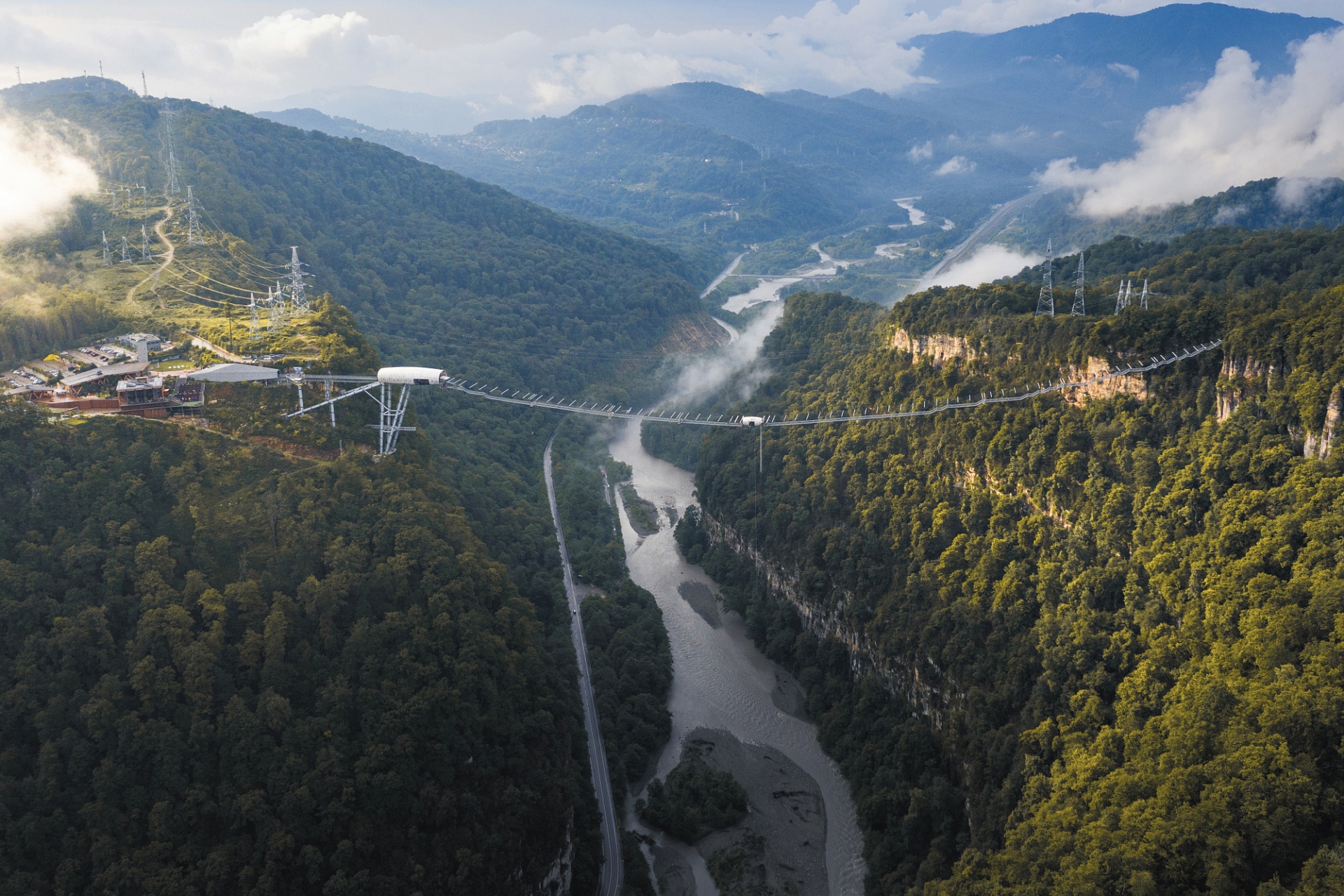
The Sochi Skybridge, which, despite being located at an altitude of 207 meters, is still almost half as low as the Chinese giants, can be compared with its eastern competitors in Russia. Against the backdrop of such significant span heights and complex terrain, the requirements for project management in construction are becoming more stringent: an audit of project management and an examination of project deadlines are required, as well as the use of project management methods to minimize deviations in the schedule and network schedule.
Geographical and meteorological challenges
Difficult terrain and weather conditions
The bridge is being built in the mountainous area of Guizhou Province, where the geology of the Huajiang Canyon and the harsh climate pose serious obstacles to construction. Strong gusts of wind (up to 12 points on the BeaufoArt scale), sudden temperature changes and frequent thunderstorms - all this required careful schedule network planning: dangerous operations - including tensioning ropes and installing sections - were carried out during calm weather seasons. Such project planning requires a high level of process maturity and the use of an EMIS. In the face of such risks, requirements for project management, as well as the introduction of digital tools, play a special role.
Technical solution
A key solution to improve stability was the use of horizontal stabilizers on the main beam. The technology was developed through wind tunnel testing and digital modeling to significantly reduce wind loads, reduce material use and minimize impact on the surrounding landscape. The solution is recorded within the framework of project management standards as a measure to reduce wind risk; execution is included in the network schedule and is controlled through project monitoring in the PMIS.
Technological innovation
Designs and materials
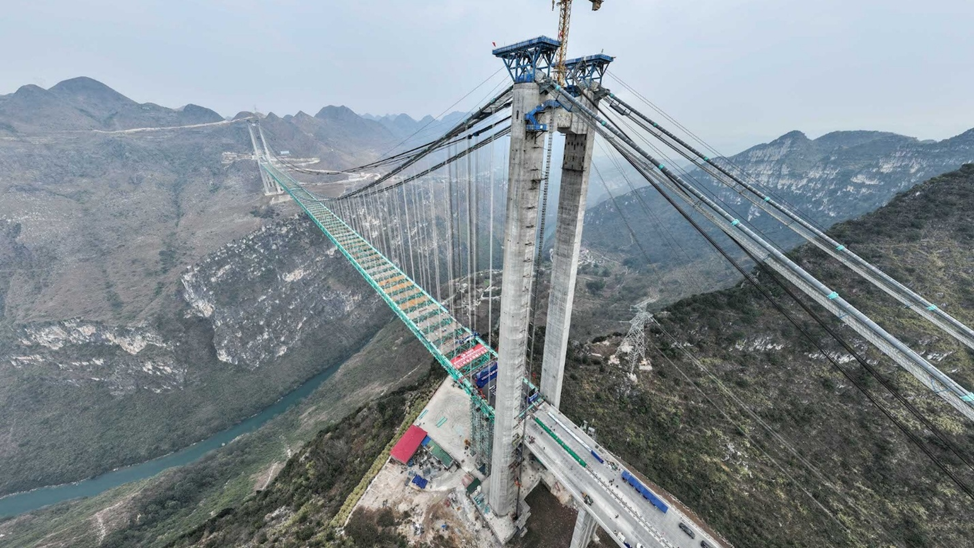
During mass concreting of the foundations of towers 262 and 205 meters high, an intelligent thermal control system was used: sensors and cooling systems were embedded in the monolith. This made it possible to avoid overheating, ensure uniform hardening and eliminate the risk of cracks and delays in the work schedule. The implementation of such technologically intensive operations requires regular examination of deadlines and timely check-out of the project, as well as monitoring of project implementation in order to prevent deviations. A daily-monthly schedule is also used to monitor daily progress and identify bottlenecks in operations.
Installation of cables and beams
The installation of the main cables, consisting of 217 strands, was carried out using a specially developed cable and rope system. It was integrated into a "smart" lifting systematic governanceled by sensors and focused on BeiDou satellite navigation signals (analogous to GPS). The steel truss beams, with a total weight of 22,000 tons, were installed in just two months, setting a speed record for the Guizhou region. This integration of digital and construction solutions meets modern project management standards and emphasizes the maturity of processes within the megaproject. At the same time, an independent examination of the project was carried out to assess the reliability of design solutions.
The bridge towers, more than two hundred meters high, were erected using a hydraulic platform - the so-called "mobile vertical plant". This platform combines the functions of formwork, lifting materials, as well as monitoring the accuracy and quality of work. The operator takes the installation to the next level, focusing on data from laser systems and sensors. Thanks to this, the installation of a cable strand weighing 41 tons is carried out with millimeter precision in just 15 minutes. Such operations are accompanied by regular project monitoring and independent examination. Upon completion of key stages, a project audit was also carried out, followed by documentation verification.
Project management
The construction of the highest bridge crossing in the mountains of Guizhou demonstrates how modern technology and strict management discipline turn extreme conditions into a controlled project. The project is being carried out in accordance with the provisions set out in the PM GUIDE, which is used for the implementation of large infrastructure projects.
The contract is being implemented under the EPC model, under which a single consortium, Guizhou Highway & Bridge Group, is responsible for design, procurement and construction. A laconic but strict KPI was set for the entire team: 0 injuries, 0 breakdowns, 0 complaints. This is consistent with the contractor's project management and PMC practices.
Priority to critical work
To manage the project schedule, the critical path method was used to identify tasks that directly affect the overall construction duration. Key milestones included the construction of the main pylons and the installation of support cables, the completion of which was critical to moving on to the next phases. Thus, the construction of the northern tower with a height of 262 m was carried out in an accelerated mode for 16 hours a day, which ensured a pace of ~1.2 m per day. This made it possible to complete the concreting of the support within 5 months and begin hanging the main cables.
The use of a critical path ensured that potential deviations were continuously monitored and managed. When delays occurred in non-critical areas, resources were quickly redistributed to critical operations, preventing delays. Particular attention was paid to supporting infrastructure (elevators, observation platforms, etc.) to prevent non-essential work from affecting key construction phases. Important events - completion of the construction of supports, tensioning of ropes, assembly of the span - were synchronized in advance and recorded in the updated schedule network schedule.
Thanks to this approach, the project was more than 75% complete by November 2024, with the main cables already tensioned and the installation of the span sections nearing completion. Regular coordination meetings of the construction headquarters recorded the plan-fact for work on the critical path, the reasons for deviations and decisions on resource provision, and the schedule network and daily-monthly schedules were updated based on the results of project monitoring.
Parallel work
The network schedule included parallel execution of work wherever possible for optimal use of time. While supports were being erected on both sides of the canyon, the construction of access overpasses and the preparation of anchor blocks was going on in parallel. By the time the towers were completed, the team was ready to begin tensioning the main ropes and installing the suspension system.
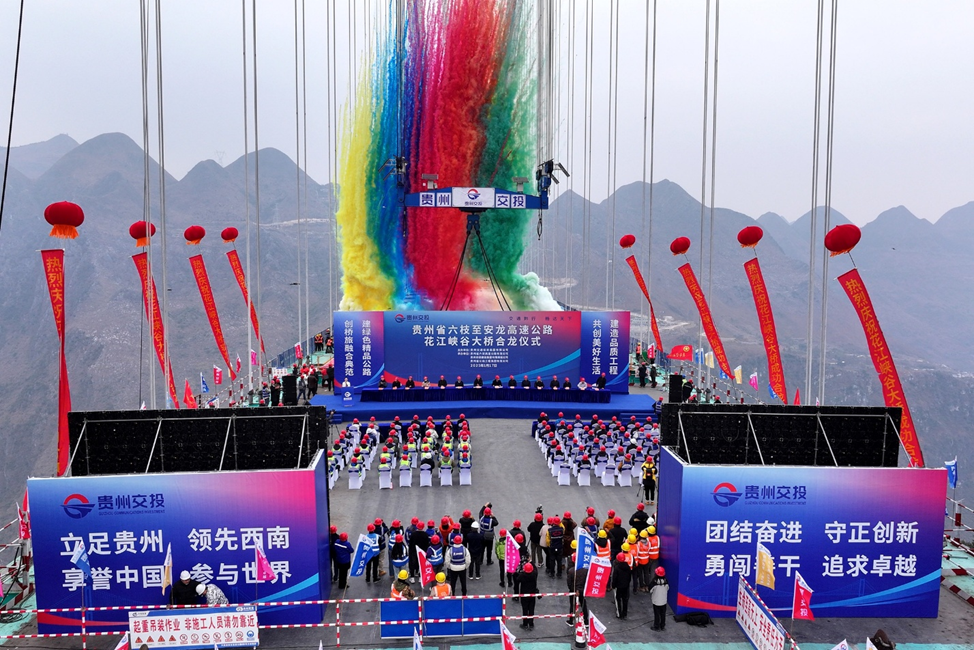
Thanks to this project planning, it was possible to proceed to the installation of the superstructure without loss of time: the steel sections of the truss beam (93 sections with a total weight of 22,000 tons) were installed in just 2 months. This became possible thanks to a clearly defined schedule and well-coordinated organization, which made it possible to avoid forced downtime. The work was carried out in accordance with the schedule network model, provided by automation of control systems.
Human Resources
However, to eliminate backlogs on the critical path, additional resources were quickly attracted and overtime was introduced. It is important to note that workers refused to take days off on holidays, ensuring the continuity of the construction process and compliance with the established schedule. This mode of work, combined with technological innovation, made it possible to overcome serious difficulties: unstable mountain winds, installation of heavy structures at height, and drilling piles on steep slopes. Constant monitoring and control of the project was maintained.
Delayed deadlines
The commissioning of the bridge, previously scheduled for June 2025, was postponed to the end of September. Four factors had a decisive influence:
- Abnormal June rainfall in Guizhou province halted open-pit work and required additional geotechnical controls.
- Tightening government inspections following the June 24 collapse of a nearby bridge.
- Expansion of the scope of work due to tourist subsystems (panoramic elevator, architectural lighting) increased the load on resources.
- Technological limitations of five-layer asphalt pavement require a long dry period for installation.
The resulting delay in terms of the schedule and network schedule reflects the objective external and technological limitations that the project faced at the final stage. In this regard, a project audit was carried out: an implementation check was carried out, an examination of the project deadlines and monitoring of project management were carried out with adjustments to the daily-monthly schedule.
Impact on regional development
Tourism and infrastructure
The project initiators successfully combined engineering objectives with a social agenda. The bridge will become a new tourist attraction and a center for extreme sports - bungee jumping, parachute jumping, and rope crossings are planned here. Air restaurants and observation corridors are also provided, which will enhance the attractiveness of the region.
This will boost development in villages like Sahuojian, where young entrepreneurs are already opening hotels and running campgrounds, while reducing the risk of protest activity.
Transport and economics
The new bridge will significantly speed up crossing the canyon: instead of an hour along the bypass road, it will now take only a minute. This will contribute to the integration of the cities of Guiyang, Anshun, Panzhihua, increase the mobility of residents and simplify the transportation of products.
Conclusion
The construction of the Huajiang Grand Canyon Bridge was an example of how even a well-planned project can encounter unlikely but critical difficulties. Despite all efforts, weather conditions made adjustments to the deadlines for completing the work. However, this experience highlights the importance of considering all possible risks when implementing large infrastructure projects.
The scale of the project cannot be underestimated - in 3 years, supports up to 262 m were erected and 93 sections were installed. As of today, the bridge is 98.2% complete. The project will set a world record and act as a catalyst for economic and tourism development, demonstrating the power of infrastructure projects.
Key sources:
- People's Government of Liupanshui City. Management News: Huajiang Bridge Construction Site Inspection - URL: https://www.gzlps.gov.cn/ywdt/jrld/202507/t20250701_88213437
- The Civil Engineer. A New Icon of Infrastructure: China's Tallest Bridge Nears Completion - URL: https://www.thecivilengineer.org/news/a-new-icon-of-infrastructure-is-set-to-open-soon-inside-chinas-tallest-bridge
- Ministry of Transport of the People's Republic of China. Huajiang Grand Canyon Bridge: A Major Milestone for Guizhou - URL: https://www.mot.gov.cn/jiaotongyaowen/202305/t20230525_3833618.html
- China Central Television (CCTV). Construction Progress of Huajiang Canyon Bridge - URL: https://news.cctv.com/2023/05/21/ARTI7HW0iPYHTNCDzran0kKR230521.shtml
- Guizhou Province Portal (eguizhou.gov.cn). Construction of the Huajiang Canyon Bridge will be completed in the second half of 2025 - URL: https://www.eguizhou.gov.cn/2024-11/08/c_1043234.htm
- Highest Bridges. Description of the design and logistics of construction of the Huajiang Bridge - URL: https://www.highestbridges.com/wiki/index.php?title=Huajiang_Grand_Canyon_Bridge
- Alimak. Huajiang Bridge Monitoring and Weather Control System - URL: https://alimak.com/project/huajiang-grand-canyon-bridge
- Sohu.com. "Guizhou Jiaotong Vocational College behind the construction of the Huajiang Canyon Bridge": https://www.sohu.com/a/775634249_120578424
- Russian People's Daily Online. Huajiang Canyon Bridge in Guizhou: construction picks up speed - URL: http://russian.people.com.cn/n3/2025/0117/c31518-20267640.html
- Guizhou Provincial Department of Transport. The main work at the Huajian Bridge construction site has been completed, the project has entered the final stage - URL: https://jt.guizhou.gov.cn/xwzx1/hydt/202507/t20250718_88304594