
The scientific and business portal "Nuclear Energy 2.0" presents a thematic interview with Alexander Sergeevich Kutuzov, PME
19.02.2024
Interview about modern development and strategic importance of the field of megaproject management, as well as the new professional standard PM GATE.
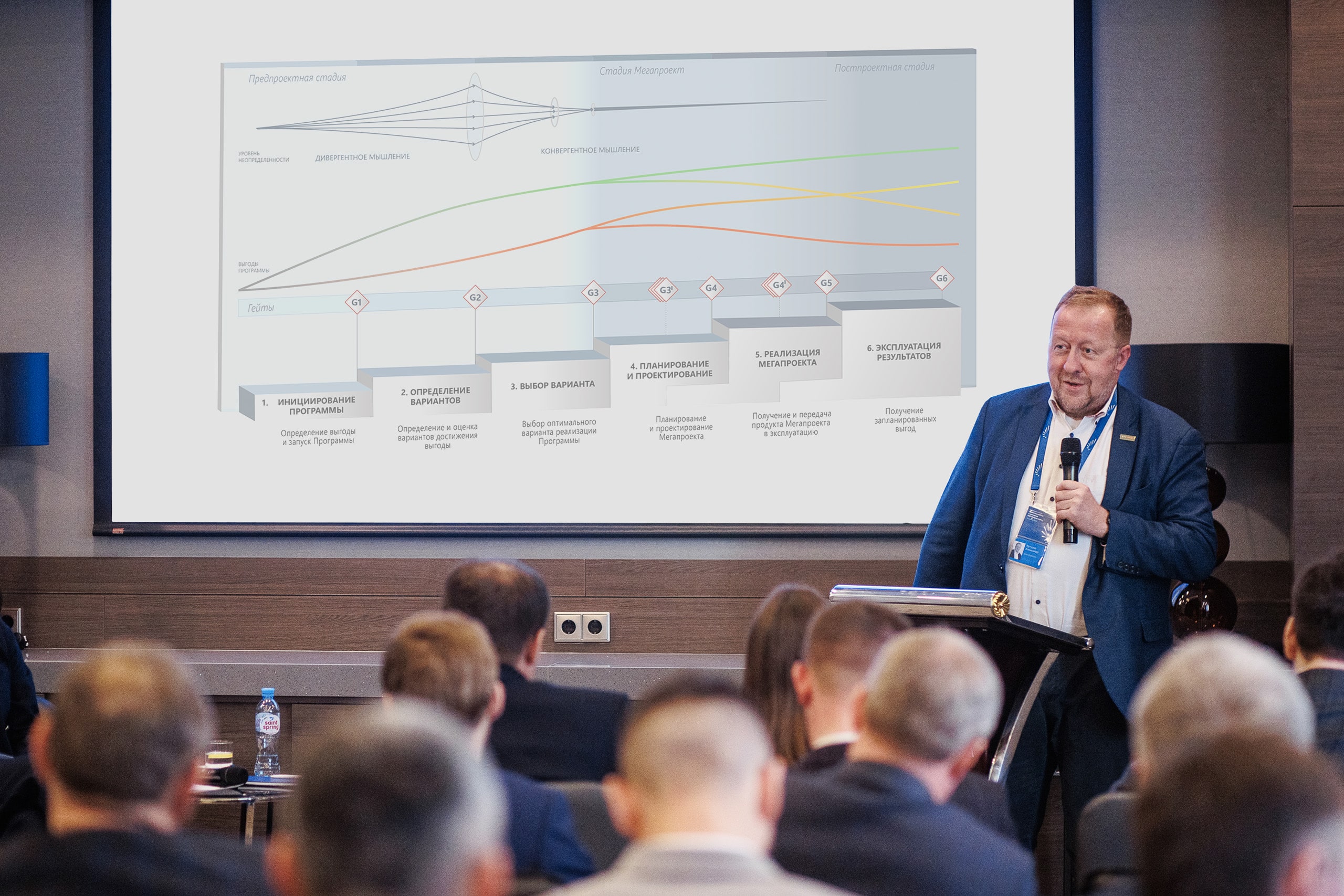
In the 2023 business season at the largest industry events TNF 2023 and MINEX Russia, and also at the XVIII International Conference "Project Management 2023" you presented a new standard for managing programs for the implementation of megaprojects - PM GATE. Prior to this, your team released the project management standard PM GUIDE. What were the prerequisites for their creation? What problems do they solve?
It is impossible for Russia to achieve sovereignty without its own management technologies. For a long time, we often thoughtlessly copied Western approaches and standards, trying to adapt them to Russian realities and mentality.
Our goal, firstly, was to select the best project and program management technologies and take into account, among other things, Russian specifics, supplementing them with extensive practice and experience of PM Excellence project managers. That's why we released project management standard - PM GUIDE in 2022 and megaproject program management standard - PM GATE in 2023.
- What is the PM GATE standard and how is it different from the PM GUIDE standard?
- In short, PM GUIDE is a project management standard, and PM GATE is a program management standard. It is focused on program management for the implementation of large-scale projects and megaprojects.
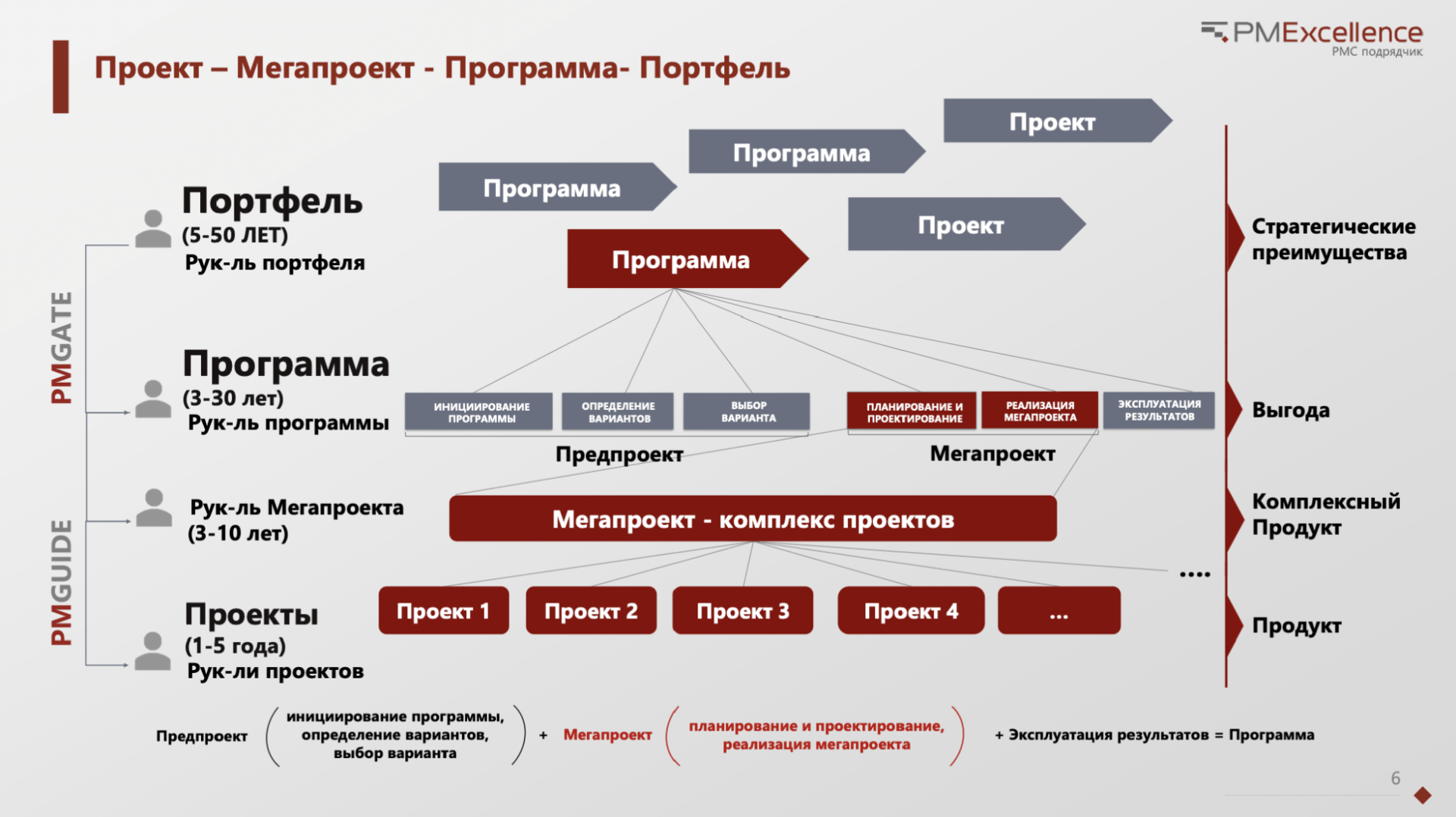
Here you should define the difference between the concepts of "project" and "program". When we say that we need to build some object, we are talking about a project. But before you start construction, you need to decide on its goals, choose options for how to build, go through the stages of design, construction and operation of the facility. Here we are talking about the program. This is a broader concept.
The main difference between a program and a project is the achievement of benefits. For example, we are developing an oil and gas field not so that it just exists, but so that it brings a certain profit.
Moreover, the benefit does not have to be in monetary form. Thus, in the preparation program for the 2014 Winter Olympic Games in Sochi, where we and the team took an active part, the main benefits were not only and not so much financial, but socio-economic.
When we manage a program, we must ensure that we are delivering benefits over the long term. The duration of operation of megaproject facilities built within the framework of the program is, as a rule, several times longer than the duration of design and construction. In addition, there is a pre-investment stage where it is necessary to determine the benefits and ways to achieve them. All this time, we must monitor possible changes in benefits and quickly make appropriate decisions. These are actions to manage changes at all stages of the program and/or its stop (freeze). For this purpose, the PM GATE standard was created and announced.
We analyzed more than 15 different standards for managing programs and large megaprojects of the largest Russian and foreign companies, and in most of them we ourselves took an active part in management. Without false modesty, the PM Excellence team is one of the most professional and experienced in the field of managing large-scale projects and megaprojects in modern Russia. It is this experience and best practice that is reflected in PM GATE.
The PM GATE standard is based on the well-known stage gate approach, created back in the 80s of the last century, and is a gate model. However, it reflects modern approaches to program implementation, taking into account the best international and Russian practices. It represents a set of steps, an order of transition from one phase to another. PM GATE has the main objective of managing benefits throughout the program, throughout the entire stage of a megaproject: from conception, construction to operation.
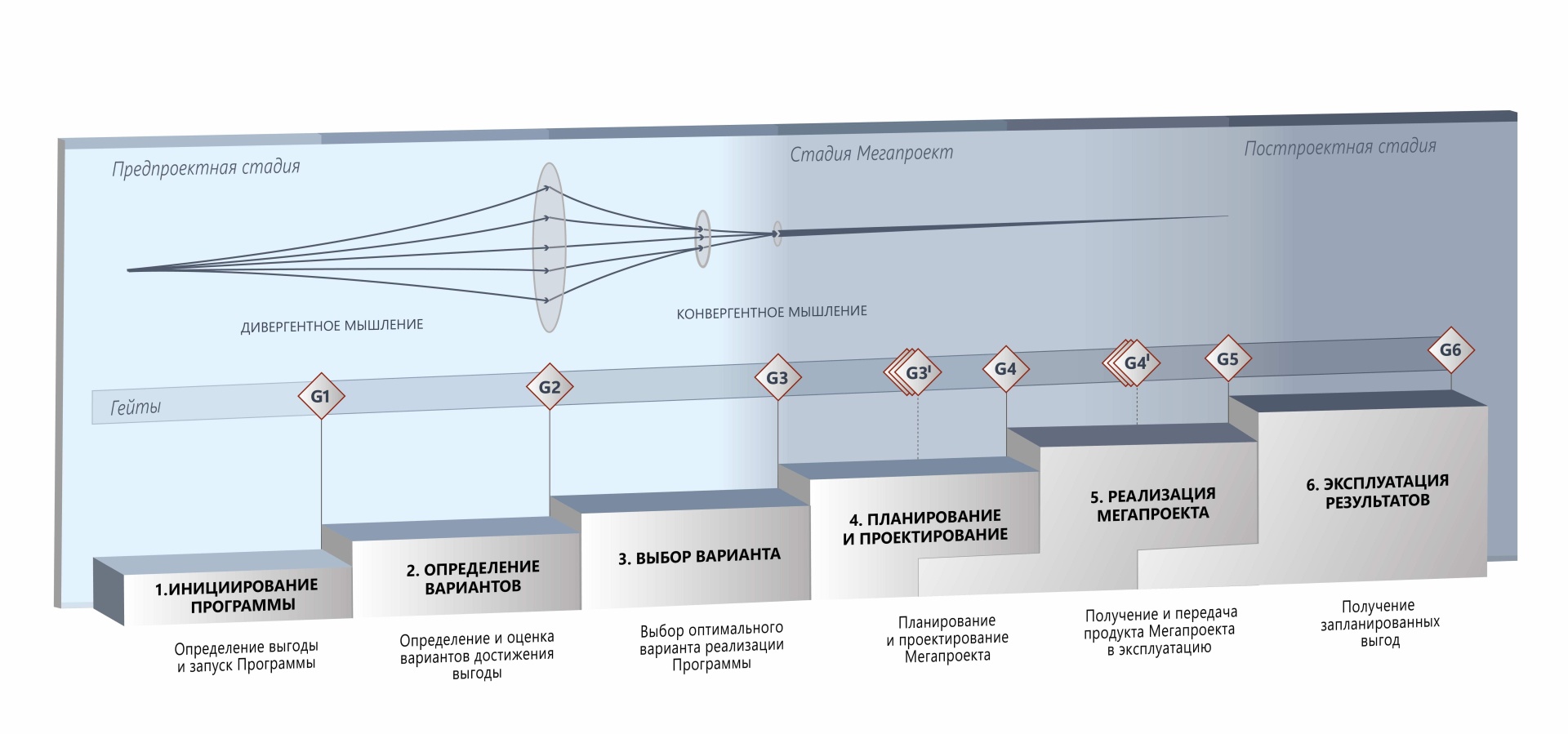
PM GATE Standard Scheme
Returning to PM GUIDE, I note that this is a standard for managing one project, in which 12 steps are selected that are the minimum required when managing any project.
PM GATE and PM GUIDE are open standards from PM Excellence. This means that you can freely use it to manage your projects or programs, or based on them, create your own standards that take into account the specifics of your projects.
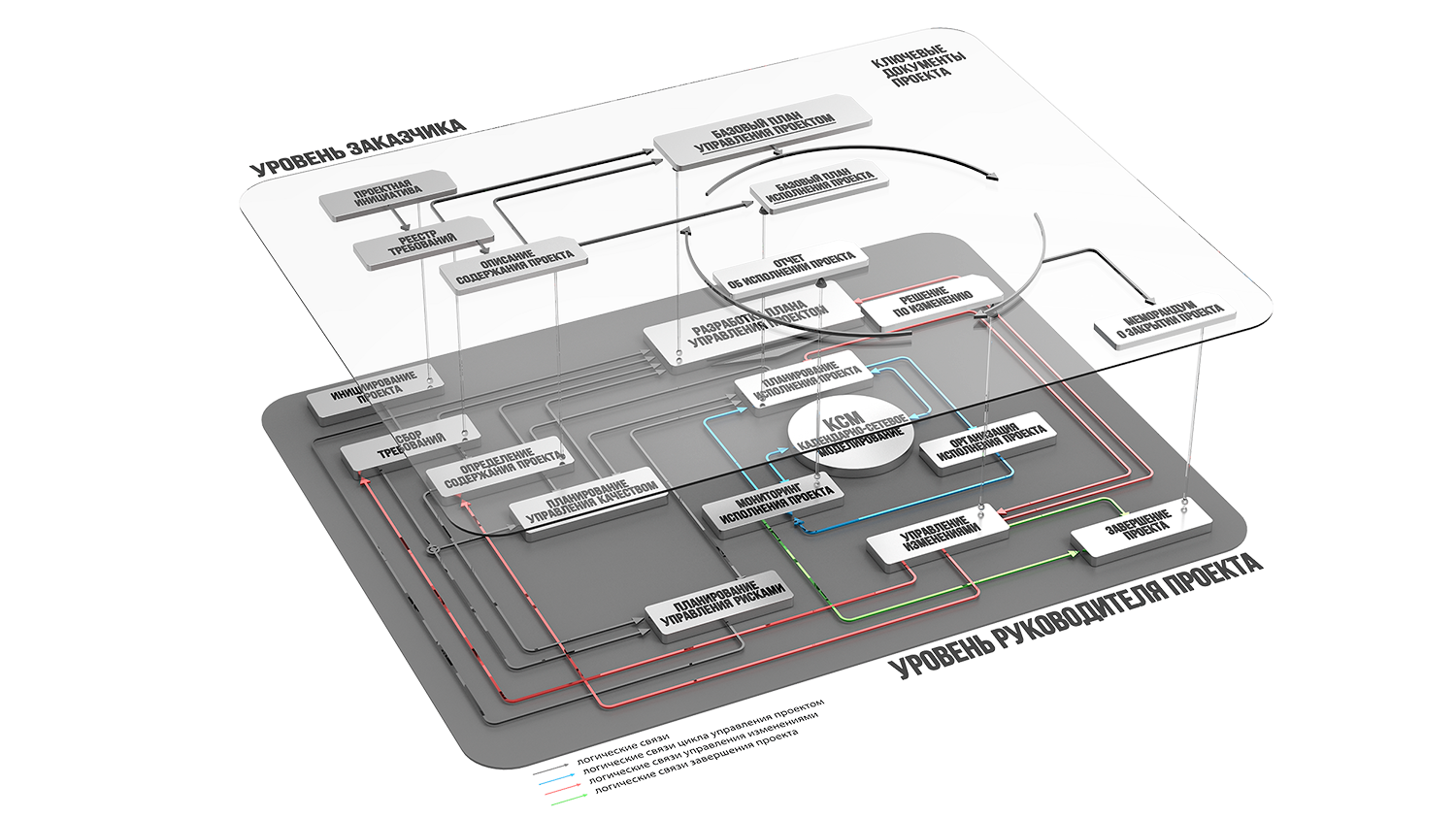
Scheme of interaction between project management processes according to PM GUIDE
By releasing its standards, PM Excellence shares its practical experience with the Russian market and contributes to the development of the managerial sovereignty of our country.
You can obtain the texts of these standards at link (PM GUIDE) and link (PM GATE).
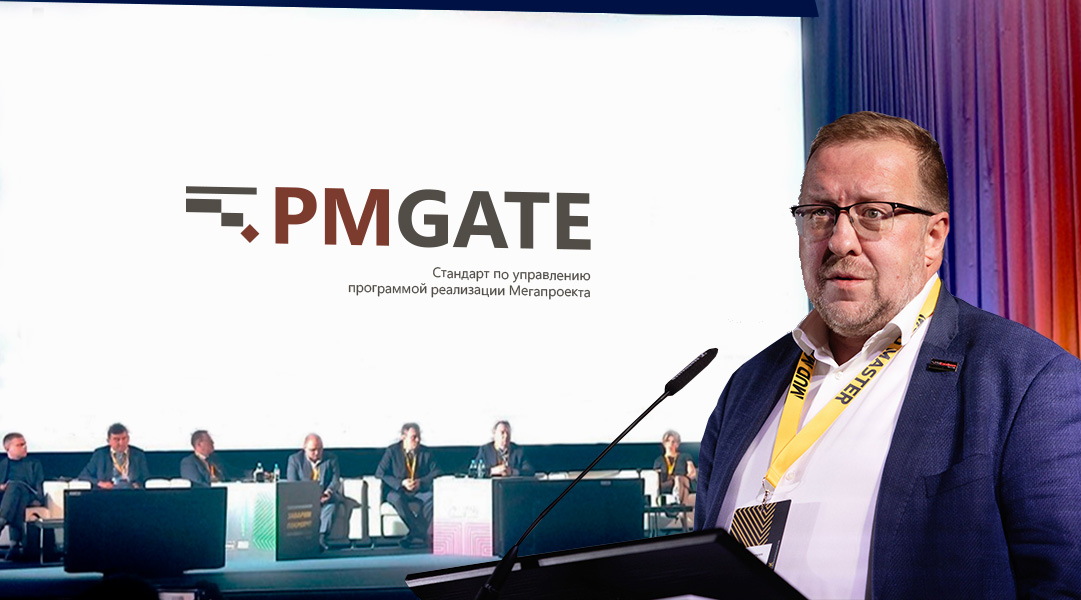
- What are the innovative capabilities of the PM GATE standard? What place will it take in your product line?
- I have never seen open standards for program management in Russia, based on the best global practices and taking into account Russian realities. There are different corporate approaches and methodologies within individual companies. PM GATE is a framework that can be used by any company to build effective program management.
Several management innovations have been introduced into the PM GATE standard (for example, as intermediate gates at the planning and design stage, and at the implementation stage), which reflect modern needs for managing programs for the implementation of large-scale projects and megaprojects in a rapidly changing external environment.
You can find out more about the standard itself and the novelties in the recording of my webinar at link.
If we talk about the line, then next year we plan to release a standard for company portfolio management. Thus, we want to cover all three levels of management: portfolios, programs, projects.
- Can PM GATE be used during the construction and further operation of nuclear power plants and other large nuclear industry facilities? What benefits can it provide to project participants?
- It won't be possible to apply it as a carbon copy, because the nuclear industry is quite specific with its control technologies. However, a nuclear power plant can be considered as a classic investment program for the implementation of a megaproject, which includes the pre-project stage, planning and design, construction and operation.
Increasingly, BOO (Build, Own, Operate) contracts are encountered in the world practice of nuclear power plant construction. Let's take the Akkuyu nuclear power plant as an example, the construction and operation of which are planned for decades to come. In such contracts, it is extremely important to manage benefits over the long term.
Moreover, the benefits here can be not only direct financial profit, but also gaining market share, political, socio-economic benefits and, undoubtedly, the prestige of the country. PM GATE can help focus on program benefits and how to achieve them, complementing already proven program management practices in the nuclear industry.
It should also be noted that the PM GATE standard provides a mechanism for translating these benefits into project priorities and change management. If, for example, the implementation of a project is behind schedule and we are not able to catch up, then the change control mechanism at the level of program benefits must work. And, conversely, if the benefits and their priority change, then this should promptly detect changes in the boundaries and parameters of projects within the program.
PM GATE is primarily a tool for the customer, curator and program manager. Its use significantly increases the likelihood of success in achieving long-term benefits.
- Please give examples from your practice of linking the benefits of the program with the parameters of the project?
- The customer involved us in the oil and gas field development project and entered into a PMC contract with us. At this time, the delay from the planned launch point was more than 200 days. The main goal (benefit) of such a program is the implementation of the business plan for oil production. To do this, we identified a minimum start-up complex that ensured the start of oil production within the required time frame, transferring all minor work to the next stage. It was this solution, along with our time-saving technologies (critical path promotion, CPRP), that made it possible to fulfill the business plan with minimal lag, that is, to achieve the planned benefits of the program.
- PM GATE is based on the gate approach. What is a gate?
- The gate is the decision point. In PM GATE, at the end of each stage, the question is asked whether it makes sense to continue the project, change it or close it, despite the costs incurred. In large megaprojects, it is very important to stop, slow down, or make the necessary changes in time. Here I would like to cite the Soviet lunar program as an example. Perhaps it was stopped in time precisely because it was realized that the main benefits of the programs were not being achieved. After the United States was ahead of the Soviet Union in the "lunar" race: further costs for the lunar program did not correspond to the political benefits of our country. PM GATE is exactly that: about linking benefits to the goals and results of projects within the program and managing change in a timely manner.
About ten years ago, we created a standard for program management for the UAC - for this, among other things, we studied gate models of Boeing and Airbus. If there are six stages in PM GATE, then in those models there were about 20 of them (idea, preliminary design, just design, and so on, and the end point is the disposal of the last aircraft in the series). Interestingly, at each gate a group of apologists and opponents was appointed. The first justified that the project should be continued, and the other - that it should be stopped, before signing a statement about the absence of a conflict of interest. Ultimately, an expert panel considered competing opinions and made decisions about continuing, closing, or changing the program. But aviation programs are designed for 50-70 years, and it is very important not to become hostage to the efforts already spent and to stop or change the program in time.
- Generally speaking, how is the global megaproject management industry developing today? Does PM EXCELLENCE plan to create new professional standards in the future?
- We analyze how megaprojects are developing both here and abroad. The term "megaproject" is popular now, but everyone has their own meaning in it. In PM GATE we have criteria that define a megaproject, and our analysts count more than 250 such projects. There are also such projects abroad. Among the particularly interesting ones, I can name hypercity projects in the Persian Gulf countries.
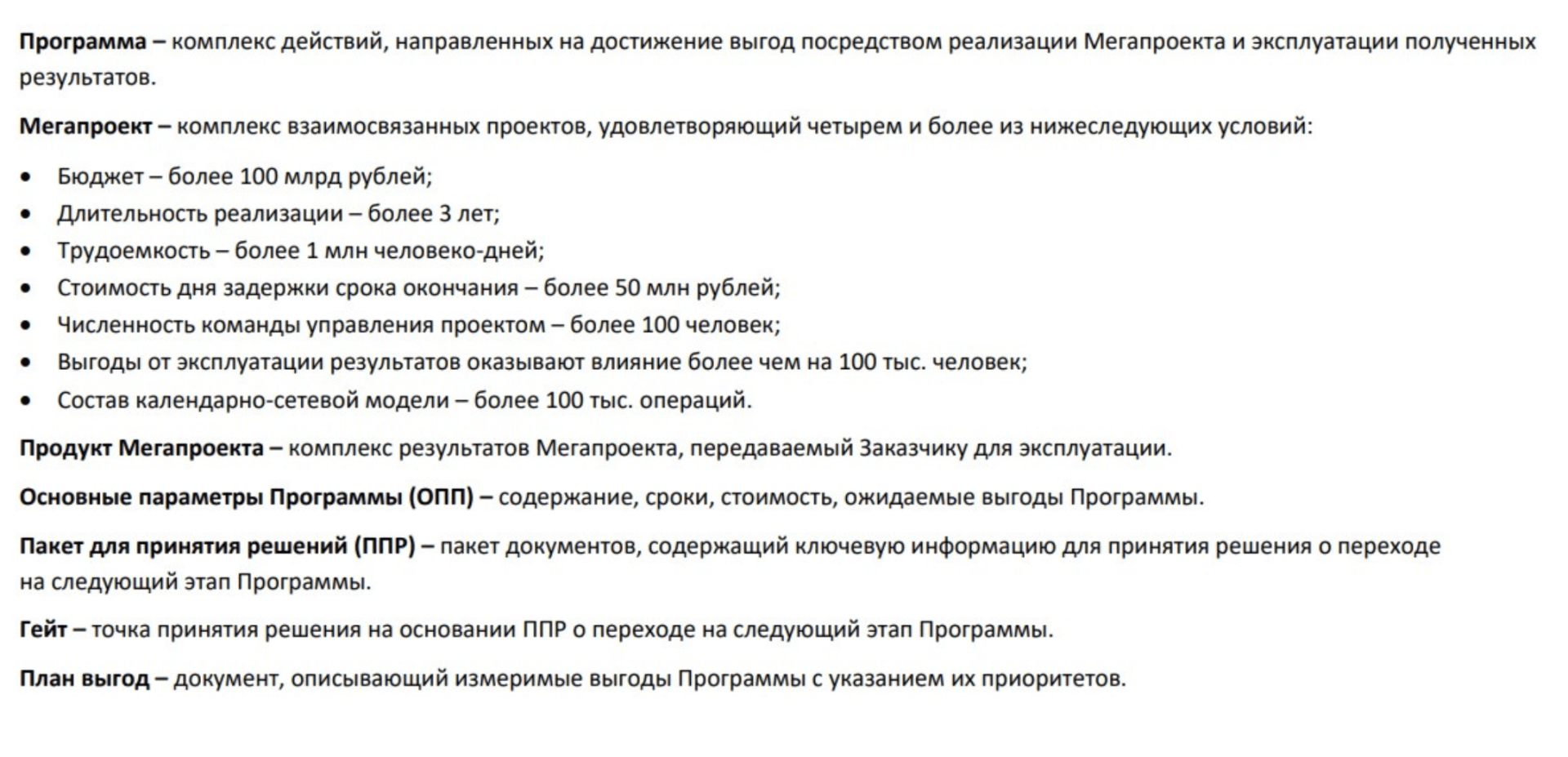
Megaproject criteria developed by PM Excellence experts
The sphere of megaprojects is developing, and the industry is coming to understand that the complexity of management grows non-linearly as the scale of the project increases. This task is an order of magnitude more complex than managing an average-sized project, and it imposes fundamentally different requirements on the qualifications of the manager and his team. Unfortunately, not in all large-scale projects in which we are invited for check-ups, we see an understanding of proactive investment in qualified teams. And this is the key problem of failures, missed deadlines, and exceeding budgets. We are currently preparing a highly specialized course for managers, customers and supervisors of megaprojects. We plan to bring it to the market in the middle of next year. There are no analogues of such a course in Russia.
I regularly post materials from this course on my channel "Megaprojects with Kutuzov.
One of the current trends in large-scale projects, in my opinion, is the introduction of a continuous risk monitoring group. Not the way it happens in most well-known cases, when once a quarter a team gathers for a risk session, generates risks and conveniently forgets about them until the next meeting. And what I mean is a permanent group that looks as far as possible, 6 to 24 months ahead, and does just that. The tasks of such a group include early detection of risks and timely proposal of options for dealing with them.
In preparation for passing the yacht captain qualification exam, I am currently studying maritime affairs. It contains, among other things, a fundamental document for all boatmasters called the International Regulations for Preventing Collisions at Sea (COLREG 72). It clearly states that the captain of the ship must ensure constant monitoring of the entire situation around him. Likewise, in projects there should be an analogue of a permanent "look-forward". A large-scale project, like a large ship, has a lot of inertia, and decisions to change course or stop must be made well in advance. Of course, it is often impossible to track all risks, but the more you invest in proactive management, the fewer problems you will have.
Another thing is that proactive management is an extremely thankless thing. Let's say you calculated all the risks in the project, spent time and money to train people, purchase the necessary equipment, and so on, but these risks did not happen. The question arises: what was the money spent on? But good work goes unnoticed. But bad work will be noticeable.
Unfortunately, our mentality is still dominated by reactive manual control, while the trend in the world is towards proactive control. However, now we notice that in Russian projects there is also a trend towards building an effective project management system from the very beginning. We support this trend, tell all our clients about the importance of this approach and show that in reality these costs always pay for themselves many times over. For example, in one of the oil and gas projects we reduced the implementation time by more than 150 days, while the cost of our PMC contract (PMC - Project Management Contractor) was less than the cost of three days of them. That is, the economic effect of hiring a professional project management service was 50 times higher than the costs!
- Can you give a short recipe for successful management of megaprojects?
- I can. The success of a megaproject is determined 80% by a professional team that systematically uses modern proactive management technologies, and 20% by the leadership qualities of the manager. And leadership in megaprojects is a topic for a separate important conversation.
Source: